Kenya’s anti-corruption war is losing ground where it matters most: Fund the citizens who can protect public money
 The Mt Kenya Times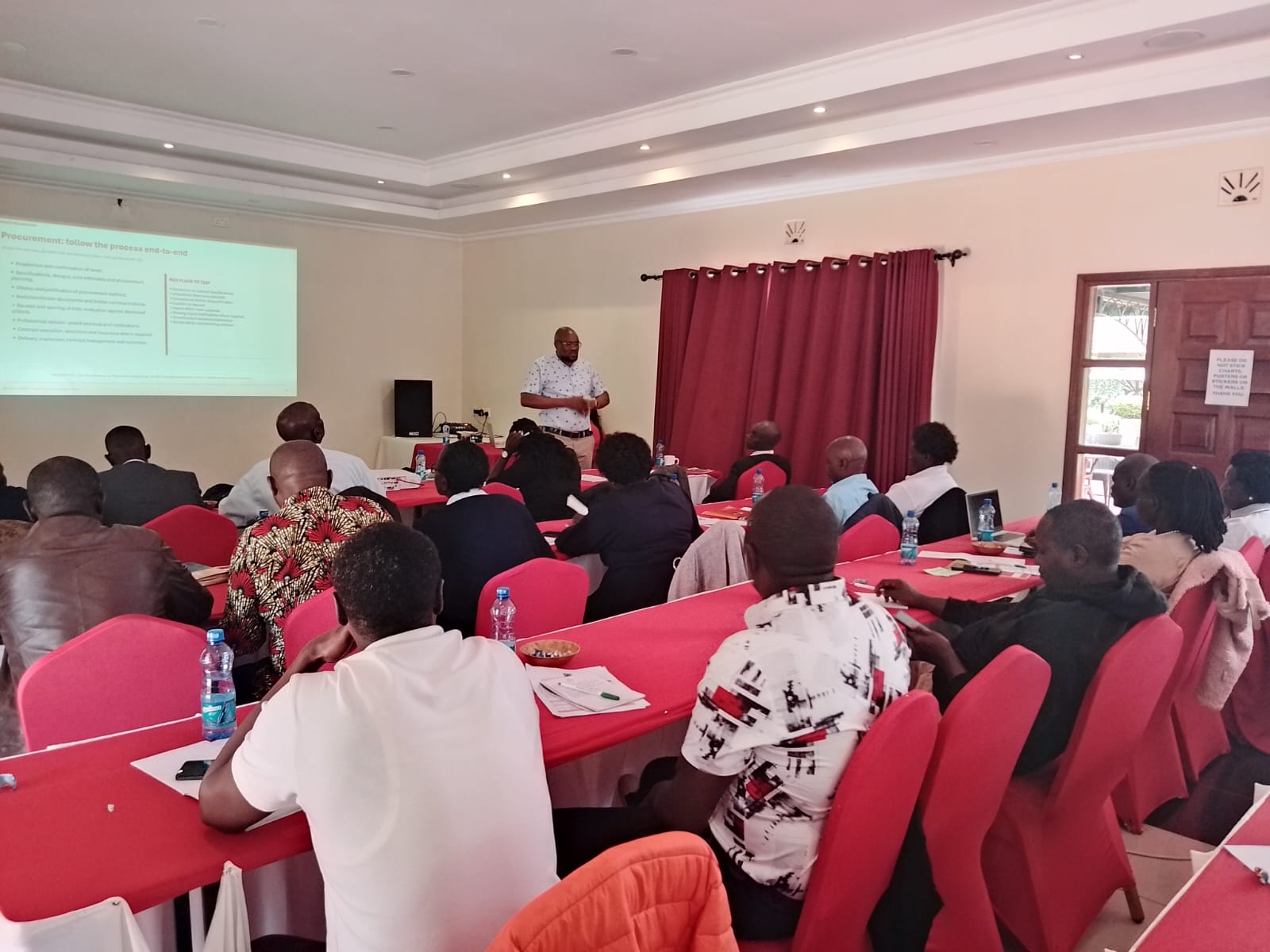
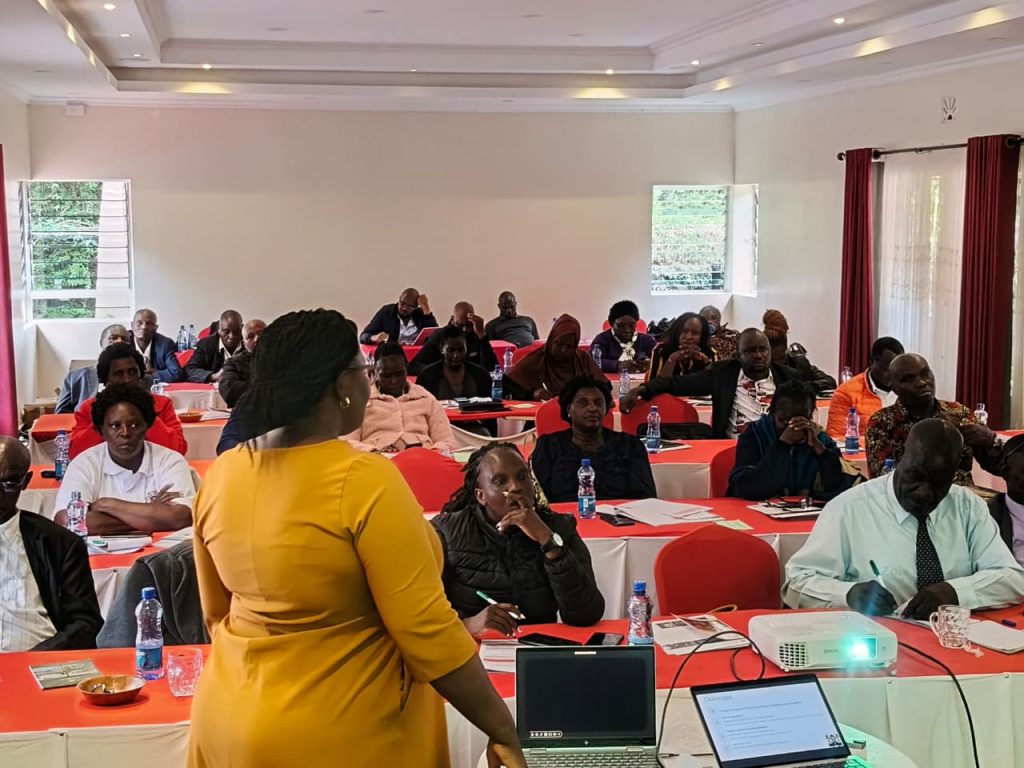
CACCOCs training workshop in Eldoret today
By Mr. Fredrick Kipchumba Chelimo – PWD
Email; fkipchelimo@yahoo.com
“The ultimate test of a government’s commitment to fighting corruption is not how loudly it condemns corruption, but how effectively it empowers citizens to prevent public money from being stolen, wasted or diverted from its intended purpose.”
Kenya’s war against corruption has reached a point where the country must confront an uncomfortable question: can we defeat a problem that flourishes within communities, public institutions and development projects while leaving ordinary citizens at the margins of the fight? For decades, the country has invested in constitutional safeguards, legislation, investigative agencies, prosecution, international conventions and elaborate regulatory frameworks. These remain indispensable pillars of accountability. Yet corruption persists, public confidence is strained, and citizens continue to encounter development projects whose promises appear considerably greater than their results. The problem, therefore, is not simply whether Kenya has enough laws and institutions. It is whether the architecture of accountability reaches the places where public money is actually spent and where the consequences of its misuse are most painfully experienced.
This is why the work of the Attorney-General’s Office, through the Department of Justice and Human Rights, the National Anti-Corruption Campaign Steering Committee (NACCSC) and its affiliated County Anti-Corruption Civilian Oversight Committees (CACCOCs), deserves far greater national recognition, institutional support and financial investment. Their community-centred approach offers an opportunity to bridge the persistent divide between the formal machinery of government accountability and the lived experiences of the citizens whom that machinery is supposed to protect. Kenya cannot win the war against corruption by treating citizens as spectators to the management of their own resources.
The traditional approach to fighting corruption has concentrated, understandably, on the institutions empowered to investigate, prosecute, regulate and punish offenders. However, by the time a scandal reaches national headlines, public money may already have disappeared, a contractor may have abandoned a project, or intended beneficiaries may have endured years of deprivation. A dispensary remains unfinished. A community water project fails to deliver a reliable supply. Farmers wait for agricultural inputs that were budgeted for and supposedly procured. A school project consumes substantial resources but delivers less than the public was promised. In each case, the people living with the consequences often possess valuable information about what happened, yet lack the knowledge, confidence or institutional channels to make that information count.
The grassroots approach offers a different starting point. Instead of waiting for public resources to be lost before accountability begins, it encourages citizens to participate in preventing losses, identifying warning signs and monitoring implementation as it happens. Properly trained and facilitated, community oversight structures can help residents understand project budgets, compare promised deliverables with actual results, document discrepancies and refer credible concerns to the competent authorities. They can equally identify projects that are working, recognise honest public servants and contractors, and provide evidence that helps distinguish genuine government achievements from individual failures.
This approach is firmly aligned with Kenya’s constitutional philosophy. Article 10 of the Constitution establishes accountability, good governance and public participation as national values. Article 201 requires openness and accountability in public finance, while Article 232 promotes accountability for administrative actions. These provisions should mean more than formal compliance at government offices. They should empower a citizen in a remote village to ask whether the money allocated to a public project produced the promised benefit.
The NACCSC’s published mandate provides an institutional foundation for this work, encompassing public education, research, resource mobilisation, complaints-related functions, corruption-risk identification and county-level campaign structures. Its affiliated civilian oversight committees can help translate these responsibilities into practical community engagement. Internationally, Article 13 of the United Nations Convention against Corruption similarly calls for active participation by individuals and groups outside the public sector in preventing and combating corruption. Kenya is therefore not pursuing an isolated experiment; it is advancing a principle recognised within the international anti-corruption framework.
The urgency is reinforced by evidence. The Ethics and Anti-Corruption Commission’s National Ethics and Corruption Survey 2024 reported that 97.2 per cent of bribery incidents went unreported. This finding exposes a disturbing gap between the experience of corruption and the willingness or ability to report it. Fear of retaliation, distrust and uncertainty about reporting mechanisms can silence people who might otherwise help expose wrongdoing. Community-based structures cannot eliminate these barriers overnight, but they can help build awareness, create trusted referral pathways and reconnect citizens with the formal institutions responsible for acting on credible allegations.
The question that follows is unavoidable: if Kenya recognises the value of citizen participation, why should the institutions facilitating it be expected to operate without the resources necessary to make that participation meaningful?
NACCSC and CACCOCs cannot be sustained by goodwill, unpaid commitment and occasional meetings alone. Meaningful oversight requires trained personnel, transport for field visits, accessible public forums, communication facilities, documentation tools, reliable referral procedures and periodic reporting. Citizens cannot effectively monitor projects across vast geographical areas when those expected to coordinate the work lack even the basic means to reach communities and verify concerns. To celebrate citizen vigilance while withholding the resources needed to sustain it would be to praise the destination while deliberately weakening the journey.
The national government should therefore provide predictable, transparent and adequate funding, supported by a clear operational framework. Parliament, the Treasury and the relevant oversight institutions should examine the resources required to enable the committees to perform their lawful functions effectively. County governments should explore permissible partnerships, appropriately budgeted public education activities and other lawful avenues of support, without compromising the committees’ independence or turning them into instruments of political patronage.
The economic case for investment is particularly compelling. Consider a public project whose value is substantially undermined by inflated costs, poor workmanship, fictitious deliveries or avoidable implementation failures. If timely community scrutiny exposes the problem before the entire allocation is lost, the value protected could exceed the cost of monitoring many times over. Early intervention may also prevent expensive remedial works, stalled services, protracted investigations and the social damage caused when citizens lose faith in public institutions.
The precise financial return must, of course, be established through credible monitoring and independent evaluation rather than unsupported promises. NACCSC should publish measurable indicators showing the projects monitored, concerns referred, corrective actions secured, verified losses prevented or recovered, and improvements in service delivery. Such evidence would establish whether the programme delivers value for money. It would also demonstrate that the institutions promoting accountability are themselves accountable.
Funding alone, however, will not unlock the initiative’s full potential. Legal and institutional empowerment is equally necessary. NACCSC and CACCOCs need clearly defined responsibilities, transparent appointment procedures, protection against political interference, appropriate access to public information, safe channels for good-faith reporting and dependable referral arrangements with legally authorised investigative and oversight bodies. Their members must be protected against intimidation when raising legitimate concerns. At the same time, allegations must be handled responsibly, confidentiality respected and the rights of accused persons protected. Community committees must not become alternative courts, political weapons or instruments for settling personal scores.
The highest offices in the land have an important responsibility to give this work the visibility and political goodwill it deserves. The Presidency, the Attorney-General and Parliament should recognise citizen-centred corruption prevention as an essential component of national development, rather than a peripheral public education activity. Such support must be expressed through sustained funding, appropriate legal safeguards, institutional coordination and public recognition of the committees’ contribution. Political goodwill should protect their independence, not dictate whom they investigate or which findings they publish.
There is also a larger national opportunity. Kenya needs a credible way to identify and celebrate development champions from the communities where public programmes are implemented. Citizens should help identify the public servants who deliver honestly, the contractors who honour their obligations, the community leaders who protect public assets and the programmes that genuinely transform lives. Where evidence establishes misconduct, the responsible authorities should act through due process. Where projects succeed, their achievements should be documented and recognised. This distinction would help separate the legitimate performance of government from the wrongdoing of individual actors, allowing citizens to judge public programmes on evidence rather than political rhetoric.
Ultimately, the success of this approach will be measured not by the number of workshops held, banners displayed or speeches delivered, but by public money protected, projects completed, services improved and citizens who regain confidence that their voices matter. A farmer should be able to question undelivered inputs. A parent should be able to follow the progress of a school project. A resident should be able to establish whether a promised water scheme works. These are not acts of hostility towards government. They are acts of responsible citizenship.
Kenya has invested heavily in building the formal architecture of accountability. The next frontier is to connect that architecture to the people who see development unfold at the grassroots. NACCSC and CACCOCs deserve adequate resources, stronger lawful institutional support, greater public visibility and the political goodwill necessary to fulfil their preventive mandate. The country should give them the opportunity to demonstrate, through measurable results, how citizen participation can protect public resources and strengthen confidence in government.
“Public money belongs to the people, and its protection cannot be left to institutions alone. When citizens are empowered to question, verify and defend the use of their resources, corruption loses the silence in which it thrives—and development gains the trust on which it depends.”
Similar Posts by The Mt Kenya Times:
- From Uzbekistan to the world: Young Poet Madina Mirzayeva publishes her first poetry collection
- Kroos eyes the dugout as new career plans take shape
- Sancho searches for a way back
- When justice fails: Men who faced unjust trials but won history
- Keeping your pet healthy: What every owner needs to know
About the Author