The Mt Kenya Times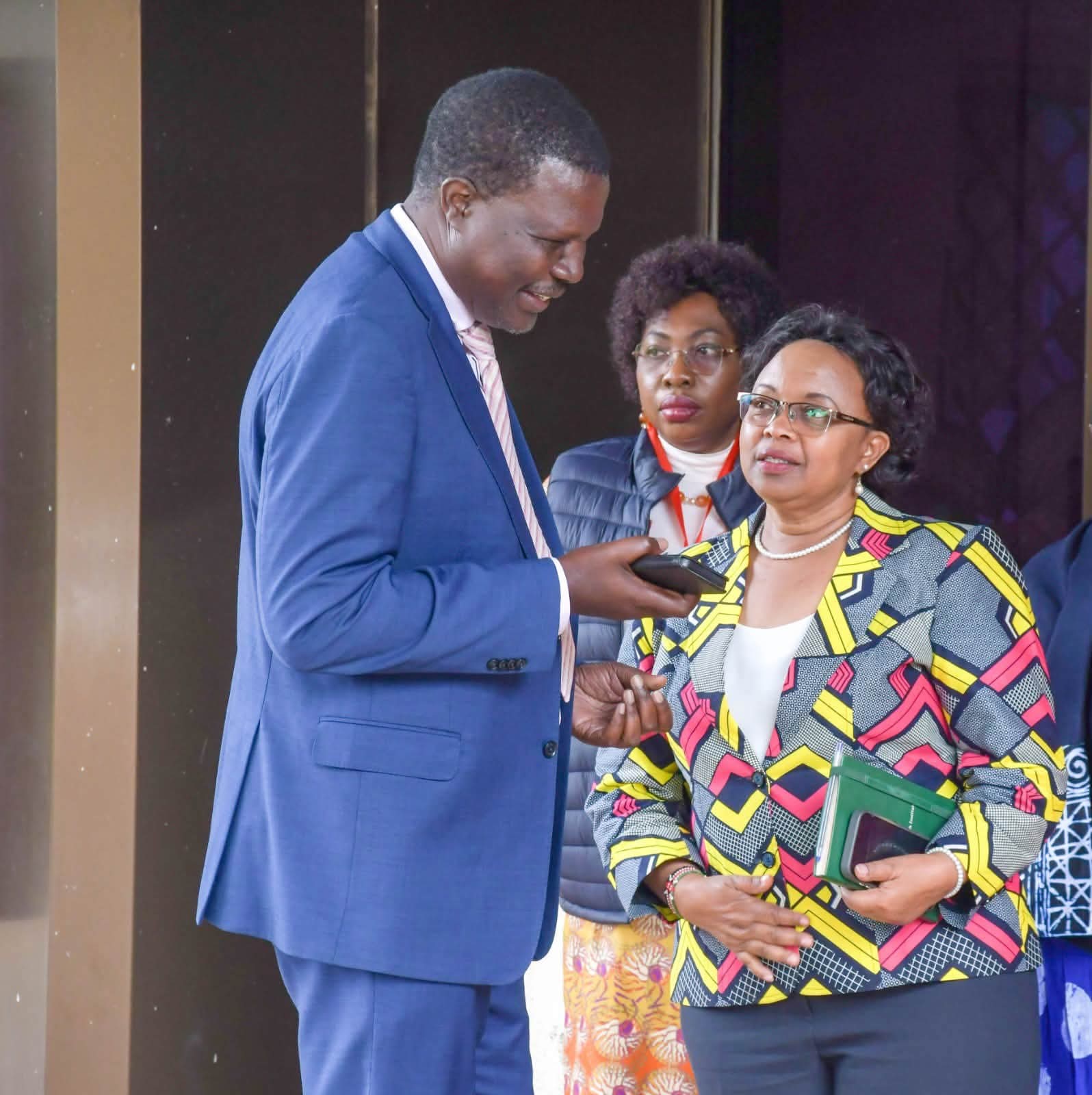
KEFRI Director General Jane Njuguna (R)
As the continent marks African Traditional Medicine Day, KEFRI’s director general is making the case that preserving indigenous trees and preserving ancestral healing knowledge are the same fight
By John Kariuki
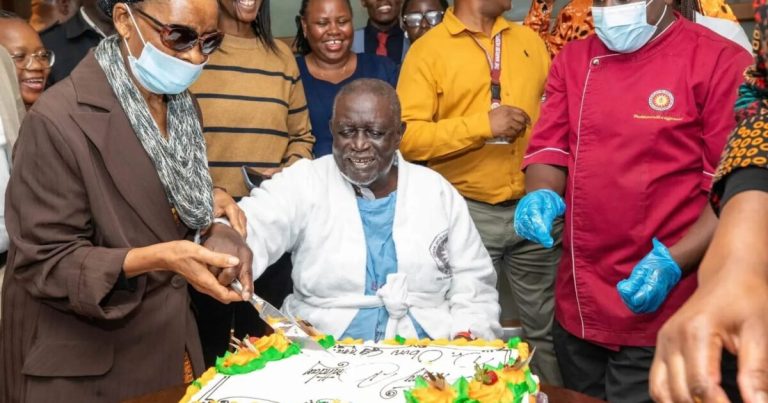
The Kenya Forestry Research Institute yesterday joined the Ministry of Health, the Kenya Medical Research Institute and a broad coalition of researchers and government officials at KEMRI’s Nairobi campus to mark African Traditional Medicine Day — an annual occasion that, under the leadership of KEFRI Director General Jane Njuguna, is becoming something more substantive than a commemorative gathering.
The event, presided over by Health Cabinet Secretary Aden Duale, brought into one room the disciplines that have too often operated in separate silos: forestry, medicine, research, public health and indigenous knowledge. The conversation they are being asked to have together is urgent, and Njuguna has been one of its most consistent advocates.
Her argument is deceptively simple but structurally important. Kenya’s forests are not merely ecological assets — they are pharmacological ones. Many of the plants that African communities have used for centuries to treat illness, manage chronic conditions and support maternal health grow among the country’s indigenous tree species and natural ecosystems. To lose those forests is therefore not only an environmental loss. It is a medical one. And to fail to study, document and protect the knowledge systems built around those plants is to allow a library accumulated over generations to disappear without a record.
“Forest conservation is not simply about protecting trees,” Njuguna has consistently argued in her work at KEFRI. “It is about safeguarding indigenous knowledge, community livelihoods, biodiversity and a rich African heritage passed down through generations.” That framing matters because it repositions conservation as a human concern rather than a purely environmental one — and in doing so, it builds a broader coalition of people who have a stake in getting it right.
KEFRI’s participation in yesterday’s commemoration was therefore not incidental. It was a deliberate statement of institutional alignment between the forestry research agenda and the health research agenda — a signal that the two institutions recognise they are working on different dimensions of the same problem. Duale acknowledged as much in his address, commending the role played by research bodies such as KEFRI and KEMRI in preserving indigenous knowledge and generating the scientific evidence needed to unlock the genuine potential of traditional medicine. That potential is considerable, and largely underexplored.
The global pharmaceutical industry has long drawn on compounds first identified in traditional medicine systems. Aspirin traces its origins to willow bark. Artemisinin, the basis of the most effective malaria treatments, was derived from a plant used in Chinese traditional medicine for centuries. African traditional medicine systems contain a comparable depth of botanical knowledge — remedies refined across generations of empirical observation, passed from healer to community, community to child, in oral and practical traditions that modern research is only beginning to take seriously.
The challenge is that those traditions are vulnerable in ways that laboratory-based knowledge is not. When an elder who holds detailed knowledge of a medicinal plant dies without passing it on, that knowledge is gone. When the forest containing that plant is cleared for agriculture or settlement, the plant may disappear with it. The window for documentation and preservation is narrowing, and institutions like KEFRI are among the few with the mandate, the scientific capacity and the community relationships to do that work systematically.
Under Njuguna’s leadership, KEFRI has positioned itself at the intersection of conservation, research, propagation and promotion of medicinal forest resources. The institute’s work in this area includes the identification and documentation of indigenous species with known or suspected medicinal value, the development of propagation techniques to ensure those species can be cultivated and sustained, and the building of research partnerships with health institutions that can provide the scientific rigour needed to move from traditional knowledge to evidence-based application.
That last piece — the bridge between traditional knowledge and scientific validation — is where the collaboration between KEFRI and institutions like KEMRI becomes most consequential. Traditional medicine is not opposed to science. It is, in many respects, the accumulated result of generations of empirical observation — people noticing what worked, refining preparations over time, and transmitting that knowledge through structured systems of apprenticeship and community practice. What it has historically lacked is the documentation and controlled study needed to meet modern regulatory standards and to be integrated into formal health systems at scale.
Building that bridge requires trust — between researchers and traditional healers, between government institutions and communities, between the global scientific mainstream and knowledge systems that have too often been dismissed rather than studied. Njuguna’s approach, which treats indigenous knowledge as a legitimate starting point for scientific inquiry rather than a curiosity to be explained away, reflects a growing consensus among researchers and policymakers that Africa cannot afford to discard what its own traditions have spent centuries developing.
The economic dimension of this conversation is also worth naming. Traditional medicine is not only a cultural or public health issue — it is a livelihood issue for millions of families across the continent who rely on medicinal plants for primary healthcare, and an economic opportunity for countries that move quickly to document, protect and develop their botanical heritage before it is appropriated or lost. Kenya, with its extraordinary biodiversity and its network of indigenous forests and botanical knowledge systems, is well positioned to be a leader in that space. KEFRI, under Njuguna’s direction, is helping lay the institutional groundwork for that leadership.
Yesterday’s commemoration at KEMRI was, in that sense, a working meeting as much as a marking of occasion — a moment for institutions with overlapping interests to reaffirm a shared commitment and to move the collaboration forward. The message that emerged was clear: protecting Kenya’s indigenous trees and forests is inseparable from protecting the healing knowledge those forests have sustained for generations.
Africa’s traditional medicine heritage is not a relic. It is a resource — one that deserves the full attention of science, policy and institutional leadership.
Njuguna is making sure KEFRI plays its part in that effort.
Similar Posts by The Mt Kenya Times:
- Diaspora Times Global Oct 17 – Oct 23, 2026
- Is social media a blessing or a curse for university students?
- Light at last: How electricity is reshaping Nandi and Uasin Gishu
- The triple squeeze: how EPRA’s fuel price hike is reshaping the survival equation for the common mwananchi
- Zelenskyy accuses Trump of rewarding Putin as Pope pleads for peace from a hospital bed
About the Author