Key Initiatives In Housing, Energy, Education And Healthcare To Boost Quality Of Life For Kenyans
 The Mt Kenya Times
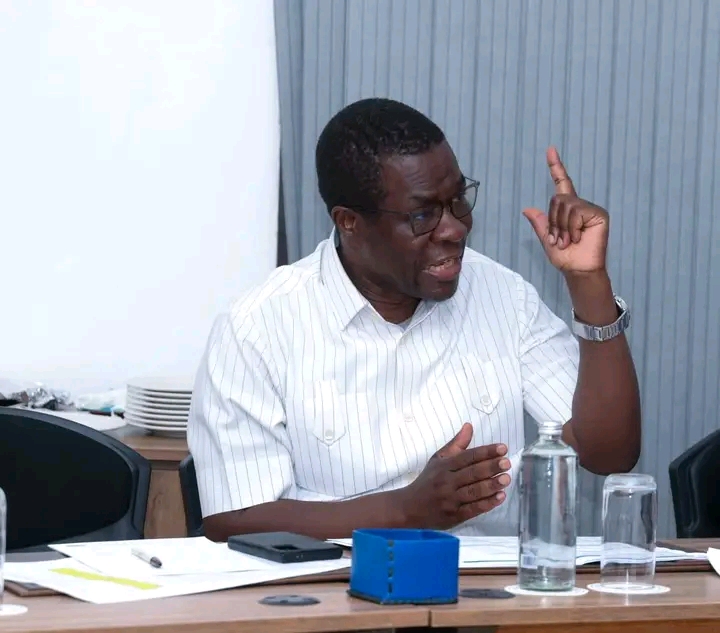
In picture ,The government spokesperson Isaac Mwaura reading a statement on the government's Development Agenda for Kenyans.
By Cynthia Masibo
Government Spokesperson Dr Isaac Mwaura has outlined the government’s renewed commitment to improving Kenyans’ quality of life through transformative programs in housing, energy, education, and healthcare.
With the overarching goal of creating an inclusive, prosperous Kenya under the Bottom-Up Economic Transformation Agenda (BETA Plan), Dr. Mwaura emphasized the administration’s dedication to fostering economic growth and social equity.
During a press briefing, he highlighted the Affordable Housing Program (AHP) as a core initiative aimed at addressing the country’s housing deficit.
Currently, 75 construction projects are underway in 37 counties, offering 124,000 affordable homes for various income levels. The program is divided into three categories—Social, Low-Cost, and Mortgage Gap Housing—allowing Kenyans earning between KSh3,200 to KSh149,999 per month to afford homeownership through the Boma Yangu platform. Over 547,000 Kenyans have already registered.
The AHP is also a catalyst for economic empowerment, with 160,000 jobs created and KSh 4.4 billion allocated to support local artisans and fabricators. This includes a substantial KSh720 million contribution to artisans under the Kibra Jua Kali Association, supporting 300 tradespeople in the production of essential housing materials like windows and doors.
“The Affordable Housing Program is not only about homes; it’s about building lives and communities,” Dr. Mwaura remarked.
In a move toward energy sustainability, the government has partnered with Adani Group Holdings to construct a 35MW geothermal power plant in Menengai, Nakuru County, aimed at bolstering energy reliability and affordability. The KSh95 billion investment, fully funded by the private sector, ensures fiscal responsibility as the government avoids accruing additional debt. The initiative is expected to drive economic growth across towns such as Nanyuki, Meru, and Nyeri, create jobs, and boost local capacity in renewable energy production and transmission.
Dr Mwaura detailed the New Higher Education Funding Model, introduced by President Ruto, as a reformed approach to financing tertiary education.
The model categorizes students into five financial need bands, offering varying levels of scholarships, loans, and household contributions. For instance, students in the highest-need category receive up to 70% of tuition as a scholarship. Additionally, upkeep allowances between KSh40,000 and KSh60,000 help cover basic expenses, enhancing student welfare and support.
Dr. Mwaura highlighted a recent case where a Dedan Kimathi University student, initially categorized in a lower funding band, successfully appealed for reassessment and received enhanced financial aid.
The Social Health Authority (SHA) is set to bolster Kenya’s healthcare infrastructure by providing accessible and affordable healthcare across urban and rural areas.
With over 13 million Kenyans enrolled, the SHA focuses on preventive, curative, and palliative care.
Employers have been urged to onboard employee data promptly to ensure consistent coverage. The government has also cleared KSh1.5 billion in outstanding payments to contracted health facilities, reinforcing healthcare reliability.
Addressing the importance of religious freedom, Dr. Mwaura reaffirmed Kenya’s commitment to safeguarding this constitutional right.
The government is working closely with religious leaders to foster mutual respect and counter misconceptions, ensuring that all Kenyans can practice their faith freely.
Similar Posts by The Mt Kenya Times:
- Nigeria Starts Making Its Own Next-Generation Malaria Nets
- Diaspora Times Global Oct 3 – Oct 9, 2026
- Kwale’s electricity push moves from grid to growth
- Linguistic Features Of Chromatonyms In English And Uzbek
- A Poem, a Universe: A poetry book gaze at Jumaniyoz Jabborov’s “Ko‘zgudagi sanam”
About the Author