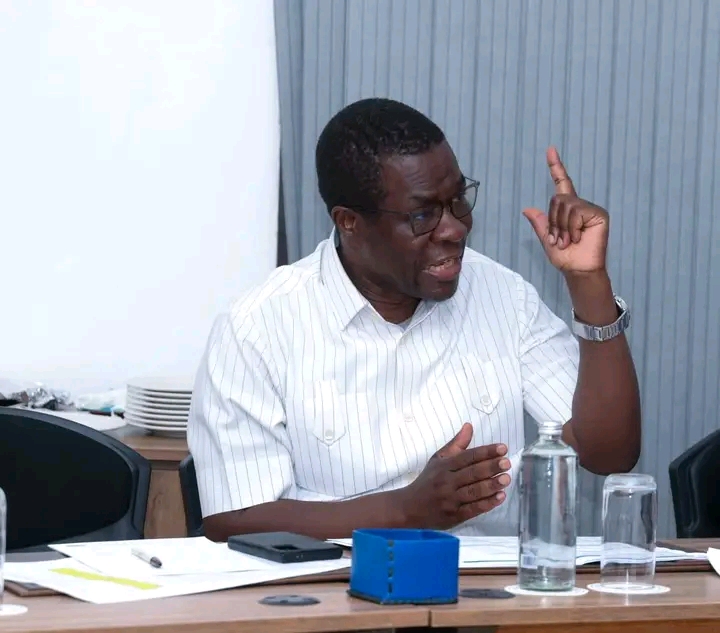
Wicknell Chivayo
What the elegies for Wicknell Chivayo left out — and why the omission matters more than the grief
By James Mwangi
When a controversial man dies suddenly, the temptation is to resolve him. To take the jagged, unfinished thing that a complicated life represents and sand it into a shape that fits a eulogy, a headline or a government decree. The tributes and reflections that have emerged in the days following Wicknell Chivayo’s death in a helicopter crash on September 30, 2026, are thoughtful in places, generous in tone and consciously balanced in their attempt to hold criticism and admiration in the same breath. But balance, when applied selectively, becomes its own distortion. What follows is not an attack on a dead man. It is an argument that the most important parts of Chivayo’s story remain unexamined, and that Africa’s tendency to let death settle arguments it never finished is one of the continent’s most persistent and costly habits.
The first gap is structural. Every account of Chivayo’s life eventually arrives at the Gwanda solar project, notes the criminal acquittal of 2023, references contractual disputes and then moves on. What none of them do is explain, in plain terms, what actually happened with the $5 million paid to Intratrek Zimbabwe in 2015 for a solar project that was not delivered on schedule, why it took years of litigation and public pressure to reach any form of resolution, and what ordinary Zimbabwean citizens lost in waiting for electricity infrastructure that was delayed. The acquittal is real and must be respected, as any honest account must state. But an acquittal in a criminal proceeding on grounds of unreasonable prosecutorial delay is not the same thing as a finding that a project was well-managed or that public money was used optimally. These are different statements. The conflation of the two, whether deliberate or lazy, leaves the public with an incomplete picture and allows a complex institutional failure to be tidied away inside a personal tribute.
The second gap concerns the nature of Chivayo’s philanthropy itself. Generosity is not always structurally neutral. When a single individual becomes the mechanism through which footballers receive salaries, churches receive support, medical bills are settled and ordinary people receive life-changing gifts, the effect on public life is worth examining independently of the giver’s intentions. Chivayo’s giving was spectacular and, for its recipients, genuinely transformative. But personalised philanthropy of this scale, particularly when the giver operates in close proximity to political power, raises questions that go beyond gratitude. Who decides who receives? What are the terms of the relationship between giver and receiver? Does large-scale personal generosity, in contexts where state institutions are weak, function as a substitute for the public services those institutions should be delivering? And does it, even inadvertently, create networks of loyalty and obligation that ultimately serve the consolidation of private and political influence rather than the diffusion of it? None of this diminishes the genuine good done for specific individuals. All of it matters enormously for understanding what Chivayo’s philanthropic model represented at a systemic level.
The third gap is the one nobody wants to write about, because it requires saying something specific about the relationship between wealth, political proximity and public contracts in Zimbabwe. The Chivayo tributes acknowledge that he was close to President Mnangagwa, that he moved in elite circles and that his business success occurred in an environment where political connections matter. They note this, mark it as a legitimate question and then decline to answer it. The result is that the reader is given the shape of a serious inquiry without any of its content. What were the specific mechanisms by which Chivayo gained access to public contracts? Were those mechanisms available to other Zimbabwean entrepreneurs, or did they depend on relationships that most people could not replicate? What does the answer to that question tell Zimbabwe about its procurement systems, its governance culture and the conditions under which its entrepreneurs operate? These are not questions about whether Chivayo was a good or bad person. They are questions about the architecture of an economy and a state. Chivayo’s life happened to sit at the intersection of several of those architectural lines, which is precisely why his story is worth examining beyond the personal.
The fourth gap is continental and the most underexplored. Chivayo was described in the immediate aftermath of his death as someone whose story reverberated across Africa, a statement that is accurate but that demands more than a passing reference. Africa has produced many Chivayos, men and women of spectacular visible success, deep political entanglement, genuine personal generosity and profound public controversy. The pattern is consistent enough to be structural rather than individual. What Africa has not yet produced, in sufficient number and with sufficient institutional backing, are the transparent procurement systems, the independent courts, the functioning anti-corruption bodies and the free press environments that would allow figures like Chivayo to be fully understood while they are alive, rather than partially mourned after they are dead. The lesson of Chivayo’s story is not about one man. It is about the conditions that produce men like him, sustain them, depend on them and then, at death, cannot agree on what they were.
The fifth and final gap is perhaps the most intimate. The tributes mention that Chivayo had children. They mention his wife. They describe a man being mourned by family. But nowhere in the public record is there a serious account of what Chivayo himself believed he was doing. Not the public performance of belief, the churches, the posted gifts, the social media theatre, but the interior logic. Did he see his philanthropy as correcting a systemic injustice he had identified? Did he view his proximity to power as a tool for accomplishing something specific beyond personal enrichment? Did he believe the visibility of his wealth was itself a statement of African possibility? Did he experience the controversy that followed him as persecution, as the inevitable price of visibility, or as something he had brought upon himself and understood? These questions matter because they are the questions that would allow us to learn something from his life rather than simply reacting to it. A tribute that tells us a man gave generously but does not ask why, that notes his controversies but does not examine their origins, and that invokes his humanity without probing what he thought his life meant is not a portrait. It is a silhouette.
Zimbabwe has chosen to honour Chivayo as a Provincial Hero. That is Zimbabwe’s sovereign right, and the decision reflects something real about the affection large numbers of people felt for him. But honouring someone and understanding them are not the same act, and the African tradition of letting the grave settle what the living could not resolve is one that a continent in the midst of an institutional development project can no longer afford. The most respectful thing that can now be done for Wicknell Chivayo’s memory is not to smooth him further. It is to finish the examination his life began and his death interrupted.
Similar Posts by The Mt Kenya Times:
- Kwale’s electricity push moves from grid to growth
- Linguistic Features Of Chromatonyms In English And Uzbek
- A Poem, a Universe: A poetry book gaze at Jumaniyoz Jabborov’s “Ko‘zgudagi sanam”
- Wicknell Chivayo: The man Africa loved, hated and never fully understood
- Kenyans abroad are sending billions home — but are they getting a bigger seat at the table?
About the Author