Kiambu school Principal denies assaulting estranged pilot husband
 The Mt Kenya Times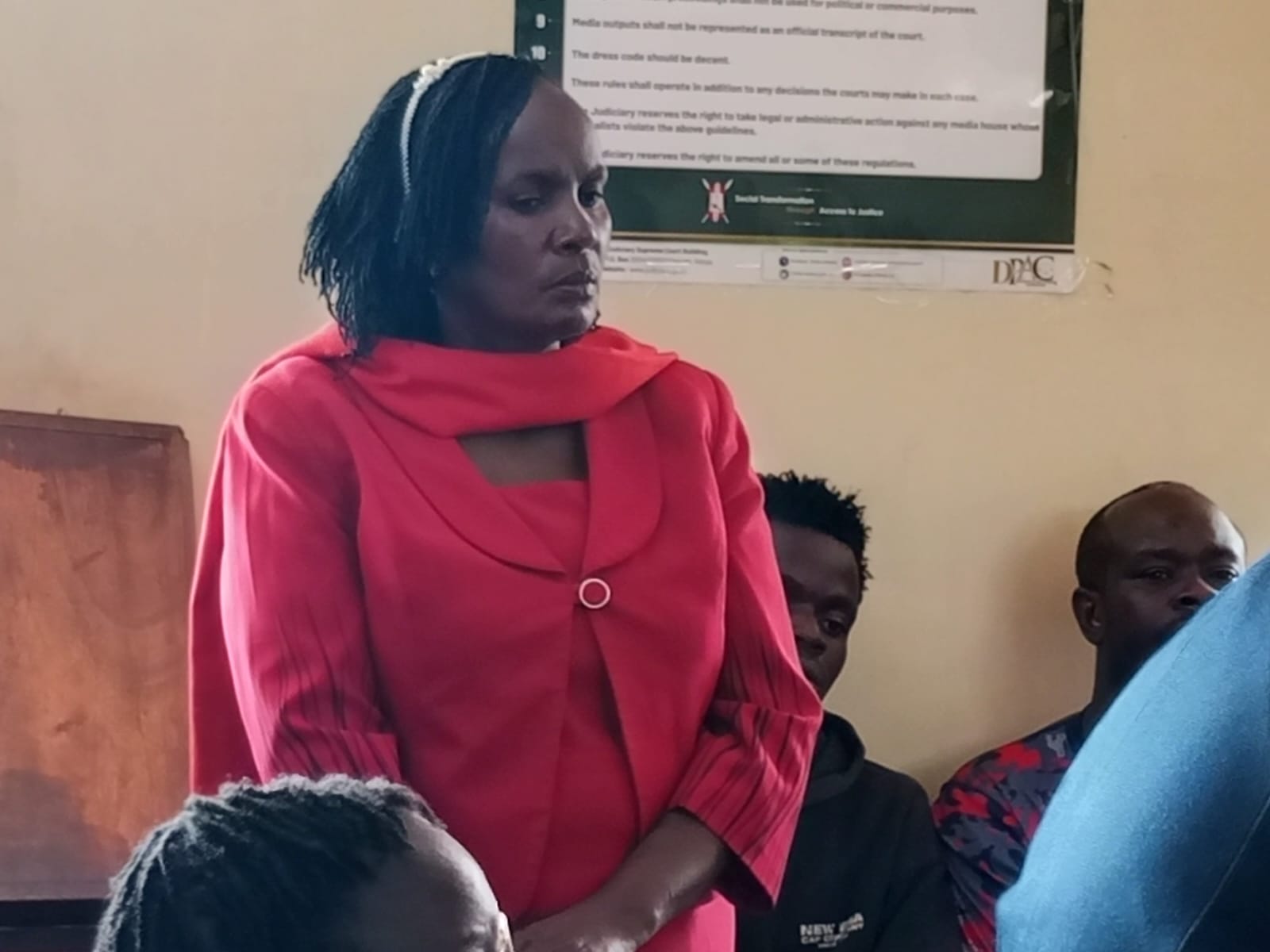
Lucy Nungari Principal St. Teresiah Preparatory School, Ngemwa in Kiambu law courts.

By Felix Njenga
The Principal of St Teresiah Preparatory School in Ngemwa, Kiambu County, has denied assaulting her estranged husband, a veteran Kenyan pilot, in a case that has exposed an ongoing domestic dispute between the two.
Lucy Nungari appeared before Kiambu Resident Magistrate Eric Muriuki and pleaded not guilty to a charge of assault causing actual bodily harm.
The complainant is her estranged husband; Patrick Waweru Mwangi.
The magistrate released Nungari on a cash bail of Sh100,000 or a surety bond of Sh200,000. The case will be mentioned for a pre-trial conference on August 6.
The plea was preceded by a legal contest after the defence sought to have the proceedings deferred, arguing that the fresh criminal case was closely linked to another matter involving the same parties that is already pending before the court.
Defence lawyer Jane Odiya told the court that her client was already involved in Kiambu Criminal Case No. 2115 of 2025, in which Waweru is the accused.
According to the defence, Waweru is facing allegations of assault causing actual bodily harm, with the alleged offence involving an incident in which Nungari was allegedly strangled.
Ms Odiya said the incident in the earlier case allegedly occurred on November 18, 2025, and questioned the timing of the fresh charges against her client, which she said were filed shortly before the earlier case was due to come up for hearing.
The defence argued that the two cases arose from the same domestic dispute and that allowing the fresh proceedings to continue without first addressing the circumstances surrounding the earlier case would amount to an abuse of the court process.
Ms Odiya also referred to protection orders that were allegedly issued in December last year, asking the court to examine the broader circumstances surrounding the two cases.
She questioned why the parties had not been charged together if the two cases were connected to the same alleged incident or transaction.
The lawyer argued that the fact that Waweru was an accused person in an existing case arising from the domestic dispute should have been taken into account before a separate prosecution was instituted against her client.
She, however, clarified that the defence was not seeking to prosecute or determine the earlier case through the present application, but wanted the court to consider the relationship between the two matters before allowing the new case to proceed.
The prosecution opposed the application, maintaining that the Office of the Director of Public Prosecutions (ODPP) had independently examined the evidence and exercised its constitutional mandate to charge Nungari.
The prosecution argued that the existence of another criminal case involving the parties did not bar the ODPP from instituting separate proceedings where investigations had established sufficient grounds for prosecution.
Lawyer Kimani Wakimaa, representing the complainant, also opposed the defence applications and asked the court to allow the plea to proceed.
Wakimaa cited the Supreme Court decision in John Lendrix Waswa v Republic, Petition No. 23 of 2019, in arguing that the complainant had a legitimate right to participate in the proceedings.
The lawyer also opposed a request by the defence seeking to restrict media coverage of the proceedings.
He argued that the case was being heard in an open court and that there was no legal justification for excluding journalists from reporting on the proceedings.
Wakimaa maintained that Nungari’s position as a school principal did not give the matter any special status that would warrant treatment different from other criminal cases before the courts.
“There is nothing special with this case,” the lawyer submitted, urging the court to allow the media to cover the proceedings in accordance with the principle of open justice.
He further argued that the domestic relationship between the accused and the complainant was known to all parties and their lawyers and could not be relied upon as a basis for stopping the criminal proceedings.
According to the complainant’s lawyer, the matter had taken time to reach court because of engagements involving the police, the ODPP and efforts to explore alternative dispute resolution.
Wakimaa argued that the ODPP is an independent constitutional office and could not be prevented from prosecuting a case merely because an advocate had written a letter questioning the decision to charge.
He asked the court to allow the plea to be taken and let the two criminal cases follow their respective legal processes.
The complainant’s legal team also opposed the bond terms sought by the accused, citing concerns about possible interference with the complainant and witnesses.
The court was told that the two parties have children together and that the accused had allegedly used the children to intimidate or threaten the complainant.
The lawyer also raised allegations of an attempt to interfere with the investigating officer, although he acknowledged that the relevant reports had not been placed before the court.
He urged the magistrate, should the accused be released on bond, to impose strict conditions preventing her from contacting or interfering with the complainant and witnesses, except through court-approved channels or alternative dispute resolution mechanisms.
In his ruling on the applications, Magistrate Muriuki rejected the request to bar the media from covering the proceedings.
The magistrate said the defence had not provided sufficient grounds to warrant restricting media access to the proceedings and had not cited any specific law that would justify such a restriction.
The court noted the constitutional principle that hearings should generally be fair and public, unless compelling legal reasons exist to limit public access.
The magistrate consequently found no basis for excluding the media from the courtroom.
On the application seeking to delay the plea, the court considered the existence of the earlier criminal case against Waweru, as well as correspondence and documents presented by the defence, prosecution and the complainant’s legal team.
The magistrate noted that the ODPP had reviewed the complaint and made an independent decision to prosecute Nungari.
The court also considered correspondence from the police and prosecution indicating that the complaint against Nungari remained active and that investigators had gathered material they considered sufficient to support the case.
Among the material cited before the court were an independent eyewitness account and P3 medical documentation.
In considering whether to defer the plea, the magistrate examined the constitutional powers vested in the ODPP under Article 157 of the Constitution.
The court noted that the Director of Public Prosecutions has the constitutional authority to institute and undertake criminal proceedings against any person before any court, without requiring the consent of another person or authority.
The magistrate further observed that the ODPP is constitutionally independent when exercising its prosecutorial mandate and is not subject to the direction or control of any person or authority.
The court held that the mere existence of another criminal case involving the parties did not automatically prevent the prosecution from filing a separate charge, provided the ODPP had independently assessed the evidence and determined that there was a sufficient factual and evidentiary basis to proceed.
The magistrate also emphasised that criminal proceedings must be anchored on a proper factual foundation and evidence capable of sustaining a prosecutable case.
After considering arguments from the defence, prosecution and the complainant’s legal representatives, the court declined to defer the proceedings and allowed the criminal process against Nungari to continue.
Nungari then formally entered a plea of not guilty to the assault charge.
The case is likely to remain under scrutiny as the two estranged spouses pursue separate criminal proceedings arising from their troubled relationship.
The court’s decision means that both matters will proceed independently through the judicial process, with the parties expected to present their respective evidence and arguments at the appropriate stages of the proceedings.
Similar Posts by The Mt Kenya Times:
- Mt Kenya Times ePAPER October 21, 2026
- Kenya confirms ninth Ebola case as outbreak remains contained within single cluster
- Musk pledges SpaceX share for every American child in 2027
- Abiy calls for deeper Kenya-Ethiopia trade partnership at Eldoret ceremony
- Kenya’s oil moment: Promise, responsibility and the long road from Turkana to market
About the Author