Kisii County Embarks to Restore Wetlands in the Face of Climate Change
 The Mt Kenya Times
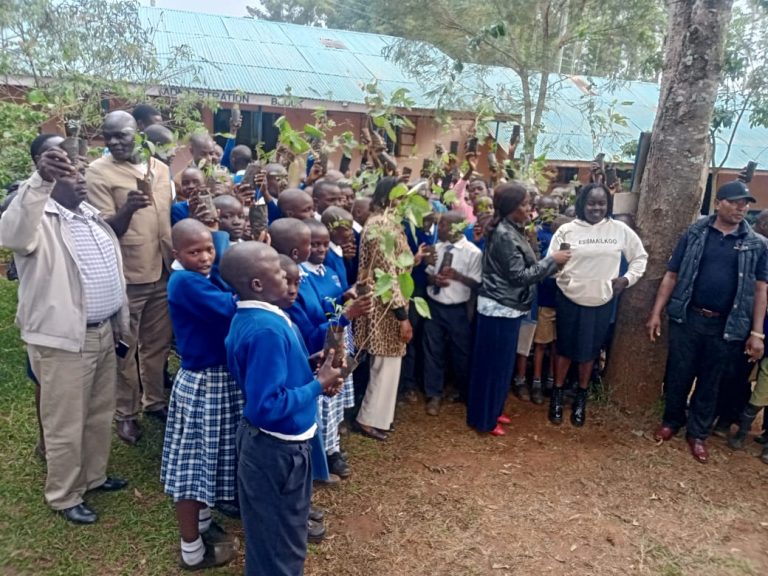
Kisii County Executive Committee Member for Environment Ronald Nyakweba, Steve Arika Ibeno Member of County Assembly during tree planting at Nyanturago Wetland photo /Elizabeth Angira
By Elizabeth Angira
Worth Noting:
- “We have reached an inflection point where we need to rethink how humans impact the environment Nyakweba said,
- Nyakweba calls on all residents to contribute to the protection and restoration of wetlands in order for the country not to suffer from any environmental challenges in the near future, particularly in the areas where wetlands are located.
- “Wetlands play a critical role and they are part of development,” he noted, adding “It is time that we restore our wetlands if we can perpetuate our existence on this earth.
- For him, many people’s livelihoods depend on wetlands and that it would be dire should the country look on for its wetlands to be destroyed by some individual developers and encroachers.
There is an urgent need to embark on restoration of wetlands to offer the critical services they provide to the environment, as well as to continue to support many livelihoods.
In Kenya wetlands cover approximately 4% of the country’s surface area, but their total area has been declining.
Kisii County has lost about 30-40 per cent of its natural wetland ecosystem
Wetlands in Kisii County includes, Nyanturago, Kiogoro, Etora, Itibo, and Mogonga.
Wetlands play a key role in water purification, flood control and also provides habitat for diverse plants and animal species.
World Wetlands Day, celebrated annually on 2 February, aims to raise global awareness about the vital role of wetlands for people and planet. The day also marks the date of the adoption of the Convention on Wetlands on 2 February 1971, in the Iranian city of Ramsar.
Nearly 90% of the world’s wetlands have been degraded since the 1700s, and we are losing wetlands three times faster than forests. Yet, wetlands are critically important ecosystems that contribute to biodiversity, climate mitigation and adaptation, freshwater availability, world economies, and more.
Speaking during the commemoration of world wetlands day at Nyanturago wetlands, Kisii County Executive Committee Member for Environment Ronald Nyakweba says that, Nyanturago Wetlands is the largest wetland which has 842 acres but has been degraded.

Environmental degradation, destructive human activities against water bodies, massive pollution, encroachment of wetlands and diversion of water for other uses such as agriculture have been pointed out as the main cause of degradation of wetlands,
The county has been replacing eucalyptus trees along riparian lands with indigenous trees as well as also demolishing illegal development along rivers Nyakomisaro, Gucha and Nyanchwa traversing along major towns.
During the event more than 1500 indigenous trees were planted to conserve the environment and increase climate resilience.
Planting of trees is to realize sustainable development and fight climate change, in line with president William Ruto‘s plan of planting 15 billion trees by 2032.
Protection of wetlands
“We have reached an inflection point where we need to rethink how humans impact the environment Nyakweba said,
Nyakweba calls on all residents to contribute to the protection and restoration of wetlands in order for the country not to suffer from any environmental challenges in the near future, particularly in the areas where wetlands are located.
“Wetlands play a critical role and they are part of development,” he noted, adding “It is time that we restore our wetlands if we can perpetuate our existence on this earth.
For him, many people’s livelihoods depend on wetlands and that it would be dire should the country look on for its wetlands to be destroyed by some individual developers and encroachers.
Nyakweba says, there is an urgent need to embark on restoration of wetlands to offer the critical services they provide to the environment, as well as to continue to support many livelihoods.
Wetlands are important natural tools that combat floods, droughts and other extreme weather events.
Plantation of indigenous trees
Steve Arika Member of County Assembly, Ibeno ward, Kisii County has mobilizes residents to plant in indigenous trees on wetlands.
Arika says that planting indigenous trees will contribute to restoration of traditional trees which have faded away leading to the young generation without knowledge of Abagusii culture.
He encourages every member of the public to plant at least ten trees per month to save and restore wetlands.
“It is urgent that we raise national and global awareness about wetlands in order to reverse their rapid loss and encourage actions to conserve and restore them,” says Arika.
World Wetlands Day is the ideal time to increase people’s understanding of these critically important ecosystems.
Kisii County Forest Conservator Wellington Ndaka planting trees is in line with realization of sustainable development and fight climate change, in line with President William Ruto’s plan of planting 15 million trees by 2032.
The conservator cited that many of the indigenous trees have been depleted, saying there is need to replenish the forest cover as well as for residents to change their attitude towards tree planting.
According to its department of forestry, the forest cover in the county is approximated at 228.4 hectares.
Measures to safeguard wetlands
Ndaka urge members of the public to plant trees shrubs and flowers that are native to the area and conserve water and avoid discharging waste in form sewage by practicing reuse and recycle.
James Maganda, Manager Kenya Commercial Bank Kisii branch, residents should adopt tree planting initiative not only in public institutions but also in their homesteads.
“We need to replenish the ecosystem through the planting of more trees because gusii has lost a lot of tree species due to deforestation,” says Maganda.
A nature-based solution
United Nations Environment Programme state that wetlands are widely seen as a nature-based solution – locally appropriate actions that address challenges such as climate change and provide biodiversity benefits by protecting, managing and restoring ecosystems.
Inland wetlands reduce floods and relieve droughts. Their flood plains, rivers, lakes and swamps function like sponges, absorbing and storing excess rainfall. During dry seasons, wetlands release stored water, to prevent droughts and minimize water shortages. They are also known as carbon sinks – as they capture large amounts of carbon dioxide from the atmosphere.
As part of its work on Sustainable Development Goal 6, the United Nations Environment Programme (UNEP) is monitoring the extent of wetlands and the pressures they are under. UNEP’s Freshwater Ecosystems Explorer provides accurate, up-to-date, high-resolution geospatial data based on earth-observations, depicting the extent of freshwater ecosystems change over time.
The theme of this year is “it’s time for wetlands restoration,” which highlights the urgent need to prioritize wetland restoration.
Similar Posts by The Mt Kenya Times:
- Education is the key to success
- From job seekers to job creators: Africa needs a new bargain between universities, governments and business
- BALLOTS, BULLETS AND THE PRICE OF A WARD
- Mt Kenya Times ePAPER October 24-25, 2026
- Muturi calls on IEBC to keep election technology tender clean and on schedule
About the Author