Mashujaa Day 2026: Let the people host the celebration, not just watch it
 The Mt Kenya Times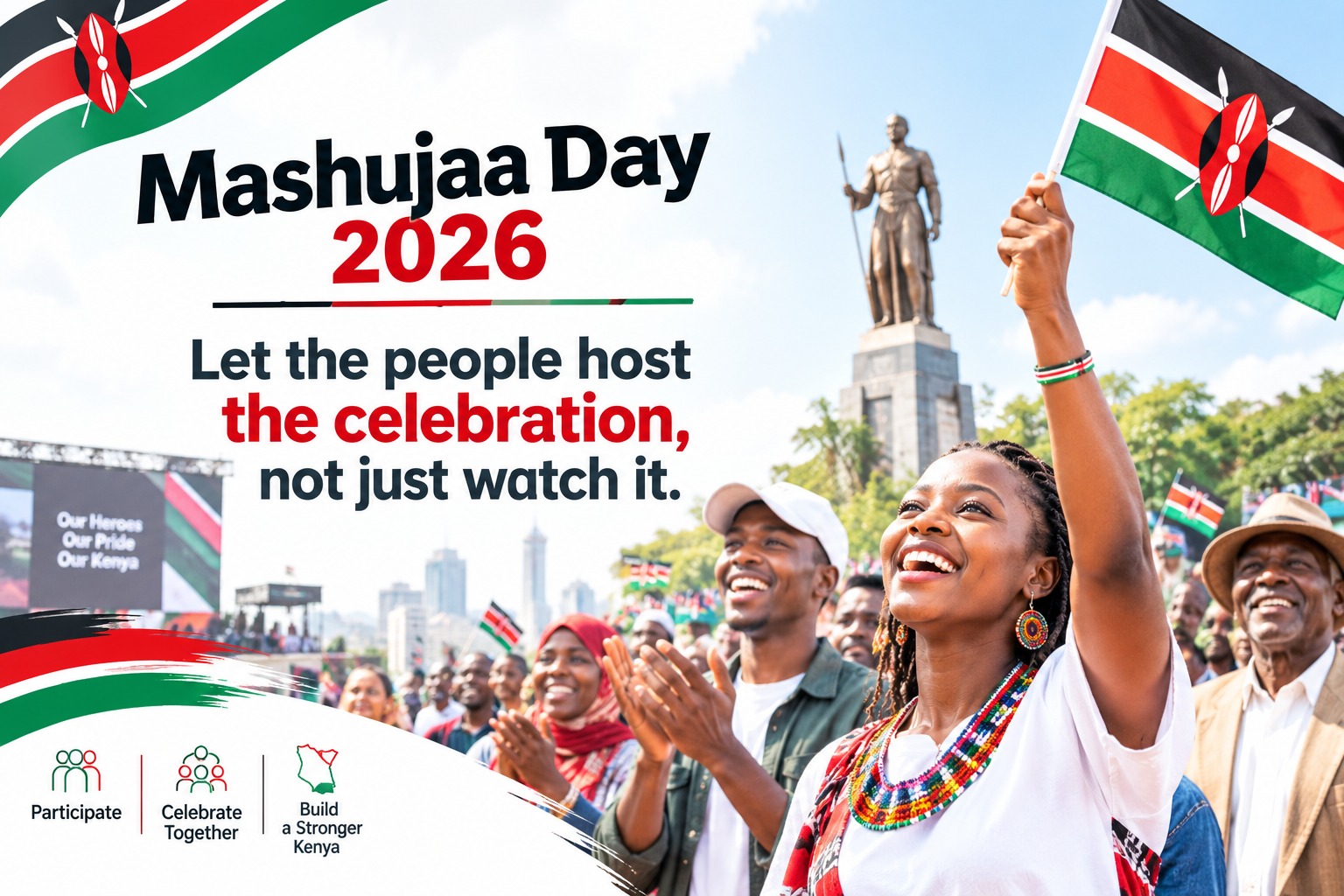
By Mr. Fredrick Kipchumba Chelimo – PWD
Email; fkipchelimo@yahoo.com
“A national celebration is truly successful when the people do not merely applaud what has been done for them, but can say: we helped build it, we participated in it, and we benefited from it.”
Mashujaa Day is a significant national holiday in Kenya, dedicated to honoring the heroes and heroines of the country who contributed greatly to the process of independence and nation-building. This day is celebrated on the 20th of October every year as a strong reminder of the sacrifices that were made by freedom fighters, community leaders, and ordinary citizens who shaped Kenya’s history.
On October 20, Kenya will turn its national gaze towards Eldoret as Uasin Gishu, Nandi and Elgeyo-Marakwet jointly host Mashujaa Day. It is an important moment for the North Rift and an opportunity to tell a national story through its people, landscapes, enterprises, sporting talent, culture, resilience and aspirations.
The Government has described the 2026 celebrations as an opportunity to showcase development progress and programmes delivering tangible benefits to citizens. The three-county hosting has also been presented as a way of promoting inclusivity and showcasing development beyond Nairobi. That ambition deserves to be taken seriously.
But there is a fundamental question that must be answered before the flags are raised and the dignitaries arrive: Are the people merely going to attend Mashujaa Day, or are they genuinely going to host it?
There is a profound difference. A people-centred national celebration cannot begin on October 20. It must begin months earlier, when plans are being formulated, committees constituted, opportunities identified, businesses contracted, infrastructure designed, cultural programmes selected, sporting activities organised and resources allocated. The citizens of the host counties should therefore not be treated as an audience waiting for a national spectacle. They should be treated as partners in creating it.
Kenya’s constitutional architecture already points in that direction. Article 10 places participation of the people, inclusiveness, equity, transparency and accountability among the national values and principles of governance. Article 174 further establishes participation, community self-governance, social and economic development and equitable sharing of resources as central objects of devolution. The courts have been even clearer: public participation should be real, meaningful and purposive, rather than a cosmetic exercise undertaken merely to satisfy a procedural requirement.
Mashujaa Day should therefore become an opportunity to demonstrate what those constitutional principles look like in practice. Participation must have an economic meaning. Thousands of visitors generate demand for accommodation, transport, food, entertainment, security, communication, logistics, construction, branding, agriculture and hospitality. Those opportunities should not evaporate from the region once the national event is over.
Local hotels should feel the difference. Local farmers should supply food. Local transport operators should carry visitors. Local artisans should sell their products. Local cultural groups should perform. Local technology providers should provide services. Local youth should find temporary and longer-term opportunities. Women-owned enterprises should access markets. Persons with disabilities should have meaningful opportunities to supply goods and services. This is where the hosting of Mashujaa Day can become more than ceremony. It can become an economic intervention.
The current programme already contains an encouraging example. A Sh63 million grassroots sporting tournament has been launched across the three counties, with competition moving from ward to sub-county and county levels. Government officials have said the initiative is intended to involve communities from the grassroots and nurture sporting talent. That principle should not stop at sport. It should be applied to procurement, culture, tourism, hospitality, transport, agriculture, technology, creative industries and enterprise development.
If government is spending public money to prepare for a national celebration, the public should be able to see the value circulating through local communities. This is particularly important for persons with disabilities. Inclusion cannot mean reserving a few seats inside Kipchoge Keino Stadium and declaring victory. It cannot mean inviting selected representatives after the important decisions have already been made. It cannot mean providing an interpreter for the ceremony while PWD-owned enterprises remain absent from the economic opportunities surrounding the event.
The Persons with Disabilities Act, 2025, recognises the entitlement of persons with disabilities to measures that accelerate equal participation in social, cultural and economic life. It also places emphasis on accessibility, reasonable accommodation, non-discrimination and participation. That means inclusion must exist before the ceremony, during the ceremony and after the ceremony.
The same principle applies to women, youth, small businesses, cultural practitioners, farmers and communities living on the margins of formal economic opportunity. There should be transparent information on opportunities. There should be clear criteria for participation. There should be accessible consultation. There should be geographical balance. There should be room for independent community voices, including voices that disagree with organisers.
A representative who cannot question an arrangement is not necessarily representing the people affected by it. And the ultimate test will not be October 20. The real test will be October 21. When the dignitaries depart, the temporary structures come down and the national cameras move elsewhere, what will remain?
Will local enterprises have gained new customers and markets? Will young people have acquired skills and networks? Will local artists have found sustainable opportunities? Will sporting facilities be more accessible? Will infrastructure serve residents long after the celebration? Will PWD entrepreneurs have entered markets from which they were previously excluded? Will an ordinary resident be able to say, without political persuasion: “Mashujaa Day changed something for me”? That is the legacy test.
The organisers still have an opportunity to get this right. The remaining preparation should deliberately widen participation rather than narrow it. Community organisations, business associations, women, youth, persons with disabilities, farmers, cultural groups, sporting organisations, transport operators and local professionals should be treated as stakeholders, not spectators.
The North Rift does not need another magnificent ceremony that leaves behind magnificent photographs and modest local benefit. It deserves a celebration whose economic footprint is as visible as its ceremonial footprint.
Mashujaa Day is ultimately about ordinary Kenyans whose courage, labour and sacrifice keep the republic moving. Hosting that day in their communities should therefore mean allowing those communities to shape it, work in it, profit fairly from it and inherit something useful from it. Let our leaderships demonstrate this, at least in Uasin Gishu.
As Kenya celebrates its heroes, the organisers should remember a simple truth: “The finest national celebration is not the one that impresses the guests most. It is the one that leaves the host people convinced that, for once, the celebration was truly theirs.”
Similar Posts by The Mt Kenya Times:
- Ebola comes to Kenya: Preparedness faces its first test
- Why waist beads are taking over campus
- Ruto’s Mt Kenya gamble: Can he win it twice?
- Samsung opens 24th experience store and first service centre in Kisii as regional market grows
- Ruto leads nation in honouring Raila at Bondo mausoleum dedication
About the Author