Mnangagwa’s pen: constitutional duty, political choice, and a national time bomb
 The Mt Kenya Times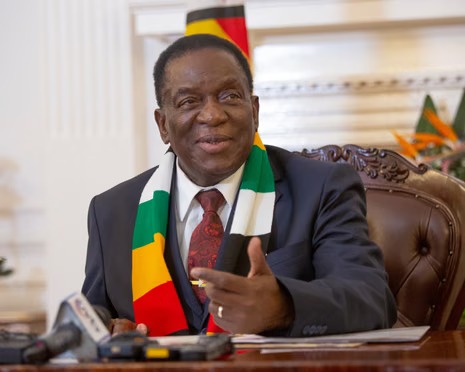
President Emmerson Mnangagwa
With Parliament’s vote done, Zimbabwe now waits on one man’s signature — and what it will mean for the country’s future
By Norman Mwale
“Assent may close Parliament’s file, but it can also open the country’s.”
With the Senate and National Assembly both having voted in support, the Constitution of Zimbabwe Amendment (No. 3) Bill now sits with President Emmerson Mnangagwa for assent or reservation. For a constitutional amendment of this nature, the path is governed by Section 328, which required a two-thirds majority in both Houses and a period of public consultation before the Bill could proceed. Now that Parliament has spoken, the President may sign it into law or refer it back with objections. In practice, however, the decision is as much a political calculation as it is a legal obligation. The country is asking one question: will the President sign, or is this Bill a time bomb waiting to detonate the moment he does?
The case for assent rests on constitutional propriety, institutional discipline and policy continuity. Zanu PF legislators argue that once Parliament has spoken, the executive’s role is to give effect to that will. “Parliament has debated, amended and voted. The President must respect that process,” said a senior Zanu PF MP on the Justice Committee. Party spokesperson Christopher Mutsvangwa has framed assent in the same terms: “We are a constitutional democracy. When both Houses agree, the President’s signature gives the law legitimacy.” Political analyst Eldred Masunungure of the University of Zimbabwe notes that this is the established norm since 2013. “Assent is the norm. To withhold it without reservation would be exceptional and would invite a constitutional standoff with Parliament.”
Pro-assent voices also point to investor and donor confidence. “Markets and donors watch how laws are concluded,” said a government official familiar with the Bill’s drafting. “A prompt signature signals that Zimbabwe can pass and implement legislation without inter-branch gridlock.” For supporters, the votes in both Houses provide sufficient democratic cover, and endorsement would close the loop on a measure they describe as necessary for governance reform and long-term policy continuity.
The case for reservation or delay is advanced by opposition MPs, civil society and commentators who argue that a parliamentary majority does not resolve substantive constitutional concerns. “Numbers in the Chamber are not the same as national consensus,” said an MDC-aligned MP. Mbizo legislator Corban Madzivanyika has consistently pressed for greater scrutiny before approval. In Parliament he stated: “It is important to understand the basic tenets around the issues before we support this initiative.” In the National Assembly Hansard of 17 February 2026 he further argued that the actions of candidates “must not prejudice the institution” without clear evidence of institutional failure — a position he has extended to constitutional amendments that risk entrenching executive power.
Civil society has warned against treating assent as automatic. “Rubber-stamping legislation because both Houses voted ‘yes’ undermines accountability,” said a coalition spokesperson. Ibbo Mandaza, director of the Southern Africa Political and Economic Series, adds the implementation risk: “Assent without genuine consultation can delegitimise the law on the ground. The question is not only whether the President can sign, but whether he should, given the concerns raised during public hearings.”
Is this a time bomb? The answer turns on what the President does next. This Bill touches constitutional architecture at its most fundamental level — presidential elections, term lengths, institutional design — and assent is virtually certain to trigger court challenges, public mobilisation and diplomatic scrutiny. The blast, if it comes, follows the signature.
The President therefore has three paths, each with a cost. Assent delivers finality, affirms parliamentary supremacy and projects decisiveness, but stores up legal and public resistance in a country where opposition to the Bill has already drawn international attention. Reservation forces Parliament back to debate and signals responsiveness to dissent, yet risks friction with the ruling party’s commanding majority. Delay creates space for legal advice and broader engagement, but can be read as indecision and invite pressure from all sides.
Ultimately, the Constitution grants authority to assent, but it also contemplates reservation where constitutional doubt exists. Whatever Mnangagwa decides, his signature — or its absence — will be read as far more than a procedural act. It will be read as a statement about how Zimbabwe balances majority rule with minority protections, party discipline with institutional checks, and legislative speed with legal prudence. As one veteran MP put it: “The vote gets the Bill to his desk. What happens next will tell Zimbabweans whether this is lawmaking — or a fuse being lit.”
Norman Mwale is a political writer and commentator based in Zimbabwe.
Similar Posts by The Mt Kenya Times:
- Olise seals France win over Belgium in Nations League thriller
- Fatuma faces Senate scrutiny in PSC commissioner bid
- Birik: Lokichar first oil on course for December
- Eng Mwangi: Dangote refinery could reshape Kenya’s industry
- Mt Kenya Times ePAPER September 29, 2026
About the Author