




By Purity Mugo
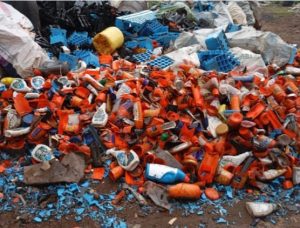
From polluting ecosystems to contributing to climate change, plastic waste continues to pose a significant threat to environmental conservation across the globe as millions of tonnes of plastic waste still end up in the environment, regardless of numerous recycling efforts.
However, an innovative initiative by a Murang’a-based engineer may offer a promising solution to this growing crisis.
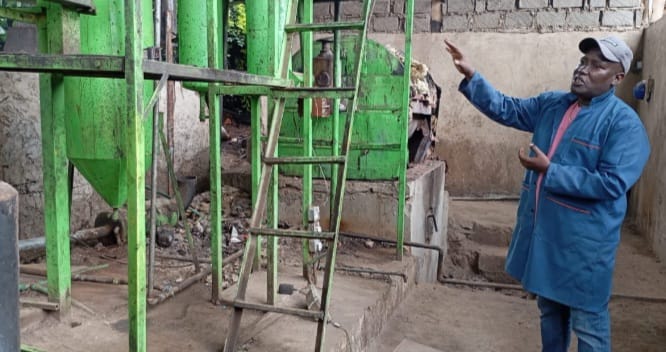
James Muritu, a software and hardware engineer by profession, has developed a groundbreaking method to convert plastic waste into fuel, specifically diesel.
His innovation, which he says took over two years of research and another 18 months of rigorous experimentation, is already gaining national recognition.
“Setting up the system was costly because I had to fund the research and build the production infrastructure myself.” Muritu explained.
“The project is capital intensive, and meeting all the compliance requirements, including the certifications, was a major challenge,” he added.
Muritu, who is based in Kenol town, Murang’a County, says he began his project during a period of surging fuel prices in Kenya, which motivated him to develop an alternative energy source.
“After fine-tuning the process of making fuel, I registered my company, Progreen, in mid-2023 and began trading in 2024 following a lengthy certification process,” he said.
Although his diesel has been certified by the Kenya Bureau of Standards (KEBS), it is currently used primarily in industrial machinery.
“I have identified a niche in the industrial sector where fuel costs are high and many manufacturers have welcomed this alternative as a cost-cutting solution,” he said.
His innovation earned him a KEBS award in 2024 for the most innovative diesel product of the year.
Currently, Muritu produces about 4,000 litres of diesel monthly, which is supplied to a major manufacturer and with additional funding, he says his plant could upscale to 50,000 litres per month, significantly boosting availability and impact.
Looking ahead, Muritu intends to expand into production of petrol; he is currently piloting petrol with 50 consumers so that once it’s fully certified, he will target the mass market, including bodaboda riders and small-scale farmers who rely on machinery.
Since launching the recycling initiative, Muritu estimates that his operation has processed over 80,000 tonnes of plastic waste, diverting it from landfills and waterways.
“When converted into a carbon rating, this amounts to 200 tonnes of carbon emissions,” he said.
“This is plastic waste that could have ended up in rivers or been burnt in open air, releasing harmful greenhouse gases. Instead, we’re converting it into something useful,” he noted.
To ensure his process is eco-friendly, Muritu has installed a gas scrubbing system that eliminates emissions from the production process, further protecting the atmosphere.
Beyond plastics, Muritu is also repurposing organic waste to produce eco-friendly heating blocks made from dried and ground bio-waste, including avocado processing residue and household organic garbage collected by local waste collectors, which he uses to power his furnace.
He uses the residue left after plastic conversion as a binding agent for the blocks.
“Currently I am using waste from an avocado processing plant which produces oil; they don’t have anywhere to dispose of it so they bring it to me,” Muritu said.
“I also get organic waste from garbage collectors which we dry, grind and mix together to make the brick,” he added.
He says he’s working to increase production and targets local tea factories, which still rely heavily on firewood, noting that the heating blocks could help reduce deforestation and promote sustainable energy use.
Muritu’s desire is to scale up the heating block production to at least 80 tonnes per month, helping factories transition away from firewood and toward cleaner alternatives.
He believes his model provides a sustainable, scalable solution for waste management not only for Murang’a but also for neighbouring counties.
“I’m currently seeking partners and investors to help expand the project to an industrial level so we can recycle waste on a larger scale,” he said.
This venture has also created employment opportunities. Muritu currently employs seven full-time factory workers and collaborates with around 20 individuals who collect plastic and organic waste for use as raw materials.
To protect his innovation, Muritu has patented his process with the Kenya Industrial Property Institute (KIPI), ensuring his idea remains exclusive and secure.
His journey exemplifies how local innovation, driven by necessity and environmental consciousness, can turn a waste problem into a sustainable, job-creating solution.


