KOPIA Trains Kiambu Pupils On Modern Farming Practices, Equip Them With Practical Agricultural Skills
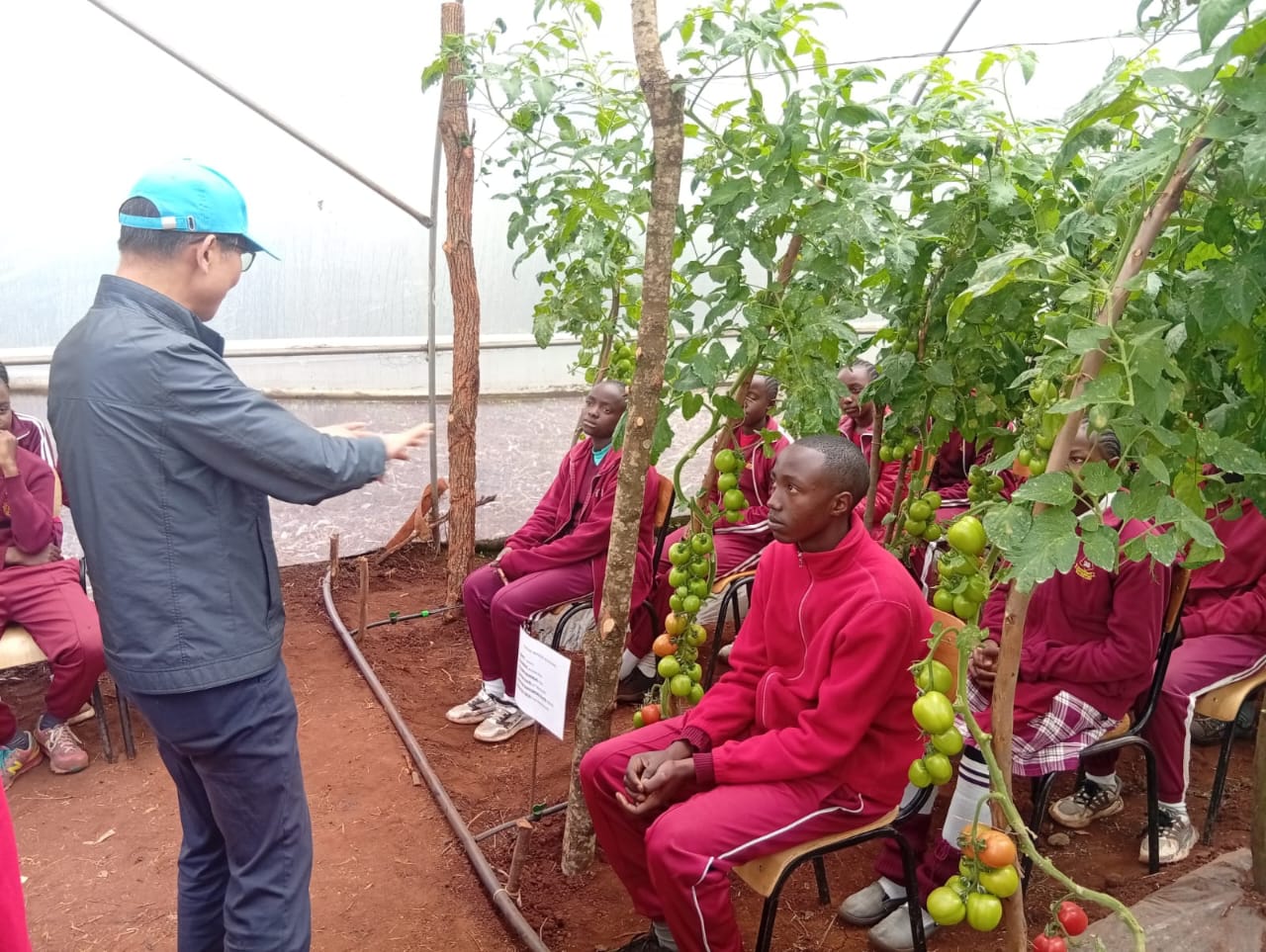
Korea Program on International Agriculture (KOPIA) Country Director Dr Ji Gang Kim while training Kandeng'wa primary school learners
By John Kamau
A multi-national lobby group has underscored the need to inculcate agricultural knowledge and skills to learners at a young age.
The Korea Program on International Agriculture (KOPIA), which has initiated diverse agriculture programmes designed to help smallholder farmers across the country, maintains that imparting hands-on agriculture skills to learners is imperative in transforming agriculture in the country.
KOPIA’s sentiments come as Kenya continues to face challenges in food insecurity, climate change and youth unemployment.
The group has already partnered with Kiandeng’wa primary school in Kikuyu constituency, Kiambu County, to train pupils on diverse farming practices as well as innovative agricultural practices in a bid to instill the vital skills and knowledge to pupils at a tender age.
The transformative move to equip learners with practical agricultural skills is also seen as a critical intervention in promoting self-sufficiency and resilience.
The initiative is aimed at enhancing agricultural literacy among young learners while promoting modern farming practices.
On Thursday, the school’s junior secondary learners were trained on tomato farming, harvesting and post-harvest management including sorting, weighing and grading.

The pupils actively participated in all aspects of tomato production from soil preparation to marketing, gaining critical knowledge and practical experience that aligns with Kenya’s Competency Based Curriculum (CBC).
The program is seen as a significant step towards addressing the country’s persistent food insecurity while also preparing learners for the evolving global job market.
Speaking during a visit to the school farm, the country Director for KOPIA, Dr. Ji Gang Kim emphasized the importance of introducing children to agriculture early.
“Our goal is not only to teach farming techniques but to instill life values such as responsibility, innovation, and self-reliance. Agriculture should not be seen as a fallback plan but as a viable, modern profession that can secure livelihoods and feed communities,” he said.
The Director averred that the learners as well as youths have a great potential to transform agriculture and help the country towards achieving food security and sustainability.
“The pupils can be agents of change in the way agriculture is done in the villages. They will get requisite knowledge and skills including latest farming technologies that will go a long way in enhancing food production,” the Director said.
Students participating in the program expressed enthusiasm about the initiative, noting that it has changed their perception of agriculture.
“Before, I thought farming was only for people who had no other option. Now I see it as a way to earn a good living and help my family and community. Today we have learnt a lot especially the best practices to deal with pests and diseases in tomato farming,” Leonel Otieno, a pupil stated
Teachers at the school also praised the initiative, noting its positive impact on student behavior and academic performance.
The teachers noted that in a country where farming still supports the livelihoods of millions, the initiative which blends education with practical agricultural experience is not just timely but essential in beating joblessness, creating income and improving the country’s wealth.
“We’ve seen improvements in discipline, teamwork, and overall classroom engagement. The learners are more focused and motivated, especially when they see the results of their hard work on the farm,” Mary Wangare, the school headteacher told journalists.
The agricultural training initiative also incorporates lessons in agribusiness, teaching learners how to manage resources, market their produce, and calculate profits — skills that are expected to serve them well beyond the classroom.
Dr. Kim called on privatet companies and development partners to support similar programs by investing in learning materials, seeds, and farming equipment. He noted that the ‘One School One Corporate’ initiative will go a long way in upscaling training and further enhancing the new curriculum’s results.
“This is an opportunity for corporations to give back to the community by supporting future farmers and agripreneurs. By working together, we can create a generation that views agriculture as a smart, profitable, and sustainable career path,” he added.
Similar Posts by The Mt Kenya Times:
- Diaspora Times Global Sep 19 – Sep 25, 2026
- Tibet’s glacial catastrophe: Behind Beijing’s wall of silence, a climate disaster reshapes a region
- Museveni says Uganda overpaid for fuel through Kenyan middlemen as new terminal breaks ground
- Court orders throw KPL season kickoff into doubt
- Can Kenyans abroad become the untapped force that transforms Kenya?
About the Author