Nairobi’s animal orphanage gets a new lease on life — and Kenya’s wildlife future may depend on it
 The Mt Kenya Times
Prof. Erustus Kanga
By John Kariuki
In a city where rush-hour traffic inches past grazing lions and morning joggers share their routes with the distant silhouettes of giraffes, Nairobi has always occupied a singular place in the global conservation imagination. Now, the Kenya Wildlife Service (KWS) is betting that a bold upgrade to one of the city’s most beloved wildlife institutions can deepen that distinction — and cement the capital’s reputation as the world’s foremost urban conservation laboratory.
At the centre of the plan is the Nairobi Animal Orphanage, a facility that has quietly performed one of conservation’s most demanding roles for decades: receiving injured, abandoned, and confiscated wildlife, nursing them back to health, and preparing them — where possible — for return to the wild. It has done this work under increasing strain, its ageing infrastructure groaning beneath the weight of rising animal rescues, swelling school visit numbers, and a public appetite for wildlife education that shows no sign of slowing.
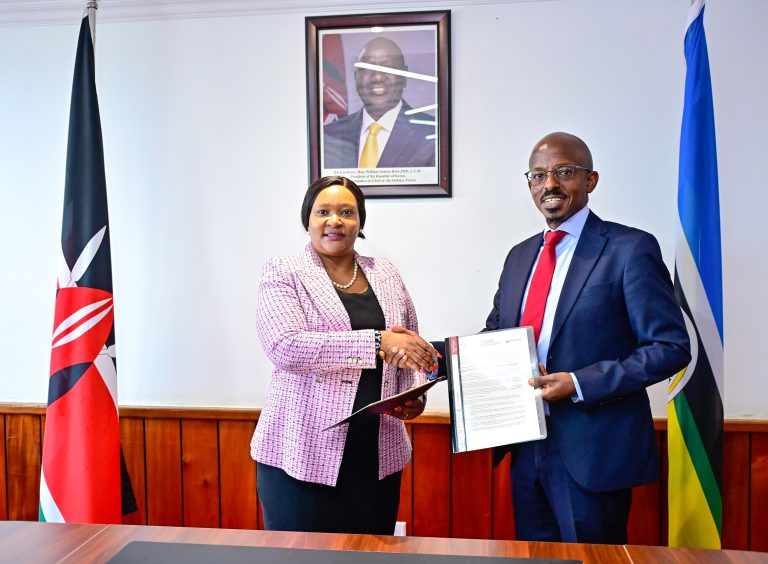
The proposal to upgrade and relocate the orphanage moved from concept to concrete commitment at a recent consultative meeting at KWS Headquarters, where Director General Prof. Erustus Kanga convened key stakeholders including the Friends of Nairobi National Park (FoNNaP) to review the master plan for the new facility. The meeting was, by all accounts, less a formality than a genuine exercise in collaborative planning — the kind of stakeholder engagement that conservation bodies more often promise than deliver.
“Sustainable conservation cannot be achieved in isolation,” Kanga told those gathered, framing the consultation not as a courtesy but as a conviction. “It thrives on meaningful dialogue, mutual respect, and a unified vision for protecting Kenya’s natural heritage.”
The proposed new site, located near the Galleria–Bomas area within a natural grassland glade inside Nairobi National Park, was selected through a multi-agency process that KWS describes as both rigorous and ecologically sensitive. Crucially, the development will not encroach on any indigenous forest within the park. The only vegetation to be cleared is a limited number of invasive eucalyptus trees already identified for removal on ecological grounds — a detail that KWS was at pains to emphasise, aware that any suggestion of forest clearance within a national park would trigger justifiable alarm among conservationists.
The distinction matters. Nairobi National Park, the world’s only national park within a capital city’s boundary, has been under sustained pressure for years — from encroaching urban development, proposed infrastructure projects, and the perennial contest between land use and wildlife habitat. The orphanage upgrade, its architects insist, is designed not to add to that pressure but to relieve it, by concentrating and improving a facility that currently operates on a footprint too small for its responsibilities.
The specifications of the proposed facility suggest an institution of an entirely different order to what currently exists. Designed to accommodate up to 20,000 visitors per day, with parking for 1,300 vehicles, the upgraded orphanage would rank among the most significant wildlife tourism assets in East Africa. It is expected to generate more than 500 jobs during construction and operation — an economic argument that, in the current fiscal climate, carries considerable weight with a government weighing conservation investments against competing national priorities.
But the case for the upgrade rests on more than visitor numbers and employment projections. At its core, the plan is driven by animal welfare. The new facility is designed to house rescued animals in significantly larger enclosures that more closely replicate natural habitat conditions, improving both their physical wellbeing and their prospects for successful reintegration into the wild. The current orphanage, built for a different era and a different scale of demand, cannot offer that. Animals that arrive traumatised and in need of gradual rehabilitation are instead confined in conditions that, however well-intentioned the staff, fall short of what modern conservation science recommends.
Education, too, is central to the vision. Nairobi’s school population — and the millions of Kenyan children who visit the city each year — represent the conservation movement’s most important long-term constituency. A modern, immersive, well-resourced learning environment at the orphanage could do more to shape attitudes towards wildlife among the next generation than any number of awareness campaigns. FoNNaP, whose membership includes educators, researchers, and committed citizens who regard the park as a communal inheritance worth defending, has long argued that investment in conservation education yields returns that are difficult to quantify but impossible to ignore.
The involvement of FoNNaP in the master plan consultations reflects a broader shift in how KWS, under Kanga’s leadership, approaches its relationship with civil society. The Service has not always had an easy relationship with community groups and advocacy organisations, some of whom have accused it in the past of treating conservation as the exclusive domain of government technocrats. The Nairobi orphanage consultations suggest a different posture — one in which stakeholder input is sought early, feedback is treated as substantive rather than ceremonial, and the final plan is expected to bear the fingerprints of those who will live alongside its consequences.
Whether that spirit of collaboration survives the transition from planning to construction will be a measure of the institution’s genuine commitment to the principles Kanga articulated in the meeting room. Conservation in Kenya has a long history of bold announcements and uneven follow-through. The political will, the technical capacity, and the financial resources to turn a master plan into a functioning world-class facility are three very different things, and the distance between them has defeated worthier projects before.
For now, though, the direction of travel is encouraging. A city that has spent decades telling the world it is unique — that nowhere else on earth can you watch lions hunt from the vantage point of a metropolitan skyline — is investing in the infrastructure to make that uniqueness sustainable, educational, and economically productive.
The lions, for their part, are not waiting for the groundbreaking.
Similar Posts by The Mt Kenya Times:
- Diaspora Times Global Oct 17 – Oct 23, 2026
- Is social media a blessing or a curse for university students?
- Light at last: How electricity is reshaping Nandi and Uasin Gishu
- The triple squeeze: how EPRA’s fuel price hike is reshaping the survival equation for the common mwananchi
- Zelenskyy accuses Trump of rewarding Putin as Pope pleads for peace from a hospital bed
About the Author