National Conference On Electoral Reforms: Kalonzo Musyoka Calls For Urgent Action Ahead Of 2027 Elections
 The Mt Kenya Times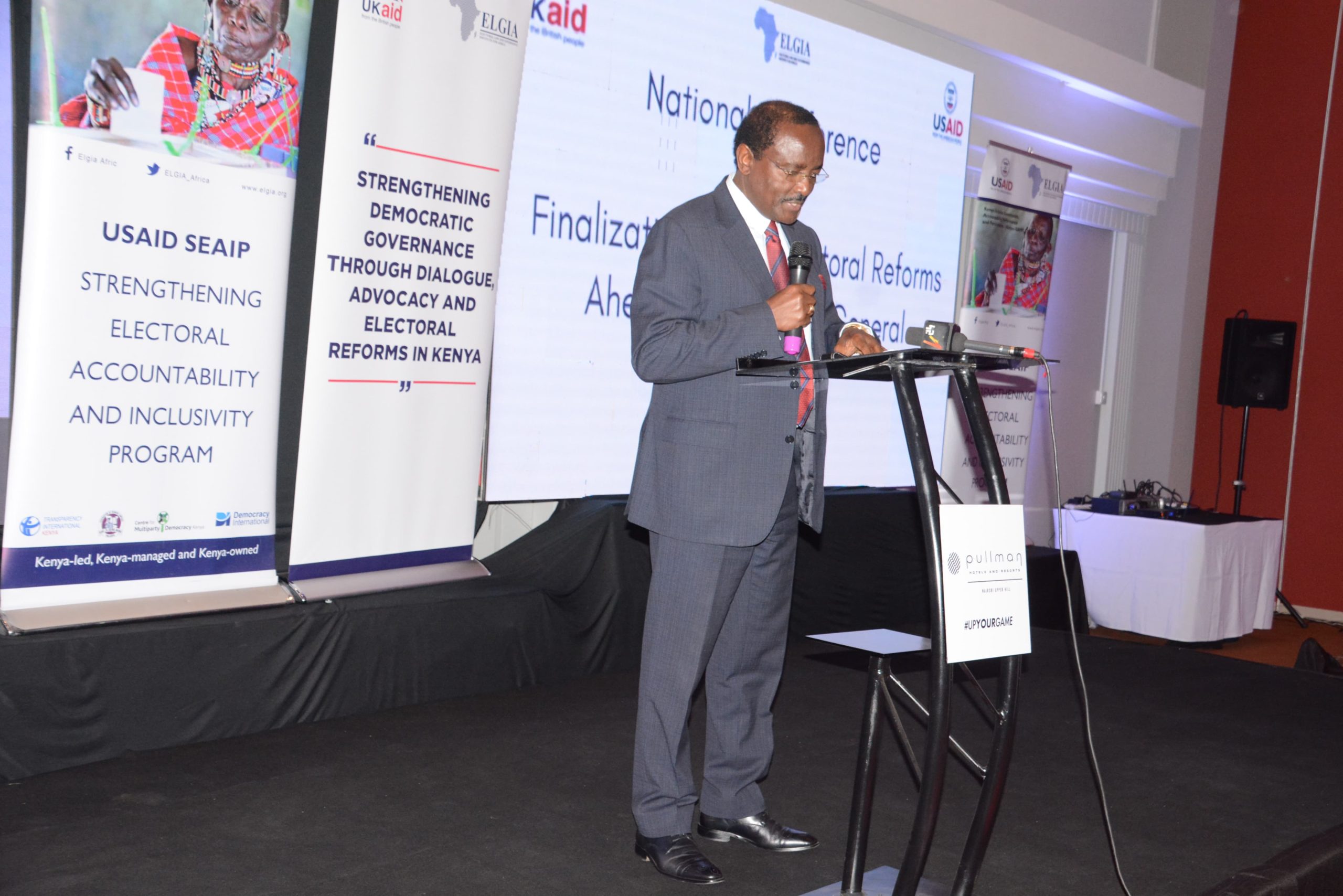
Wiper Leader Stephen Kalonzo Musyoka at the National Conference on the Finalization of the Electoral Reforms before the 2027 General Elections with IEBC Kenya and ELGIA Africa
By: Cynthia Masibo
The National Conference on Electoral Reforms was officially launched in Nairobi, setting the stage for crucial discussions on Kenya’s electoral future ahead of the 2027 General Elections.
Bringing together political leaders, civil society representatives, and electoral stakeholders, the conference kicked off with contributions from several stakeholders, including Ali Abdullahi Surraw, Deputy Registrar of Political Parties, and Mr. Marjan H. Marjan, Commission Secretary of the Independent Electoral and Boundaries Commission (IEBC).
Wiper leader Kalonzo Musyoka, who co-chaired the National Dialogue Committee (NADCO), emphasized the significance of electoral reforms, stating, “This conference is more than another political gathering; it marks a watershed moment in our path to enhance democracy and ensure the people’s will is honoured via a transparent and legitimate election process.”
During his speech, Musyoka underscored the critical role of the Electoral Law and Governance Institute for Africa (ELGIA) in advancing Kenya’s electoral reforms.
He lauded their efforts in advocating for increased transparency and strengthening election standards.
“As we prepare for the 2027 General Elections,” Musyoka noted, “ELGIA will continue to play an important role in maintaining the integrity of our electoral process.”
Musyoka further detailed the findings of the NADCO report, which he co-led, explaining that one of its central recommendations was the reconstitution and restructuring of the IEBC. He criticized the delay in reconstituting the electoral body, citing how the lack of commissioners had hindered essential operations such as border delimitation and the handling of by-elections. He pointed to the urgent need for political goodwill to address the institutional roadblocks delaying the reforms.
The former Vice President also drew attention to constituencies and wards left without representation due to deaths and appointments, stressing how delays in reconstituting the IEBC continue to deny citizens their rightful representation.
He highlighted specific cases such as Banisa Constituency and Kisa East Ward, which have been without a Member of Parliament and a Member of the County Assembly (MCA), respectively.
On the topic of inclusivity, Musyoka strongly advocated for greater participation of women, youth, and people with disabilities in the electoral process. He remarked that women, in particular, remain underrepresented in elective positions despite making up the majority of Kenya’s population.
Musyoka stressed the need for measures to improve women’s participation and leadership as part of the ongoing electoral reforms.
Technological reforms were also a major point in his speech, with Musyoka emphasizing the need for secure, transparent, and tamper-proof systems in future elections. He called for a comprehensive audit of Kenya’s electronic voting system to restore public trust in the voting process.
In conclusion, Musyoka urged political leaders, civil society, and government bodies to work collectively towards implementing the NADCO recommendations.
Similar Posts by The Mt Kenya Times:
- Mt Kenya Times ePAPER October 24-25, 2026
- Muturi calls on IEBC to keep election technology tender clean and on schedule
- Ruto meets UAE minister in push to deepen trade ties
- Gideon Moi breaks silence on Ruto fallout, cites broken promises
- The doctor who refused to abandon a sick Uganda
About the Author