The Mt Kenya Times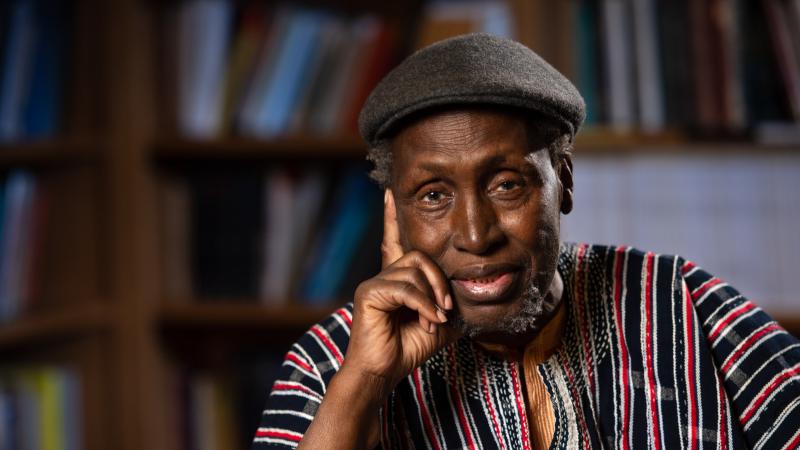
Ngugi Wa Thiong'o
By: Midmark Onsongo
Worth Noting:
- I find it both fascinating and perplexing. It is as though the oilskin that was once kept strictly within the house is now being freely shared with strangers. These leaders, with their platform and influence, are no longer keeping the “magic” and rituals of the mountain within.
- Instead, they are laying it bare for all to see, perhaps believing that transparency and openness will lead to greater power or influence. But I can’t help but wonder if they’ve forgotten the wisdom encapsulated in the phrase “Kagutui ka Mucii gaithakagwo Ageni.”
- In their bid to remain relevant or to gain political favor, have they lost sight of the importance of guarding the very essence of their community?
In The River Between by Ngũgĩ wa Thiong’o, the depicted scene speaks volumes about the intricate and secretive nature of the communities residing in the hills and ridges of Mount Kenya. These geographical formations were not just physical landmarks but symbolized the very essence of the tribes’ identity and culture. Ngũgĩ illustrates how the people of these hills maintained a strong bond within their community, safeguarding their traditions and rituals from the prying eyes of outsiders. The passage emphasizes that these communities shared laughter, blood, and warmth amongst themselves, but they were equally adept at keeping their secrets hidden from those who did not belong.
The phrase “Kagutui ka Mucii gaithakagwo Ageni”—meaning “the oilskin of the house is not for rubbing into the skin of strangers”—serves as a powerful metaphor for this guarded nature. It reflects a deep-seated belief that certain aspects of their culture and knowledge were sacred and meant to remain within the tribe. To outsiders, they appeared silent and unyielding,
revealing nothing of their inner workings or the “magic and rituals” that were central to their way of life.
This guardedness can be seen as a double-edged sword. On one hand, it protected the community from external influences that could dilute or corrupt their traditions. On the other hand, it may have also isolated them, creating a barrier between themselves and potential allies or broader understanding. Ngũgĩ seems to be suggesting that this insularity, while preserving the community’s essence, may also lead to their vulnerability. By keeping their knowledge and strengths confined within, they may have inadvertently limited their capacity to engage with the outside world effectively, leading to their eventual defeat despite their significant numbers.
But what are we seeing today? The leaders from the mountain, like Moses Kuria, Kimani Ichung’wa, and Ndindi Nyoro, seem to be spilling out these once-guarded secrets to the valley. They have, perhaps unwittingly, become the conduits through which the deep-seated traditions and strengths of the people of Mount Kenya are being exposed. The same principles that once bound the community tightly together are now being unraveled, not by outsiders, but by the very leaders entrusted with the guardianship of these secrets.
I find it both fascinating and perplexing. It is as though the oilskin that was once kept strictly within the house is now being freely shared with strangers. These leaders, with their platform and influence, are no longer keeping the “magic” and rituals of the mountain within. Instead, they are laying it bare for all to see, perhaps believing that transparency and openness will lead to greater power or influence. But I can’t help but wonder if they’ve forgotten the wisdom encapsulated in the phrase “Kagutui ka Mucii gaithakagwo Ageni.”
In their bid to remain relevant or to gain political favor, have they lost sight of the importance of guarding the very essence of their community? The valley, once a distant and perhaps even indifferent observer, now has access to the very strategies, vulnerabilities, and internal dynamics that were meant to be kept within the mountain’s fold. It’s as if the ancient hills and ridges, once the bastion of secrecy and power, are slowly being eroded, not by natural forces, but by the very people who were meant to protect them.
As I watch this unfold, I can’t help but draw parallels to Ngũgĩ wa Thiong’o’s narrative. He might have foreseen this very scenario, where the internal cohesion that once made the mountain people strong is being compromised from within. What does this mean for the future of Mount Kenya’s political influence? Will the spilling of these secrets lead to a new form of power, or will it signal the beginning of a decline that was once unthinkable?
Ngũgĩ wa Thiong’o’s wisdom is once again reflected in his words: “They became strangers to the hills. Thereafter, the oilskin of the house was not for them.” This is a chilling reminder of what happens when the guardians of a community’s secrets betray their trust. Those who once belonged to the inner sanctum of the mountain, who were privy to its mysteries and strengths, find themselves alienated. They become strangers to the hills they once called home, no longer entitled to the protection and unity that these sacred places provided.
Ngũgĩ insists that the oilskin of the house, the very fabric that held the community together, is reserved for those who remain within the bounds of trust. When leaders like Moses Kuria, Kimani Ichung’wa, and Ndindi Nyoro step beyond these boundaries, revealing what was once hidden, they risk becoming outsiders in the very community they sought to represent. The passage poignantly describes how the trees, the birds, and the beasts—symbolic of the natural world that once resonated with the language of the people—now listen in silence. The hills no longer echo with the familiar sounds of unity and strength, but instead with the eerie quiet of secrets lost and trust broken.
Ngũgĩ’s narrative suggests that by forsaking the unity of the mountain and spilling its secrets, these leaders may find themselves disconnected from the very source of their power. The joyful applause or angry roar that once greeted them may turn to silence, or worse, to a response of indifference or rejection. The hills, with their deep-rooted wisdom, may no longer speak to them, and the language they once knew may become foreign.
In this light, Ngũgĩ’s words serve as a powerful warning. The consequences of betraying one’s community are severe, and those who do so may find themselves lost, without the support of the very people they were supposed to lead. The secrets of the mountain are not just words or rituals; they are the lifeblood of the community, and once spilled, they cannot be gathered back. Ngũgĩ’s narrative is a testament to the enduring truth that leadership comes with the responsibility to protect, not to expose.
We all know that Ngũgĩ wa Thiong’o was a Kikuyu patriot, a deep lover of his culture and people, as vividly portrayed in his writing. His stories are not just fictional tales but reflections of the very fabric of society, echoing the truths and values that have shaped the Kikuyu community for generations. Ngũgĩ’s portrayal of the guarded secrets of the mountain is not just a literary device; it is a window into the soul of a culture that has long understood the importance of unity and the dangers of betrayal.
In Kikuyu culture, as in many African traditions, the community is paramount. The secrets and rituals passed down through generations are more than just traditions; they are the essence of identity, the glue that holds the people together. When Ngũgĩ writes about those who become strangers to the hills, he is speaking to a very real fear—a fear that once the bonds of trust are broken, there is no going back. The community that once embraced you may no longer recognize you as one of their own.
Literature, as Ngũgĩ has shown us, is not just an art form; it is a mirror of society. It reflects the values, the struggles, and the consequences of our actions. When leaders betray their community by revealing its inner workings to outsiders, they are not just breaking a trust; they are tearing at the very fabric of their identity. This is what happens in the culture, and Ngũgĩ, through his writing, captures this reality with a clarity that resonates deeply with those who understand the weight of such betrayal.
In essence, Ngũgĩ’s work reminds us that literature is real—it is rooted in the lived experiences of the people, and it carries the wisdom of generations. The stories he tells are not just about the past; they are a warning for the present and the future, a reminder that the choices we make today will shape the destiny of our communities for years to come.
This article was scripted by; MIDMARK ONSONGO
(Sustainability economist, Geo-Politics strategizer)
Similar Posts by The Mt Kenya Times:
- Diaspora Times Global Sep 26 – Oct 2, 2026
- RS South Africa supports next-generation edge AI with NVIDIA Jetson Orin Nano 2
- AFRICLOUD opens Lagos region and local-currency payments across African markets
- Fine Spinners targets Kenya’s US apparel supply chain with $5m investment
- Nuclear energy debate must begin with public trust and shared responsibility
About the Author