No more new fossil fuels in East Africa, religious leaders declare
 The Mt Kenya Times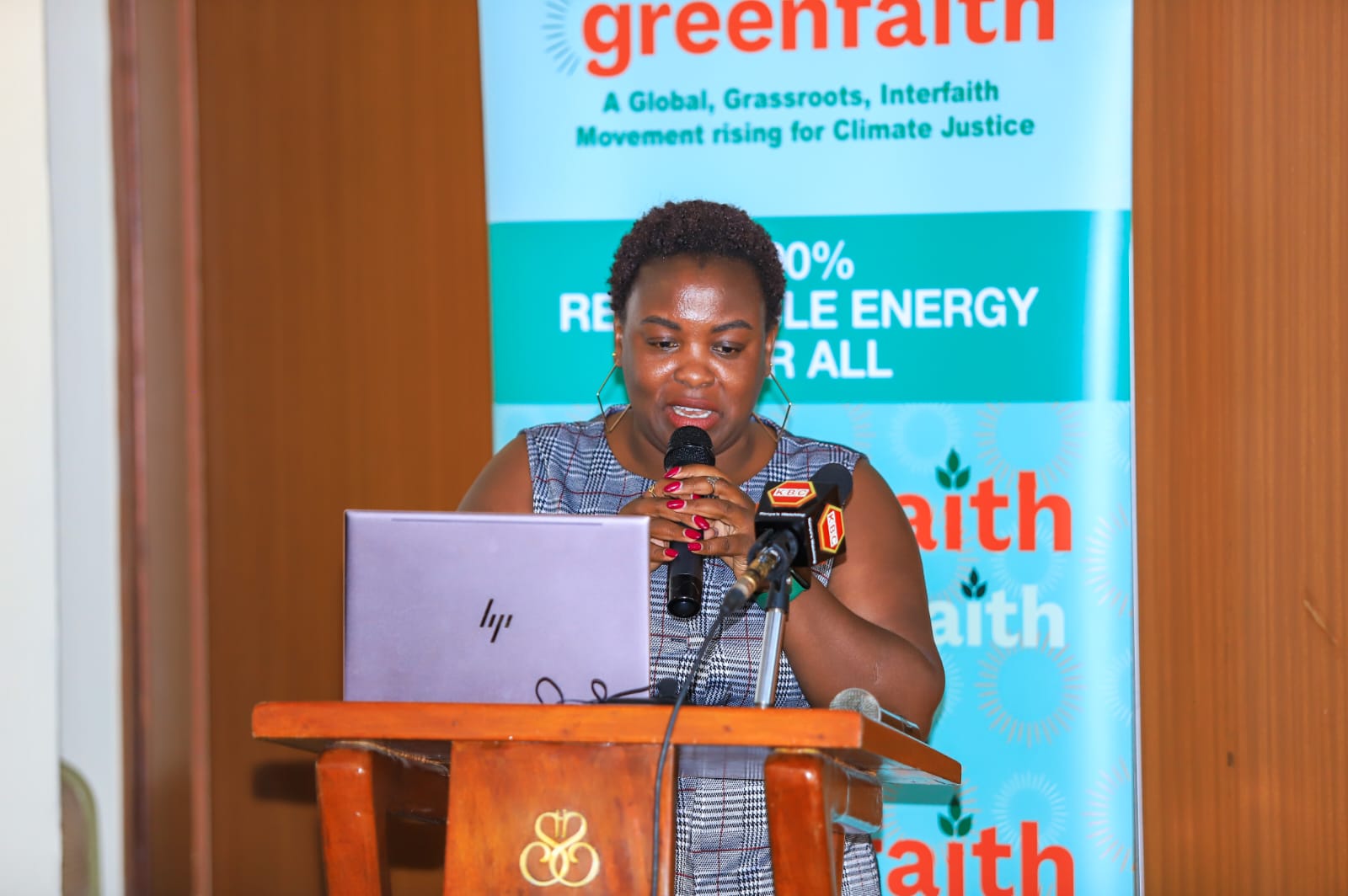
Meryne Warah Global program codinator Green Faith
By Elizabeth Angira
Worth Noting:
- Sheikh Lithome said faith and religious leaders, as custodians of Earth’s user manual given by the Creator, should lead in the capacity building and reminding governments and all on the need to keep the environment cleaner and safer
- Omar Elmawi, the Muslims for Human Rights Executive Director, condemned deliberate misuse of Earth’s resources as well as taking advantage of Africa’s desire to industrialize as a justification for introducing new fossil fuel projects in the continent.
- He condemned EACOP, which projects to transport crude oil drilled in Uganda to Tanzania’s Tanga port over 1,445km on a heated pipeline.
- The faith leaders called on African governments to do due diligence before engaging in deals that will cause more harm than good to the continent’s people and biodiversity.

Faith leaders condemn EACOP, demand faster universal access to clean energy
Religious leaders have called for a faster universal access to renewable energy, but one that does not lead to destruction of the environment or cause harm to the people who occupy it.
At the same time, the clerics urged African governments to reject any efforts by the Global North nations and firms to introduce new fossil fuel projects such as the East African Crude Oil Pipeline (EACOP) in the continent when the rest of the world is phasing out such.
The tens of clerics and religious leaders representing different faiths, including Hindu, Muslim and different Christian denominations, spoke at the “Religious Leaders Roundtable on (EACOP)” event organized by Green Faith in Nairobi today.
Despite their diverse beliefs and doctrines, the clerics were united in calls for faster but just transition to renewable energy and phasing out fossil fuel projects in Africa.
“There is no justification for allowing new fossil fuel projects, when the alternative more renewable energy sources have not been exploited. We must instill proper and sustainable use of Earth’s resources without hurting its occupants. This way we will be fulfilling the Earth’s stewardship role assigned to us by the Creator,” said Sheikh Ibrahim Lithome of the Interreligious Council of Kenya, who gave the keynote speech.
Sheikh Lithome said faith and religious leaders, as custodians of Earth’s user manual given by the Creator, should lead in the capacity building and reminding governments and all on the need to keep the environment cleaner and safer
Omar Elmawi, the Muslims for Human Rights Executive Director, condemned deliberate misuse of Earth’s resources as well as taking advantage of Africa’s desire to industrialize as a justification for introducing new fossil fuel projects in the continent.
He condemned EACOP, which projects to transport crude oil drilled in Uganda to Tanzania’s Tanga port over 1,445km on a heated pipeline.
The faith leaders called on African governments to do due diligence before engaging in deals that will cause more harm than good to the continent’s people and biodiversity.
“We must not accept anything that will adulterate the earth in the name of helping Africa to develop,” said Pastor Sam Kaloki of Gospel confirmation Centre.
The meeting was held with a view to add voices to calls for signing of the global Fossil Fuels Non-Proliferation Treaty (FFNPT), even as the world’s focus shifts to COP27 in Egypt in November.
Economic and Ecological Justice Programme Executive Director Dr Tinashe Gumbo said: “As we go to COP27, it is all about Justice. We, as faith leaders, believe in Justice. We must push those behind injustices causing the climate crisis to pay. The politics must be put aside, because we must live,” he said.
The clerics urged governments and faith leaders to acknowledge the need for a faster but just transition to renewable energy, need for green jobs, and end to new fossil fuel projects as well as immediate end to deforestation.
Pastor Timothy Ghuto of the Seventh Day Adventist Church said time had come for religious leaders to guide thoughts and lead actions to save the environment, as stewards of what God gave to man.
Sabina Ng’ang’a from Kenya Women of Faith Network said: “Women support calls against any person that destroys the environment.
For Collins Otieno of Dorcas Aid, it was a time to reflect on the loss and damage, and what faiths could do. “We must look at local examples and be honest about the urgency of action needed to save lives.
Meryne Warah asked: “Oil projects such as EACOP happen where indigenous communities and usually very poor people live. But why should such a project be militarized? Who needs security between the people and resources? Africa needs to develop, but must this happen at the expense of our people, social fabrics, heritage, health or wellbeing?”
Sheikh Lithome said time had come to remind the global and local leaders of their moral duty to treat the Earth and the creatures in it as sacred as they are meant to be.
“It is true that Africa needs to develop, just like the global north has. But two wrongs don’t make a right. God gave us a manual for a clean earth, showing what to do with it. We have the responsibility to provide guidance to fellow human beings on how to take care of the Earth. He gave us the earth clean. We should leave it clean,” he said.
Similar Posts by The Mt Kenya Times:
- Mt Kenya Times ePAPER September 19-20, 2026
- Kenya joins US and UK to put citizens on the terrorism frontline
- Kenya’s parliament races to tame the AI frontier
- Kalonzo calls Ruto to order over Uhuru attacks
- Gachagua takes his 2027 campaign to America
About the Author