Ol Kalou was more than a by-election. It was a national wake-up call
 The Mt Kenya Times
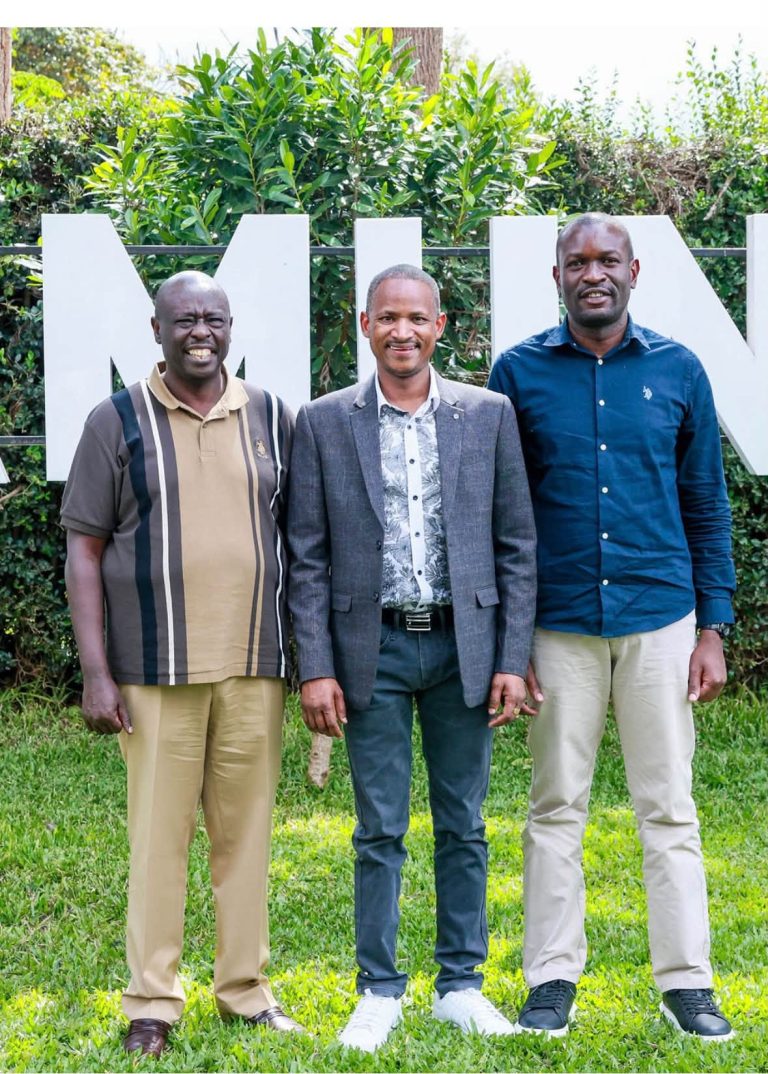
DCP leader Rigathi Gachagua and Sammy Douglas Kamau Waweru Ol Kalou MP
By Prof. Gitile Naituli
Politics has its moments of symbolism. Then there are moments that fundamentally alter the national conversation. The Ol Kalou parliamentary by-election belongs to the latter category.
The opposition candidate, Sammy Kamau Ngotho of the Democracy for Citizens Party (DCP), secured approximately 85 per cent of the vote, while the ruling United Democratic Alliance (UDA) managed only about 13 per cent.
That is not an ordinary electoral loss. It is a political statement. It is the kind of result that forces every government to stop, reflect and honestly ask whether it is still listening to its citizens.
For weeks, Ol Kalou became the centre of national politics. Senior government officials, Cabinet Secretaries, Members of Parliament and party leaders campaigned vigorously for the ruling party’s candidate. Government development projects featured prominently in campaign speeches. Public reports also described the distribution of various items during the campaign, while opposition leaders alleged that public resources were being deployed to influence the outcome. Those allegations should continue to be addressed through the institutions established under the Constitution.
Yet when polling day arrived, none of that proved sufficient. The voters had the final word. The scale of the defeat matters as much as the defeat itself. An 85 per cent to 13 per cent result against a ruling party is not simply a rejection of a candidate. It suggests a profound disconnect between those in power and a significant portion of the electorate in that constituency.
The lesson extends far beyond Ol Kalou. Governments often assume that incumbency is an advantage. It certainly provides visibility, resources and the opportunity to showcase achievements. But democratic legitimacy cannot be manufactured through state power alone. It must continually be renewed through public confidence.
The ballot box remains the one place where every Kenyan stands equal. Inside the polling booth, there are no Cabinet Secretaries, no governors, no billionaires and no ordinary wananchi. There are only citizens exercising one vote each. That is democracy at its purest. For many Kenyans, the concerns driving political opinion today are remarkably consistent.
The cost of living continues to dominate household conversations. Workers watch their disposable income shrink as living expenses rise. Parents struggle to pay school fees. Small businesses speak of declining purchasing power. Manufacturers continue to raise concerns about production costs. Farmers seek better returns for their labour. Young graduates leave universities and colleges only to encounter an economy unable to provide sufficient employment opportunities. Hospitals continue to face challenges in delivering quality healthcare to all citizens.
These are not abstract policy debates. They are lived realities. Governments are ultimately judged not by the elegance of their manifestos but by whether citizens experience meaningful improvement in their daily lives.
That is why reducing every political contest to personalities or ethnic arithmetic risks missing the central issue. The economy remains the defining political question of our time.
History shows that electorates can be remarkably patient. They understand that governing is difficult and that complex economic problems require time to solve. What they rarely forgive, however, is the perception that their struggles are being ignored or minimised.
Ol Kalou also delivered another important democratic lesson. Kenyan voters are far more politically independent than many politicians assume.
Campaigns may feature promises, rallies, endorsements and the distribution of lawful campaign materials or gifts. Yet once voters enter the polling booth, they exercise independent judgment. The secrecy of the ballot remains one of the greatest protections of democratic freedom.
That reality should humble every political party. No government should assume victory because it controls the instruments of the state. No opposition should assume victory merely because citizens are dissatisfied. Ultimately, elections are won by earning public trust.
The broader significance of Ol Kalou lies in what it may signal for 2027. By-elections do not automatically predict general election outcomes. National elections involve different issues, different turnout patterns and a much broader electorate.
However, they often serve as early warning systems. Wise governments pay attention to such warnings. They ask difficult questions. What message are citizens sending? What needs to change? Which policies require urgent review? How can public confidence be restored? Ignoring those questions has rarely served governments well.
Above all, however, we must remember what is truly at stake. We owe it to the next generation. A nation is not inherited by accident; it is preserved by the courage of those willing to defend it when it matters most.
That courage is demonstrated not through violence or intimidation but through peaceful democratic participation, constitutional fidelity and responsible citizenship.
The 2027 General Election will almost certainly become one of the most consequential elections since the promulgation of the 2010 Constitution. It will not simply determine who occupies public office. It will ask a much larger question. Has Kenya moved closer to the aspirations contained in its Constitution? Have economic opportunities expanded? Have public institutions become stronger? Has governance improved? Those questions will not be answered by commentators or politicians. They will be answered by millions of Kenyans casting their ballots.
Ol Kalou has already spoken. Whether the country chooses to listen may well determine the course of the next General Election. History rarely changes direction overnight. More often, it begins with one unmistakable signal. Ol Kalou may prove to have been exactly that.
Prof. Gitile Naituli teaches Constitutionalism and Governance at Multimedia University of Kenya and is a Fellow of the Kenya National Academy of Sciences.
Similar Posts by The Mt Kenya Times:
- Mt Kenya Times ePAPER October 21, 2026
- Kenya confirms ninth Ebola case as outbreak remains contained within single cluster
- Musk pledges SpaceX share for every American child in 2027
- Abiy calls for deeper Kenya-Ethiopia trade partnership at Eldoret ceremony
- Kenya’s oil moment: Promise, responsibility and the long road from Turkana to market
About the Author