Over 2.4 Million Learners Sit CBE Exams In Historic National Assessment
Kenya’s education system marked a major milestone this week as over 2.4 million candidates began sitting for Competency-Based Education (CBE) examinations across the country. The assessments, which kicked off on Monday, include the Kenya Primary School Education Assessment (KPSEA) for Grade 6 learners and the Kenya Junior School Education Assessment (KJSEA) for Grade 9 students.
These exams are pivotal in determining learners’ progression into junior and senior secondary school under the new Competency-Based Curriculum (CBC). According to the Ministry of Education, 1.29 million Grade 6 learners are sitting for KPSEA, while 1.13 million Grade 9 learners are taking the inaugural KJSEA.
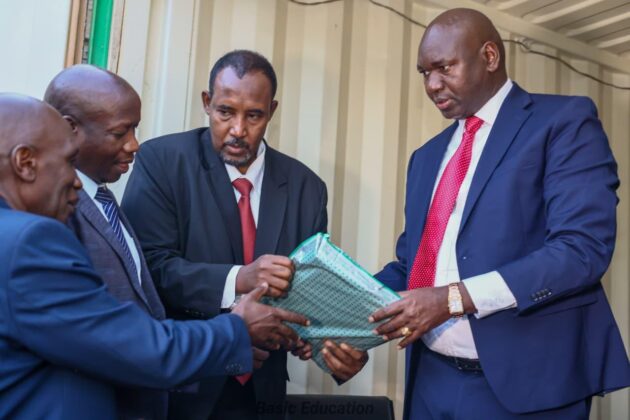
Basic Education Principal Secretary Julius Bitok assured the public that all logistics had been finalized, including the release of capitation funds to schools, deployment of invigilators, and secure distribution of exam materials. “Everything is ready. The learners have been prepared, the exams have been delivered, and all officials are in place. We expect a smooth and professional exercise,” Bitok stated during the launch at Olympic Primary School in Nairobi.
The Kenya National Examinations Council (KNEC) confirmed that over 3.4 million learners are registered for various assessments this year, spanning primary, junior, senior, special needs, and pre-vocational levels. The Grade 9 learners already have 40% of their marks from continuous assessment, with the remaining 60% determined by the KJSEA.
This year’s exams are not only a test of academic readiness but also a litmus test for the CBC rollout, which aims to shift the focus from rote learning to skills development, creativity, and learner-centered approaches. The Ministry of Education emphasized that the assessments are designed to evaluate competencies rather than memorization, aligning with global education trends.
Security around exam materials has been tight, with containers unlocked at dawn across the country under supervision from education and interior ministry officials. The government has also deployed additional resources to ensure the integrity of the process, especially in remote and underserved areas.
As the exams continue, education stakeholders are closely monitoring the implementation to identify areas for improvement. The results will not only influence individual learner placement but also inform future policy decisions on curriculum development and resource allocation.
Similar Posts by The Mt Kenya Times:
- Breach at Vote 8: What the Attack on the Namibian Defence Establishment Means for National Security
- Inspired by the poem “Time”
- The use of digital educational technologies in the prevention of dental diseases
- Behind the visor: How Nairobi’s ‘Brayo Oyaah’ is redefining Kenya’s road safety culture
- Trauma, Friendship, Love, and the Search for Self-Worth in Hanya Yanagihara’s A Little Life
About the Author