Parliamentary Finance Committee Meets CBK Governor Over Procurement Of New Bank Notes
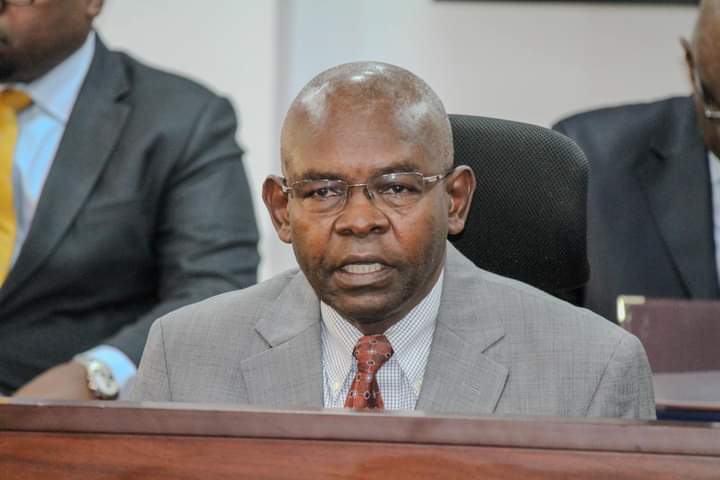
CBK Governor Dr Kamau Thugge when he appeared before the committee yesterday

By MKT Correspondent
Worth Noting:
- “Hon. Chairperson, the classified procurement was undertaken to avert a stock-out crisis. The procurement process was conducted in accordance with the Public Procurement and Asset Disposal Act (PPADA), and with the approval of the National Security Council and the Cabinet. The contract was reviewed and approved by the Attorney General as required by law before execution by the Parties”, Dr. Thugge told the committee.
- The lawmakers led by the chairperson had taken the Governor to task to justify why the Bank needed to print new currency in under a period of 5 years, especially given the huge expense the process is set to incur.
- The Bank launched the current generation currency banknotes in 2019 whereby, the old generation 1,000-shilling banknote was withdrawn

The National Assembly Departmental Committee on Finance and National Planning yesterday asked the Central Bank of Kenya to avail detailed documents relating to the recent procurement of new currency valued at KSh689 Billion for scrutiny, and to help the committee confirm that the process followed due process.
The directive came even as the Bank through the Governor, Dr. Kamau Thugge assured the committee that the procurement of new bank notes by German firm, Giesecke+Devrient Currency Technologies GmbH (G+D) at a cost of KSh14.2 billion was above board.
While appearing before the Kuria Kimani – led committee where members sought to be apprised on the new currency printing deal, Dr. Thugge told the lawmakers that the move was taken after realization that the country was at a risk of stockout of bank notes, with grave economic and national security implications.
“Hon. Chairperson, the classified procurement was undertaken to avert a stock-out crisis. The procurement process was conducted in accordance with the Public Procurement and Asset Disposal Act (PPADA), and with the approval of the National Security Council and the Cabinet. The contract was reviewed and approved by the Attorney General as required by law before execution by the Parties”, Dr. Thugge told the committee.
The lawmakers led by the chairperson had taken the Governor to task to justify why the Bank needed to print new currency in under a period of 5 years, especially given the huge expense the process is set to incur.
The Bank launched the current generation currency banknotes in 2019 whereby, the old generation 1,000-shilling banknote was withdrawn
Dr. Thugge told the committee that the new contract is cheaper than the one the Bank held with De La Rue by about KSh480 million which is huge reprieve for the country.
According to the Bank, notes worth KSh689bn are set to be printed. They include 460 million notes in KSh50 denomination, 690 million notes in KSh100 denomination, 260 million notes in KSh200 notes, 170 million notes in KSh500 and 460 million notes printed in KSh1,000 denomination.
The members further sought to know what was the fate of De La Rue company, and the 40 per cent stake owned by the National Treasury in the firm locally.
“This committee is concerned that the firm which had very good and modern infrastructure has closed down and business has now gone to a firm operating outside the county, leaving in its trail job losses and loss of business from Kenya’s neighbours who were relying on the company to print their currency. Is there a possibility of the company using the infrastructure of De La Rue”, Kimani inquired.
In response, Dr. Thugge noted that the printer which established base in Kenya in October 1992, had made a decision to exit the country by themselves. He told the lawmakers that there was a remote chance that G+D would wish to use the De La Rue facility.
Committee members David Mboni (Kitui Rural), Joseph Munyoro (Kigumo), Julius Rutto (Kesses) and Adan Keynan (Eldas) expressed concern that the firm’s exit from the country had not only liquidated Kenya’s stake in the firm but had also left hundreds of people jobless.
Noting that Kenya had made great progress in the fintech sector, members inquired if CBK would consider introducing an e-currency or even digital currency given that the contracted Germany firm, G+D has the capacity to generate digital currency.
Dr. Thugge however noted that given the digitization progress on M-Pesa, the Bank did not view this as a priority.
He cited the failed attempt by Nigeria to introduce an e-currency as one of the reasons why the plan would not work.
The new currency which is already in circulation in the KSh1,000 denomination, bears the signature of the Governor of the Central Bank of Kenya, Dr. Kamau Thugge, that of the Principal Secretary, National Treasury, Dr. Chris Kiptoo, the year of print – 2024, and new security threads with colour changing effects that are specific to each denomination.
The governor explained that the new changes are in line with the traditions of the CBK adding that they had sought the advisory of the Attorney General.
Dr. Thugge also clarified that the old currency will continue to be legal tender adding that the move to print new currency did not occasion any form of demonetization.
Meanwhile, Kimani has called on CBK to consider honouring Kenya’s heroes such as athletes on new bank notes in appreciation of their contribution towards the country’s profile.
The Bank’s Director of currency operations Mr. Paul Wanyagi however noted that though this is a progressive proposal, there’s no provision in law allowing such.
Asked by the lawmakers if the Bank could consider developing higher quality notes which do not require periodic replenishment, Mr. Wanyagi noted that there was need to sensitize Kenyans on money handling since rough handling especially of lower denomination notes had seen them get withdrawn from circulation regularly.
On the sidelines of yesterday’s session, the committee lauded Dr. Thugge and his team for having contained inflation and the exchange rate against the dollar for several months consistently.
Similar Posts by The Mt Kenya Times:
- Mt Kenya Times ePAPER October 17-18, 2026
- Ruto bets billions on Kerio Valley — with one eye on 2027
- Ruto’s health ministry kills Murang’a’s digital hospitals
- Kenya bets on Mount Kenya to drive a billion-shilling tourism revival
- Do you have a wealth vision? Or are you just working until you die?
About the Author