PAWO Appointment, Business Record, and Controversy: A Full Analysis of Stina Wu’s Role
 The Mt Kenya Times
Chinese-Namibian businesswoman Stina Wu (born Qiaoxia Wu)
By: Silas Mwaudasheni Nande
Introduction
On 7–8 July 2026, the Pan African Women’s Organisation (PAWO) announced the appointment of Chinese-Namibian businesswoman Stina Wu (born Qiaoxia Wu) as its Special Economic Advisor. Within hours, the news has spread rapidly across Namibian social media, news platforms and business circles, sparking intense debate. Some have hailed the appointment as well-deserved recognition of Wu’s decades-long investment footprint and contribution to economic activity in northern Namibia. Others have raised immediate and searching questions: Was this a formal government appointment? Could this role become a channel for undue influence or even state capture, given her extensive local business interests? And given well-documented financial and legal challenges linked to her companies in recent years, does she have the credibility to hold an advisory position focused on economic development?
Misinformation and misunderstanding have clouded public discussion, with many incorrectly assuming Wu has been appointed to an official government post. This article sets out to clear the air, presenting verified facts, official documentation and balanced, evidence-based analysis. It explains the exact nature and scope of the appointment, draws a clear line between this civil society role and official government advisory positions, examines allegations of state capture, assesses her suitability against her business track record, and outlines the ethical safeguards needed to address legitimate public concerns.
The Appointment: Official Facts and Mandate
Verified Details of the Appointment
All information in this section is drawn directly from PAWO’s official public statement dated 7 July 2026, and remarks by PAWO President Eunice Iipinge at the announcement ceremony in Windhoek:
Appointing authority: The Pan African Women’s Organisation (PAWO), a continental women’s rights and development body granted Specialized Agency status by the African Union in 2017. It is not an organ, department, or agency of the Government of Namibia.
Appointee: Stina Wu, prominent businesswoman and investor active in Namibia since 1996.
Official title: Special Economic Advisor to the President of PAWO
Effective date: 7 July 2026
Remuneration: Explicitly stated as honorary and unpaid. No public or state funds are allocated to this role.

Core mandate: To provide strategic advice on economic development, cross-border investment promotion, inclusive entrepreneurship, and targeted strategies to advance women’s economic empowerment across the African continent, with a specific initial focus on Namibia and the Southern African Development Community (SADC) region.
Terms of appointment: No fixed term of office; the appointment is revocable at any time by PAWO’s executive board through its internal governance procedures.
In her official remarks, PAWO President Eunice Iipinge confirmed the appointment was made under PAWO’s constitutional rules, which do not restrict advisory positions to African nationals. She noted: “We selected Ms Wu in recognition of her long experience as an investor, her track record of building businesses in underserved regions of Namibia, and her stated commitment to supporting women-led enterprises. This role is focused entirely on advancing PAWO’s developmental goals, not on influencing government policy or commercial interests.”
Stina Wu, in accepting the appointment, stated: “I am deeply honoured to take on this responsibility. My focus will be to bridge gaps between investors and local communities, open new markets for African women entrepreneurs, and work to create practical support systems that help women grow sustainable businesses. I understand the public scrutiny this role brings, and I commit to acting with integrity at all times.”
Critical Distinction: PAWO Role vs. Official Government Advisory Posts
This is the single most misunderstood aspect of the appointment. Confusion between these two very different types of positions has fuelled much of the public debate. The table below provides a clear, fact-based comparison:
Table
| Comparison Dimension | PAWO Special Economic Advisor | Official Namibian Government Economic Advisor |
| Legal and Institutional Status | A role within a non-governmental civil society organization with AU consultative status; not part of the Namibian state, public service, or government structure | A formal public office established under Namibian law; part of the government structure, reporting to the President, Cabinet, or a designated Minister |
| Decision-Making Authority | No executive, legislative, regulatory, or policy-making power; advice is limited to PAWO leadership and internal organizational strategy only | May advise directly on national policy, economic planning, regulatory frameworks, and public spending; input can directly shape government decisions |
| Formal Powers and Access | No automatic or statutory access to state secrets, cabinet meetings, government procurement processes, or confidential official information | Entitled to official access to relevant government information, inter-ministerial forums, and policy discussions as required for their role |
| Accountability Framework | Reports solely to PAWO’s executive board; subject only to PAWO’s internal rules and ethics guidelines; no statutory public accountability requirements | Accountable to the President, Parliament, and the public; bound by the Public Service Act, Government Advisers Act, and rules of parliamentary oversight |
| Conflict of Interest Rules | No mandatory legal requirement to publicly declare assets, business interests, or potential conflicts; governed only by PAWO’s internal policies | Legally required to make full public disclosure of all assets, business interests, and potential conflicts; subject to review by the Anti-Corruption Commission (ACC) |
| Appointment and Removal | Appointed and removed by PAWO’s executive leadership; no public process or parliamentary confirmation required | Appointed through official government procedures; removal follows formal legal processes that may be subject to public reporting |
| Scope of Work | Limited exclusively to PAWO’s programs, projects, and organizational objectives | Defined by official government mandate, covering national economic policy and public interests |
Key Conclusion: On the basis of official facts and legal definitions, Stina Wu has not been appointed as an economic advisor to the Government of Namibia, the Office of the President, or any state ministry or agency. This is an independent civil society advisory role, with no official authority, state powers, or public responsibilities attached. Misrepresentation of this role as a government appointment is factually incorrect.
Stina Wu’s Economic Interests and Business Footprint in Namibia
To understand the context of the appointment and the concerns raised, it is necessary to outline Wu’s established business presence and current economic interests in Namibia.
Background and Business Expansion
Stina Wu arrived in Namibia in 1996, starting with small-scale retail trade before steadily expanding her business interests into property development, hospitality, construction, and manufacturing. Over more than two decades, she became one of the most visible foreign investors operating in northern Namibia, a region often overlooked by major domestic and international developers.
At the peak of her business growth around 2018, her portfolio included high-profile assets:
Etango Shopping Complex in Oshakati, valued at approximately N$41 million at launch
Galaxy Shopping Mall in Rundu, the largest commercial centre in the Kavango East region, housing more than 50 local and national tenants
Rainbow Housing and Sunshine Village, large-scale residential development projects aimed at expanding affordable housing stock
Marigold Hotel Developer and AH Helmsman Group, her flagship entities operating in tourism infrastructure and civil construction
Stina Youth Growth Foundation, her philanthropic initiative focused on vocational training and youth enterprise support
Public estimates at the time placed the total value of her assets at over N$1 billion, making her one of the most prominent private investors in northern Namibia.
Current Economic Interests (as of mid-2026)
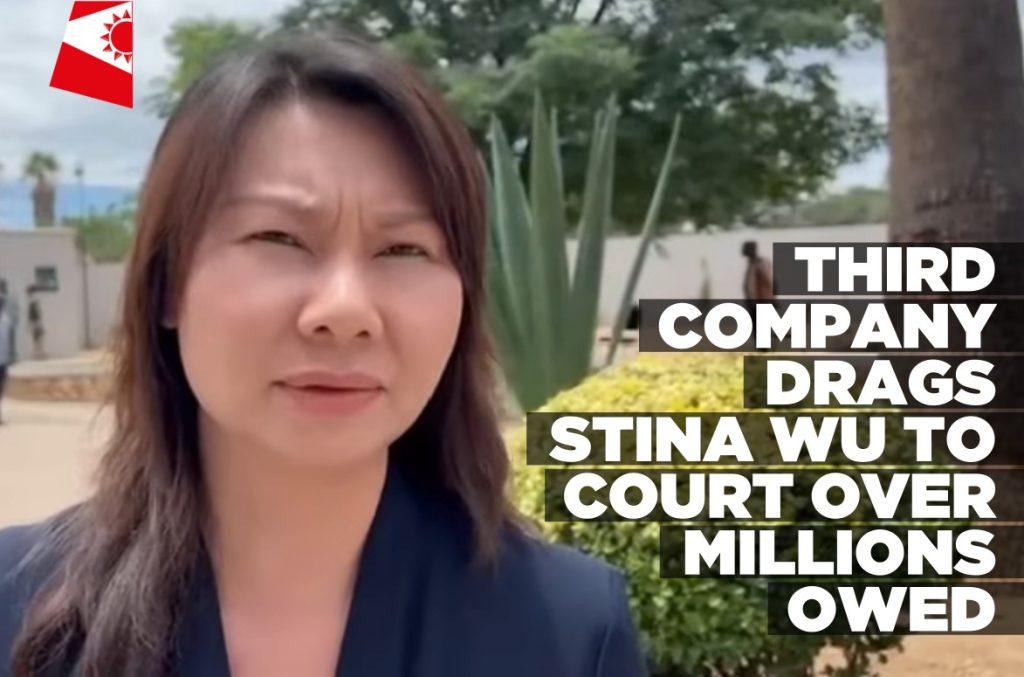 Wu and her family-controlled business entities continue to hold significant economic interests across the country:
- Ownership and management of commercial land and property in Windhoek, Oshakati, Rundu, and Ondangwa
- Active operations in construction, hospitality, and property management sectors
- Ongoing commercial partnerships with local suppliers, contractors, and service providers
- Outstanding applications for municipal land allocation and development permits in several regional towns
All these businesses and assets are legally registered under Namibian company law, and her commercial activities are legitimate. However, these interests mean her business success is closely linked to government decisions on land allocation, planning regulations, infrastructure investment, and economic policy – a fact that forms the basis of concerns about potential conflicts of interest.
State Capture Allegations: Fact, Speculation, and Risk
One of the most serious concerns raised by members of the public and some public commentators is the claim that this PAWO appointment could be a “backdoor mechanism” to facilitate state capture. For clarity, we use the definition formally adopted by the Namibian Anti-Corruption Commission: “the abuse of entrusted power or influence to shape state institutions, policies, or decisions for private gain, or to benefit a narrow group or individual rather than the public interest.”
Arguments Put Forward by Critics
Those who raise concerns about state capture base their arguments on three main observations:
Established political and institutional proximity: Wu has well-documented personal and business relationships with senior figures in the ruling SWAPO Party, including former and current ministers, regional governors, and local municipal leaders. Critics argue the PAWO title will give her greater public standing and easier access to engage these decision-makers.
Potential for hidden influence: Even without official government powers, the title “Economic Advisor” carries significant prestige. There is concern that public officials, business partners, and the public may incorrectly perceive the role as a sign of government endorsement, which could translate into preferential treatment in land applications, contract awards, or regulatory approvals.
Conflict of interest risk: As a major property developer and investor, Wu stands to gain financially from government policies that support infrastructure development, ease land access, or promote foreign investment. Her advisory role could give her a platform to advocate for positions that align with her own commercial interests, while appearing to speak in an independent advisory capacity.
Factual Assessment of the Claims
When measured against available evidence, these concerns require careful separation between proven facts and reasonable speculation:
No legal or institutional link to state power: There is no evidence or legal basis to suggest PAWO has the authority to influence government decisions, award state contracts, or alter public policy. Its role is limited to advocacy, programming, and advisory work focused on women’s empowerment.
No official mandate to engage with government on policy: PAWO’s appointment documentation explicitly restricts Wu’s advisory work to internal organizational strategy and programming, not to providing advice to government or shaping national policy.
No evidence of improper conduct: To date, there have been no formal investigations, charges, or prosecutions initiated by the Anti-Corruption Commission or any other authority against Wu related to bribery, corruption, or improper influence over state decisions. Allegations remain within the realm of public debate, not proven fact.
PAWO’s independence: PAWO is funded primarily through grants from the African Union, international development partners, and contributions from its member organizations, not through financial support from the Government of Namibia. Its governance structure is continental, not national.
Balanced Conclusion on State Capture
On the basis of available facts, this appointment does not in itself constitute state capture, nor does it create a formal mechanism for state capture. There is no evidence to support claims that the role gives Wu power or access to manipulate state institutions for private gain.
However, the risk of perceived influence and reputational harm is real. Even without improper actions, the combination of a high-profile advisory title, extensive business interests, and established political connections creates an environment where preferential treatment could be suspected. This perception itself erodes public trust, and carries real risks for both PAWO’s reputation and public confidence in governance.
Business Performance and Challenges: Does She Merit the Appointment?
Another central question in public discussion is whether Wu’s business track record justifies her appointment as an economic advisor. Supporters point to her investment and job creation record, while critics highlight significant financial difficulties and legal disputes in recent years. A balanced assessment requires consideration of both sides of the record.
Established Achievements
Supporters of the appointment highlight substantial contributions:
Significant investment in underserved regions: Wu has injected an estimated N$600 million into Namibia’s economy since 2007, primarily in northern regions where few developers were willing to invest. This has expanded commercial and residential infrastructure in historically underdeveloped areas.
Job creation: At peak operation, her businesses have provided hundreds of direct jobs in construction, retail, hospitality, and property management, alongside indirect employment for suppliers and service providers.
Market access and networks: Her international business connections have created opportunities to link Namibian producers and entrepreneurs with regional and global markets.
Support for women and youth: Through her foundation and direct business initiatives, she has provided scholarships, enterprise training, and market access support to women and young people in rural communities.
These achievements align closely with the criteria PAWO cited for her appointment: investment leadership, entrepreneurship experience, and commitment to community development.
Financial and Legal Challenges
Critics, however, point to well-documented financial setbacks and legal disputes reported in local media and recorded in the High Court of Namibia over recent years:
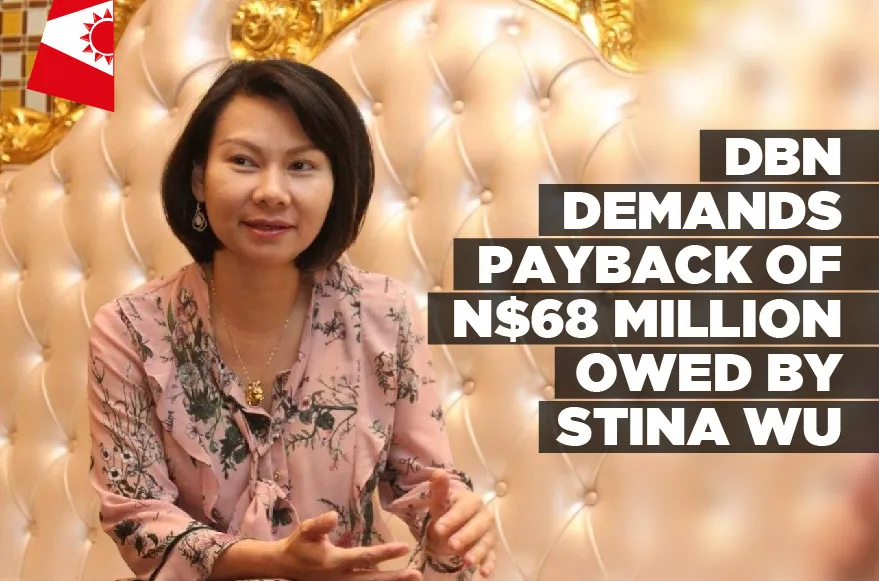
Outstanding debt and loan disputes: In October 2024, the Development Bank of Namibia (DBN) launched legal action against Wu-linked entity Marigold Hotel Developer to recover N$68.4 million in unpaid loans and accumulated interest, citing repeated breaches of repayment agreements. Mediation efforts failed in April 2026, and the case remains before the courts. Separately, First National Bank (FNB) initiated proceedings in early 2025 to recover N$35 million from African New Era Investments, another company linked to Wu.
Commercial legal disputes: In 2023, private property owner Esmerelda Manahi launched legal action against Wu, claiming N$24 million in unpaid property purchase instalments plus N$2.1 million in outstanding rent, alongside allegations of property damage and devaluation. This civil dispute remains unresolved.
Delayed and abandoned projects: The high-profile Gala Square/Chinatown development in Windhoek was announced in 2018 as a N$150 million mixed-use project, but remains incomplete and vacant as of mid-2026 with no confirmed completion timeline. Similarly, the 550-unit Sunshine Village housing project in Kaisosi faced repeated delays, contract disputes, and work stoppages, leaving more than 120 workers without employment in 2020.
Governance concerns: Court documents and business reports indicate repeated attempts to refinance debt obligations, with several loan applications rejected by commercial banks due to weak financial ratios and poor project performance. Small business associations have also raised concerns about alleged labor non-compliance, underpayment of workers, and preference for imported labor over local employees – allegations Wu has consistently denied.
It is important to note that Wu has never been convicted of any criminal offence, including fraud, theft, or tax evasion. All disputes are civil matters related to contracts, debt, and business performance, not criminal wrongdoing.
Assessment of Suitability
Evaluating whether Wu deserves this role requires applying two different sets of standards:
Against PAWO’s selection criteria: PAWO explicitly selected her based on experience in investment, entrepreneurship, and commitment to women’s empowerment. On these criteria, her track record is substantial and relevant. She has built businesses from scratch, mobilized significant capital, and operated in challenging environments – experience that brings practical value to the role.
Against public expectations: For many members of the public, an economic advisor should demonstrate consistent financial responsibility, accountability, and sound governance. Her history of large-scale debt defaults, stalled projects, and ongoing legal disputes raises legitimate questions: Can someone who has faced significant challenges managing their own financial affairs provide credible advice to others on sustainable economic development?
Balanced conclusion: Wu brings genuine, valuable practical experience to the role, but her recent financial and governance challenges are significant and valid grounds for scrutiny. She is not unqualified, but neither does she have an unblemished record. Her suitability will ultimately be judged on how she performs in the role, and how she manages potential conflicts between her business interests and her advisory responsibilities.
Ethical Risks and Recommended Safeguards
While the appointment is legal and legitimate, it carries clear ethical and reputational risks. To address public concerns and ensure the role delivers on its intended purpose, practical safeguards are needed:
Public conflict of interest disclosure: PAWO should require Wu to make a full public declaration of all her business interests, assets, and ongoing legal disputes, and update this declaration annually. She should formally recuse herself from any work, advice, or discussions that could directly or indirectly benefit her commercial interests.
Published terms of reference: PAWO should release a detailed, public document outlining exactly what the role entails, what activities are permitted, and clear restrictions on using the title for commercial lobbying or personal benefit.
Independent oversight: Establish an independent ethics committee within PAWO to review potential conflicts of interest, monitor adherence to the role’s mandate, and address public complaints.
Regular public reporting: Wu should publish a short public progress report every six months, outlining activities undertaken, outcomes achieved, and confirming no conflicts of interest have arisen.
Clear public communication: PAWO and Wu should consistently clarify the nature of the role in all public engagements, to prevent ongoing misunderstanding that it is a government position.
Conclusion
Stina Wu’s appointment as Special Economic Advisor to the Pan African Women’s Organisation is a legitimate, legal appointment within a civil society structure – not a government position, nor an official state role. Misrepresentation of this fact has been the source of much unnecessary confusion and concern.
On the question of state capture: There is no factual evidence to conclude the appointment enables or constitutes state capture. However, the perceived influence that could come with the title creates real reputational and governance risks that must be addressed through transparency and safeguards.
On the question of suitability: Wu brings valuable experience as an investor and entrepreneur, particularly in underserved regions, and has contributed to economic activity and social development. But her significant financial challenges, debt disputes, and project failures are valid matters of public concern that cannot be dismissed. Her appointment is controversial precisely because her record is mixed – she has achieved much, but also faced significant difficulties.
Ultimately, this appointment will be judged not by the title, nor by past achievements or failures alone, but by actions and outcomes. If Wu uses her experience and networks to genuinely advance women’s economic empowerment, deliver practical results, and maintain full transparency, public concern will fade. If she uses the role to advance her own commercial interests, or fails to demonstrate accountability, the concerns raised today will be confirmed.
For now, the facts show a legal but controversial appointment – one that deserves careful oversight, balanced scrutiny, and the opportunity to prove its value, rather than pre-emptive acceptance or condemnation.
Sources: PAWO official statement 7 July 2026; The Namibian; Namibian Sun; High Court of Namibia case records 2023–2026; Development Bank of Namibia public statements; African Union PAWO accreditation documents.
Similar Posts by The Mt Kenya Times:
- God had to break your marriage to save your mother’s house
- Meru commissioner urges residents to act before the rains claim more lives
- The hidden pressure of being a university student
- Youth surge in Kenya’s 2027 elections: From protest to power
- Kenya’s educated jobless: A generation waiting for a chance
About the Author