The Mt Kenya Times
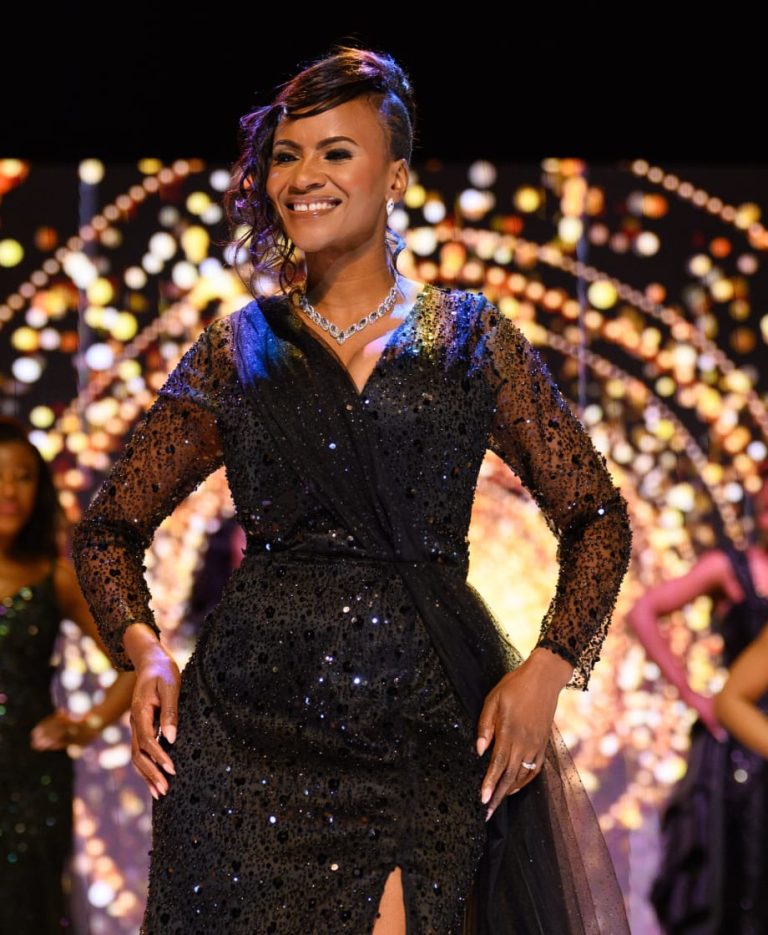
Wendy Omanga, the Kenyan beauty queen
Miss Jungle Kenya and CNN Academy alumna Wendy Omanga has turned her crown and her political science degree into a full-time campaign against electoral violence — and Kenya is beginning to listen
By Ayesha Talib
Wendy Omanga, the Kenyan beauty queen, political scientist, and CNN Academy-trained journalist, has launched a youth-led peace campaign aimed at countering electoral violence, hate speech, and political incitement ahead of the 2027 general election.
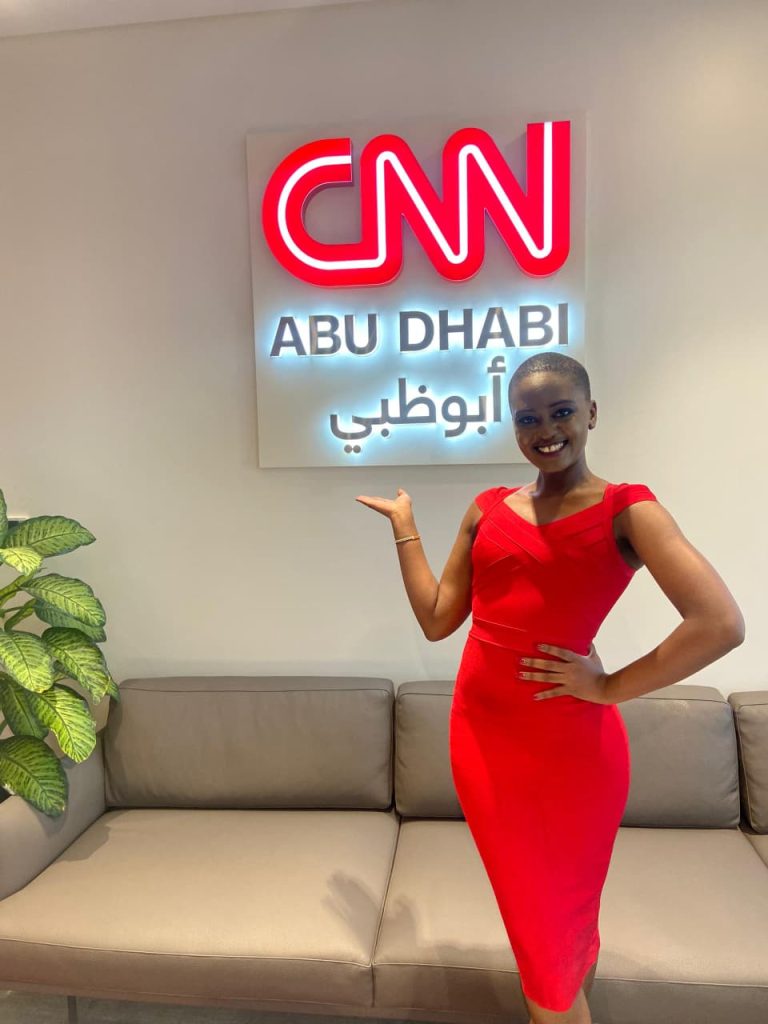
It is an unlikely combination on paper — a pageant crown, a political science degree, and a media fellowship — yet in practice, the 32-year-old from Nyando in Kisumu County has spent the better part of a decade demonstrating that the combination is not only coherent, but formidable. The 2027 campaign is, in many ways, the fullest expression yet of a life built deliberately at the intersection of visibility and substance.
Omanga won Miss Journalism World Kenya in 2018 and was crowned Miss Jungle Kenya in 2022, titles she has consistently used as platforms rather than pedestals. She studied political science and communication at the University of Nairobi, and went on to become a CNN Academy-trained climate storyteller — a credential that sharpened not only her technical media skills but her understanding of how narrative shapes public behaviour. She has applied both with increasing urgency as Kenya’s political temperature has risen.
Her peace caravan is the centrepiece of the current campaign. Traversing regions with histories of electoral tension, the initiative brings together young people, women, and local leaders through open forums and reconciliation workshops. The format is deliberate. Rather than delivering messages from a podium, Omanga convenes conversations — creating space for communities to name their fears, examine the anatomy of past violence, and imagine a different kind of election.
“The crown gives you a room,” she has said. “The degree tells you what to do once you’re in it.” It is a formula she applies with discipline.

As a political scientist, Omanga is particularly focused on the dangers of ethnic mobilisation — the process by which political operatives exploit identity, grievance, and community loyalty to manufacture division. She does not speak about this in abstract terms. She grew up in Nyando, a constituency in Kisumu County that has experienced some of Kenya’s most devastating flood cycles and, during election years, some of its most painful communal tensions. “I come from Nyando in Kisumu County, where floods perennially cause loss of lives and property. In 2005, our home was washed away by floods,” she has said. The experience of watching a community made vulnerable by both nature and politics has informed everything she does.
Her media training has made her campaign unusually sophisticated in its execution. Where many peace initiatives rely on word of mouth and printed pamphlets, Omanga deploys digital storytelling, television appearances, and structured community dialogues in parallel. The CNN Academy fellowship, which recognised her as its best climate storyteller, gave her a toolkit that translates directly to electoral advocacy: how to frame a story, how to reach an audience that is not already convinced, and how to hold attention long enough to shift a mind.
The 2027 election context gives her work particular urgency. Kenya has a well-documented history of post-election violence, most devastatingly in 2007 and 2008, when more than 1,000 people were killed and hundreds of thousands displaced in the aftermath of a disputed presidential result. Subsequent elections have been accompanied by varying degrees of tension, intimidation, and localised violence. The wounds from those periods have not fully healed, and the approach of another highly competitive election cycle has prompted security agencies to begin monitoring political activity across the country.
Against this backdrop, Omanga’s campaign occupies an important space. Formal peace messaging from government institutions is often received with scepticism, filtered through the lens of whichever political narrative audiences already hold. Omanga, by contrast, arrives with a profile that cuts across conventional political allegiances — a young woman from western Kenya, educated in Nairobi, recognised internationally, and carrying a crown that signals neither party nor tribe. It is an unusual kind of credibility, and she has earned it.

She sits on the board of the Climate Students Movement organisation based in Sweden, serving on its communications committee, and was named to the North American Association for Environmental Education’s Top 30 Under 30 class of 2023. Her international networks give the peace campaign access to frameworks and funding mechanisms that domestic initiatives often lack, and her digital fluency means that the campaign’s reach extends well beyond the physical geography of the caravan’s stops.
What distinguishes Omanga most clearly from other advocates working in the same space is the consistency of her underlying philosophy. She does not treat peace as a slogan or a season. She founded the Moonlight Initiative, a non-governmental organisation with a mission to make Africa climate-aware in adopting climate-smart practices — an organisation that at its core is about building community resilience, the same principle she is now applying to electoral preparedness. Whether she is planting bamboo along riparian land in Kakamega County or convening a dialogue forum in a volatile constituency, the animating question is the same: how do you build something durable in a place that has been made fragile?
Kenya has no shortage of voices calling for peace before elections. What it has in shorter supply are voices that can be heard across the lines that elections are designed to exploit — lines of ethnicity, class, geography, and gender. Omanga speaks across several of them simultaneously, and does so with the confidence of someone who has spent years learning, deliberately and under serious tutelage, how to communicate.
The 2027 election is still over a year away. But the work of shaping the environment in which it will be conducted has already begun, and few people are doing it more thoughtfully than Wendy Omanga.
The crown, it turns out, was always a means. The peace was always the end.
Similar Posts by The Mt Kenya Times:
- Kenya’s educated jobless: A generation waiting for a chance
- Eldoret must deliver more than a ceremony
- The long road back: How to conquer PTSD
- When lectures stop, student lives stand still
- All survive as Kenya Forest Service helicopter crashes at Kericho golf club
About the Author