Presidential Demonization Of Enlightenment Principles Sparks Laughter In Shadows Of Power
 The Mt Kenya Times
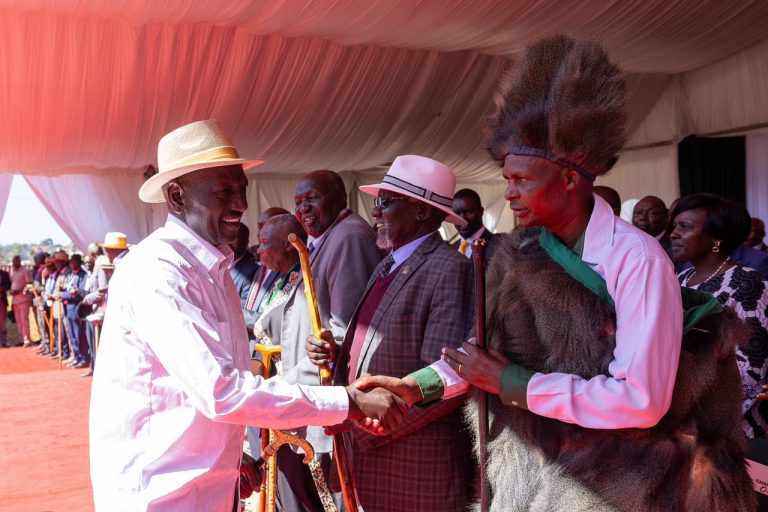
President William Ruto
How the president dismissed freedom of thought as ‘pepo’ while the masses dared to ask why the emperor has no clothes
By: Midmark Onsongo
Worth Noting:
- If enlightenment thinkers believed in one thing, it was reason. Yet here, reason is buried beneath layers of rhetoric designed to inflame, not inform. The principles of freedom of thought, as championed by Voltaire in his Candide, were never meant to be comfortable. Voltaire’s wit, sharp as a blade, once declared, “Those who can make you believe absurdities can make you commit atrocities.” The parallels are unmistakable. When a leader brands intellectual inquiry as diabolical, it is not the devil we fear but the man wielding the branding iron.
- But let us not speak in abstractions. The masses are asking real questions: why does the cost of living climb while salaries remain stagnant?
Imagine standing in a dimly lit room filled with whispers, each one daring to pierce the silence. In the corner, a man clad in robes of power bellows, “It is a demon!” This is no script from a medieval play but the chilling reality of recent weeks. The president, whose name we must utter with caution, likened the principles of enlightenment—freedom of thought and questioning of social order—to a malevolent force, dismissing centuries of progress with a word: pepo. The question hangs heavy: how did we regress to a time when truth was heresy, and the thinkers were witches to be burned?
The story begins not with kings but with the people—the masses tired of bowing to gilded thrones. The Enlightenment, that luminous age stretching from the late 17th century into the 18th, brought us names like Voltaire, John Locke, and Jean-Jacques Rousseau. These were not gods but men, wielding nothing but words against the towering fortresses of tradition. Locke’s Two Treatises of Government (1689) argued that all men are born equal, with natural rights to life, liberty, and property. It was this spark that set aflame revolutions—the American Revolution of 1776, the French Revolution of 1789—shaking monarchies to their core. And yet, in 2024, a president calls this progress demonic. Are we to clap at this tragic comedy or weep at its absurdity?
The president’s words, spoken on November 30th, 2024, during a rally in Nairobi, reeked of irony. “These foreign ideologies,” he thundered, “are the work of demons corrupting our youth.” The masses cheered, or perhaps it was fear masquerading as applause. Was this not the same man whose government signed treaties with the International Monetary Fund, inviting what he now calls ‘foreign influences’? The hypocrisy drips like a leaking faucet, each drop louder than the last.
If enlightenment thinkers believed in one thing, it was reason. Yet here, reason is buried beneath layers of rhetoric designed to inflame, not inform. The principles of freedom of thought, as championed by Voltaire in his Candide, were never meant to be comfortable. Voltaire’s wit, sharp as a blade, once declared, “Those who can make you believe absurdities can make you commit atrocities.” The parallels are unmistakable. When a leader brands intellectual inquiry as diabolical, it is not the devil we fear but the man wielding the branding iron.
But let us not speak in abstractions. The masses are asking real questions: why does the cost of living climb while salaries remain stagnant? Why are those in power fattened on the spoils of corruption while the rest scrape for crumbs? On December 3rd, 2024, a protest erupted in Kisumu, with thousands chanting, “Where is our freedom?” Police responded with tear gas, their weapons speaking louder than the crowd. And yet, the voices do not fade.
Enlightenment principles are dangerous, not because they are evil, but because they are empowering. When Immanuel Kant penned his essay What is Enlightenment? in 1784, he called on humanity to dare to think for itself. “Sapere aude,” he wrote, “Dare to know!” But what happens when knowledge becomes a threat? The president’s words, echoed by his loyalists, suggest a fear—not of demons, but of an educated populace unafraid to question.
The contradictions are glaring. This is the same government that champions education reforms, encouraging critical thinking in schools. In November 2024, the Ministry of Education unveiled a new curriculum emphasizing problem-solving skills. Are these students not to think critically about the very system that educates them? Or is the classroom a cage where minds are trained to obey, not to question?
It would be comical if it weren’t tragic. Enlightenment principles gave birth to democracy itself, the system under which this president rules. The idea that governments derive their authority from the consent of the governed comes straight from Rousseau’s The Social Contract (1762). And yet, when the governed question, they are silenced. Is this not the very antithesis of democracy?
Consider the paradox: a leader rising to power through the freedoms granted by enlightenment thought now seeks to suppress those very freedoms. The masses, however, are not so easily silenced. Social media, that modern-day printing press, hums with dissent. Hashtags like #FreedomOrPepo and #DareToThink trend daily, each tweet a drop in an ocean of resistance.
The president’s dismissal of enlightenment principles is more than an attack on history; it is an assault on the future. In a world grappling with climate change, economic inequality, and political instability, we need reason and critical thought more than ever. Enlightenment principles are not relics of the past; they are tools for navigating the present. But let us not be naïve. The president’s rhetoric is strategic. By branding intellectual inquiry as demonic, he consolidates power among those who fear change. It is easier to control a populace that sees questions as threats and blind obedience as virtue. The irony, of course, is that this strategy is not new. It is as old as power itself. The Catholic Church did it during the Inquisition. Totalitarian regimes did it in the 20th century. And now, in 2024, it resurfaces in the guise of patriotism.
The masses, however, are waking up. On December 10th, 2024, a group of university students in Eldoret organized a debate titled “Is Enlightenment the Enemy?” Their conclusions were scathing: the real enemy is ignorance, perpetuated by those who benefit from it. One student, Mary Atieno, put it best: “Freedom of thought is not a demon. It is a mirror. And perhaps some fear what they see in the reflection.”
It is said that history repeats itself, first as tragedy, then as farce. The president’s dismissal of enlightenment principles is both. It is a tragedy for those who suffer under its consequences and a farce for those who see through its absurdity. But let us not end in despair. The story of enlightenment is the story of resilience. It is the story of people who dared to think, to question, to fight for a better world.
As the year ends and the shadows of 2024 lengthen, we must ask ourselves: will we allow fear to silence us, or will we, like the thinkers of old, dare to know? The choice is ours. And as the echoes of protest chants fill the air, one thing is clear: the masses are choosing knowledge over ignorance, courage over fear, light over darkness. The president may call it pepo, but history will call it progress.
This article was scripted by;
MIDMARK ONSONGO, SGS
(Socio-Geographic Scholar)
Similar Posts by The Mt Kenya Times:
- Mt Kenya Times ePAPER October 20, 2026
- Ruto rallies Kalenjin elders in Rift Valley unity push
- Sonko bid to nullify impeachment judgments fast-tracked in court
- Arrest the sponsors, not just the foot soldiers, Kalonzo tells police
- Police and politics shut down Kitale’s busiest market
About the Author