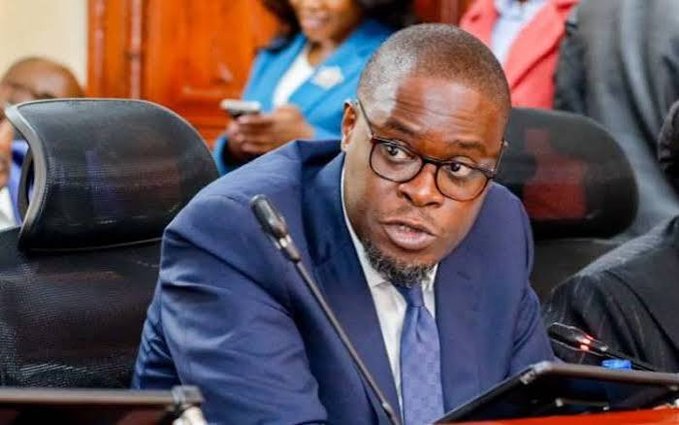
Public Investments Committee On Governance And Education Pushes For Diligent Use Of Public Funds
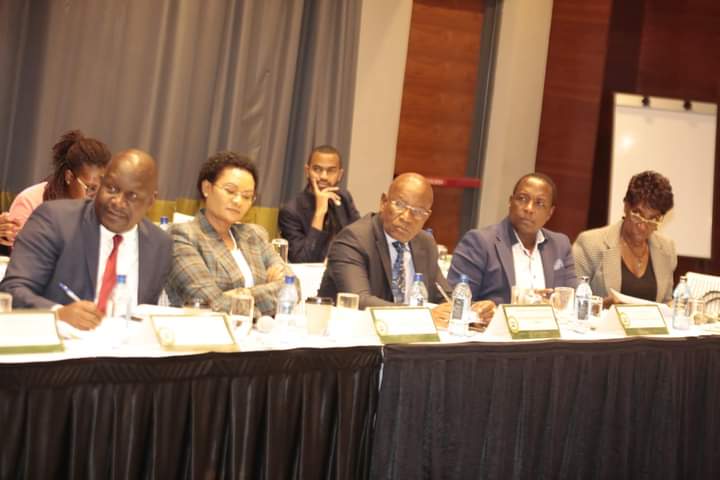
Members during the session

By Our Reporter
The National Assembly Public Investments Committee on Governance and Education yesterday met various parastatal heads to deliberate on audit queries raised in reports of the Auditor General.
The committee chaired by Jack Wanami Wamboka from Bumula sought responses from parastatal heads on financial transparency, accountability, and governance.
Kenya Universities and Colleges Central Placement Services (KUCCPS) led by the CEO, Agnes Wahome was asked whether it is prudent for the government to sponsor students in private universities.
Members further set out to understand what informed the decision to have students pick courses offered in private universities, despite public universities having the capacity to absorb all students.
In her submission to the committee, the KUCCPS CEO affirmed that Public Universities do have the capacity to admit all government-sponsored students.
Kenya School of Law (KSL) led by the CEO, Dr. Henry Mutai appeared before the committee to answer to several audit queries including unremitted tax deductions, budgetary control, irregular payment of allowances, non-compliance with the Public Procurement and Assets Disposal Act, 2015 among others.
The Managing Director, Seith Abeka, of the University of Nairobi Enterprises and Services (UNES) Limited, a company founded to harness the resources of the University with a view to enhance the University’s teaching and research was tasked to respond to matters regarding budgetary control and performance, lack of proper checks and balances, and the probable insolvency of the institution guided by their statements of financial performance reflecting net losses.
Members of the committee sought responses on audit queries within the Karen Technical Training Institute for the Deaf (KTTID) led by Tecla Chemobo.
The Principal in response to the institution’s effort to resolve a matter of encroached land within the 40-acre institution, did not offer a satisfactory response.
Members encouraged her to be proactive in seeking permanent solutions to the institution’s challenges beyond drafting letters.
Members while offering solutions, instructed the institution’s management to create a proper breakdown of the student’s history with the aim of ensuring that needy students receive funding from their respective constituencies through the National Government Constituencies Development Fund, which caters for students with special needs.
The Kenya National Commission for UNESCO CEO, Dr. Evangeline Njoka was held responsible by the members for failing to end a contract related to a construction project that has been ongoing for nearly three years, despite the contractor being contractually obligated to finish the work within six months.
During their discussions, the committee considered a legal issue related to the appointment of a candidate who ranked third in the recruitment process for a job vacancy.
The CEO confirmed that there was no official proof of the first and second candidates rejecting the job offer, begging the question why the third was given the job.
Similar Posts by The Mt Kenya Times:
- Diaspora Times Global Oct 24 – Oct 30, 2026
- America’s baby bust: U.S. birth rate hits record low as women choose later motherhood
- Literary Outreach Incubation Program Instills The Culture From Book Adaption To Spoken Words
- Why starting school too early is failing our children
- Who defines Africa’s destiny? The western lens, African compliance and the struggle for intellectual sovereignty
About the Author