Reclaiming Public Participation, Calls For Meaningful Engagement
 The Mt Kenya Times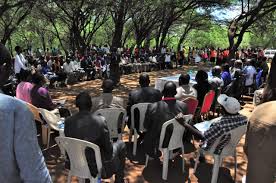
By: Dennis Wendo
The recent civil society statement on the state of the nation calls attention to a critical truth. Public participation, though well anchored in law, often remains a simulated process, more symbolic than substantive.
Kenya boasts one of the most progressive legal frameworks for citizen engagement. The Constitution of Kenya 2010, along with supporting legislation such as the County Governments Act 2012, the Urban Areas and Cities Act 2011 and the Environmental Management and Coordination Act, mandates inclusive governance. These laws require state agencies to create platforms that allow citizens to influence decisions and policies that directly affect their lives.
In principle, public participation promotes transparency, accountability and equity. It is meant to give citizens a voice in governance, particularly within the devolved system, where counties are expected to implement bottom-up approaches in planning and development.
Ideally, tools such as community barazas, public forums and stakeholder consultations would facilitate this engagement. However, what we continue to witness is a deliberate, disjointed and often tokenistic approach to involving the public.
A recent report by the Kenya Human Rights Commission, in collaboration with other civil society organizations (CSOs), paints a concerning picture of a country grappling with deep-rooted challenges, from deteriorating healthcare and education systems to rising political violence, gender-based violence, land injustices and public finance opacity. Citizens are struggling with economic strain, yet often find themselves excluded from decision-making processes.
Importantly, the report doesn’t just lament, it offers pragmatic recommendations. As it rightly calls out areas of concern, it is important to acknowledge that the Kenya Kwanza administration, now midway through its first term, has made some progress in key sectors including agriculture, health, education and energy. However, a core challenge lies in the government’s dim communication of these gains. Citizens remain unaware or unconvinced, largely because they have not been brought along in the journey. This is where the opportunity lies.
The government should view civil society not as adversaries but as partners. Constructive criticism should not be mistaken for sabotage. Instead, these insights provide valuable feedback that can inform better governance. As we approach the 2027 general elections, this is a chance for the administration to self-assess, recalibrate, and respond meaningfully to the issues affecting ordinary Kenyans.
Citizens are not inherently opposed to development projects or policy reforms. Their frustration stems from poor rollout strategies, inadequate consultation, and lack of clarity. Policies such as the Social Health Insurance Fund, the Affordable Housing Program, and new education financing models have faced backlash, not necessarily due to their intent, but because of how they were introduced.
Public participation should not be a checkbox. It must be genuine, inclusive, and timely. Proper piloting of policies can help flag potential weaknesses early, enabling the government to make necessary adjustments before full implementation.
Globally, Kenya has made commitments to participatory governance. For instance, Principle 10 of the 1992 Rio Declaration emphasizes public access to information and meaningful involvement in environmental and developmental decisions. These principles must translate into local action.
Consider the Finance Bill 2024, while it included both progressive and controversial proposals, many Kenyans never had the chance to fully engage with its content. The lack of public awareness gave rise to misinformation and fueled protests, most notably the Gen-Z demonstrations that rocked the country between June and November 2024.
With the 2025/2026 budget-making process underway, and the Finance Bill 2025 on the horizon, the government must prioritize public engagement. This means diversifying information-sharing channels, from social media and community radio to vernacular broadcasts and town hall meetings. Transparent feedback mechanisms are critical to restoring public trust.
Several other important bills are in progress, including the Business Laws (Amendment), the Assemblies and Demonstration Bill, the Whistleblower Protection Bill, the Computer Misuse and Cybercrimes (Amendment), and the Public Participation Bill 2024. These must not be passed without thorough consultation with stakeholders and citizens.
Beyond the government, the public also has a role to play. Article 119 of the Constitution allows any Kenyan to petition Parliament. Citizens should seize this right, through petitions, memoranda, public hearings, and digital platforms. Our democracy thrives when voices from all corners of the country are heard and considered.
Finally, civil society must safeguard its space by ensuring its actions remain guided by truth and integrity. It should never allow infiltration or misuse for partisan agendas. When CSOs and the state collaborate in good faith, it creates a powerful framework for inclusive governance.
As Kenya continues its democratic journey, let us move beyond performative participation. Let us build a nation where every voice truly counts.
Dennis Wendo
Integrated Development Network – Public Benefits Organization (PBO)
Email: idn.kenya@gmail.com | info@idnkenya.org
Similar Posts by The Mt Kenya Times:
- Breaking frontiers: The engineer building infrastructure and tearing down barriers
- Prophetess Taniesha Ramsey: Empowering lives through faith, leadership, and purpose
- Ebola and the American fear factor
- Nyeri and Makueni ranked the most transparent counties in budget management survey
- EACC recovers KSh65 million in cash during raid on Nairobi County official’s home
About the Author