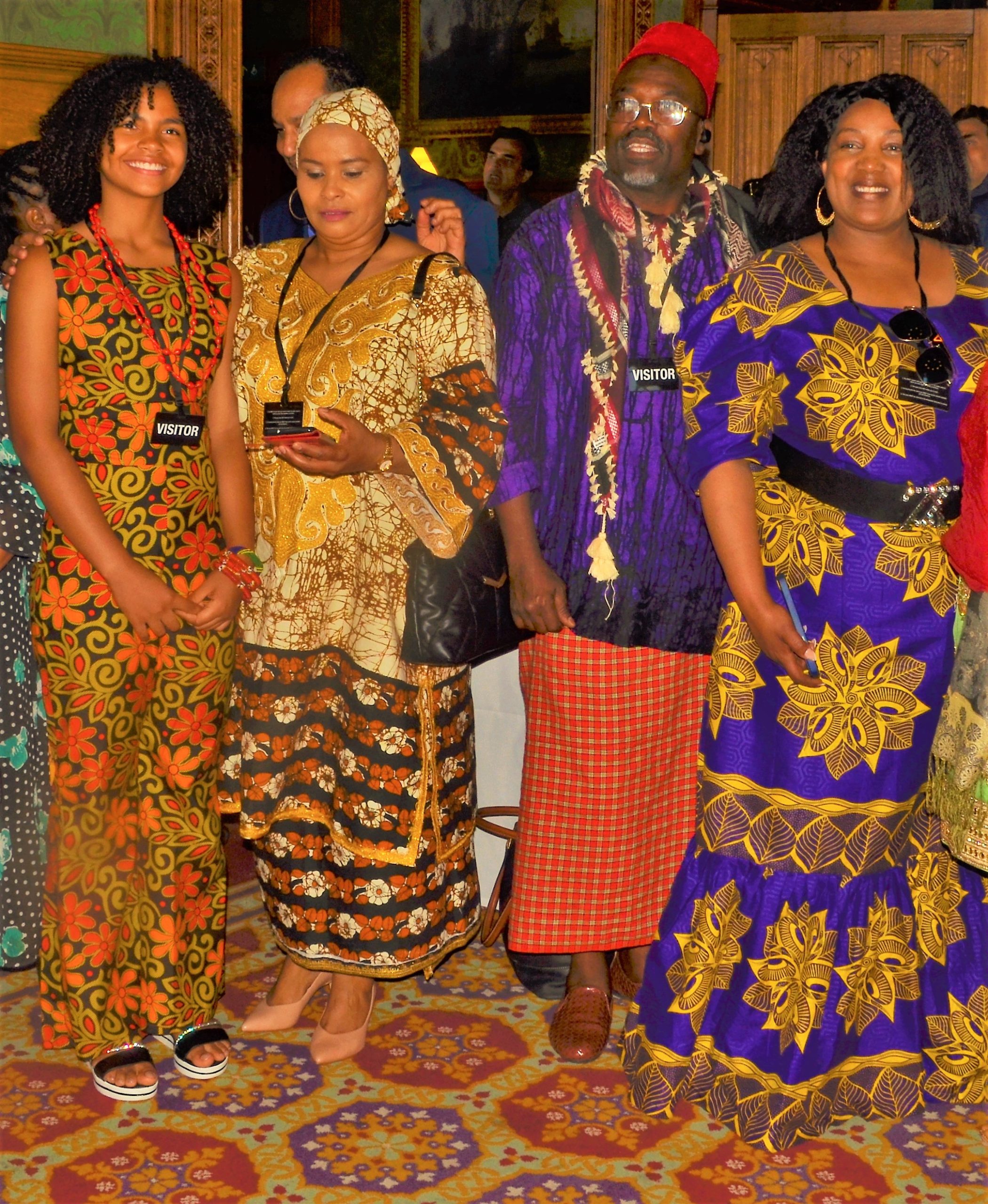
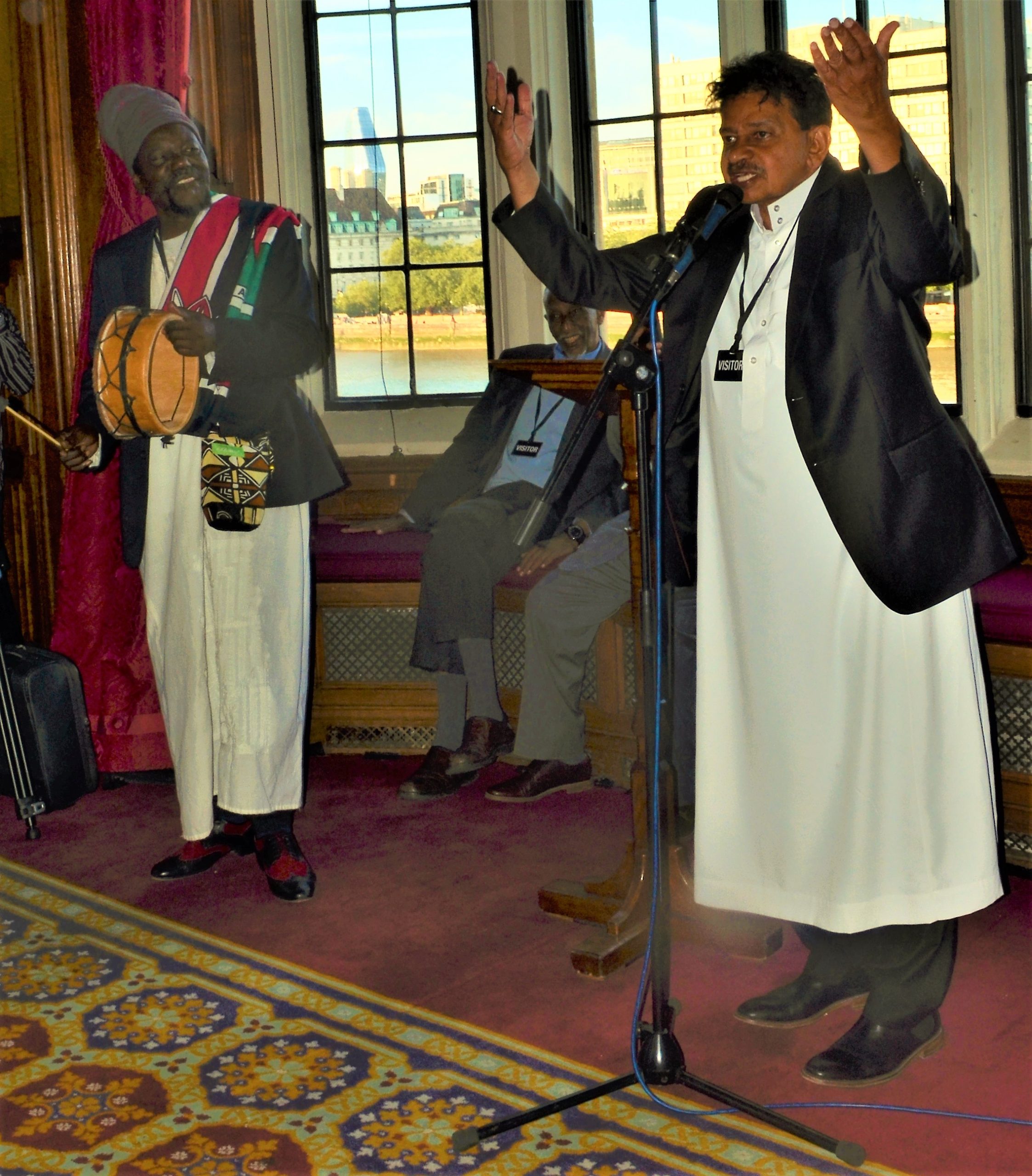
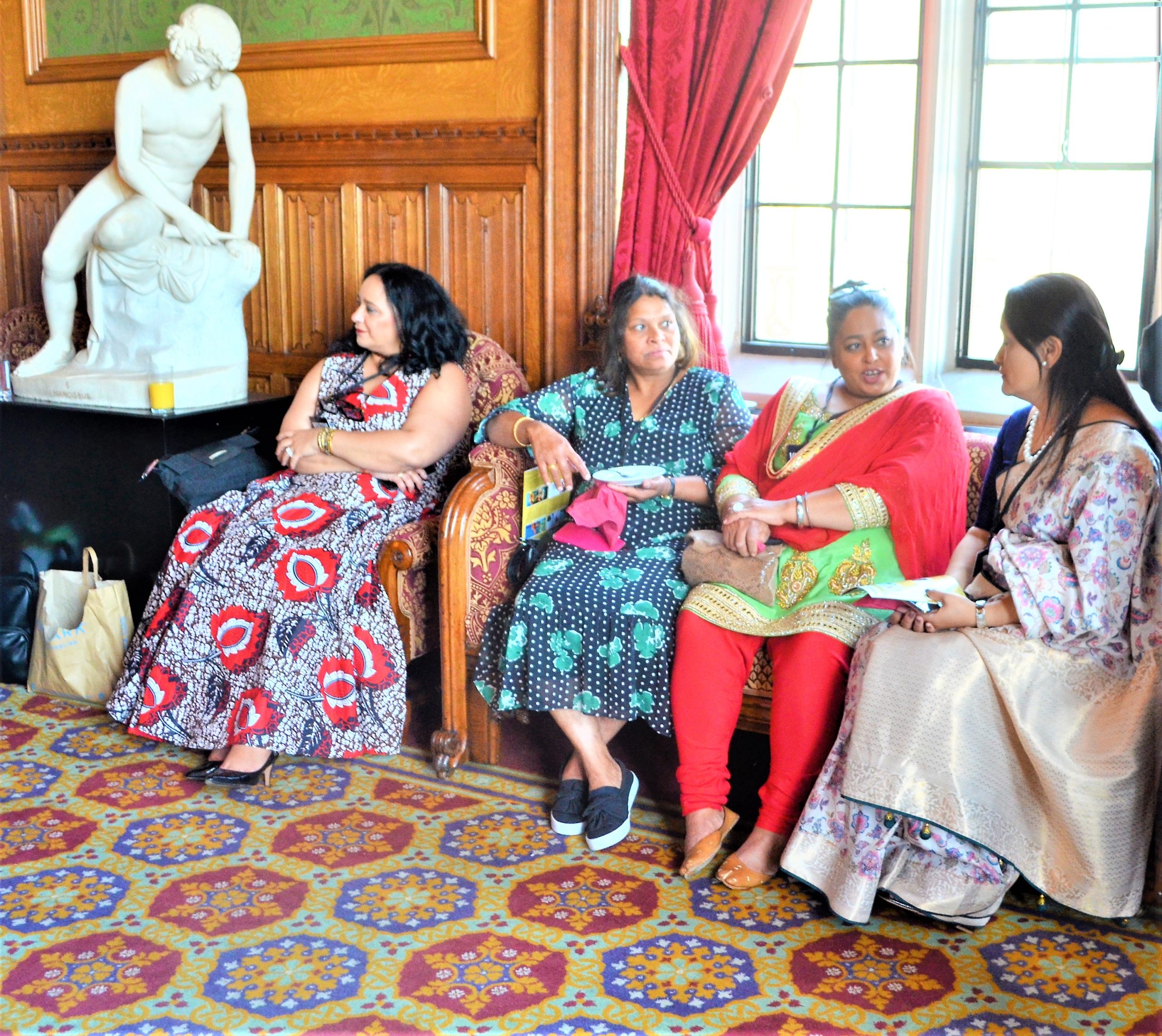
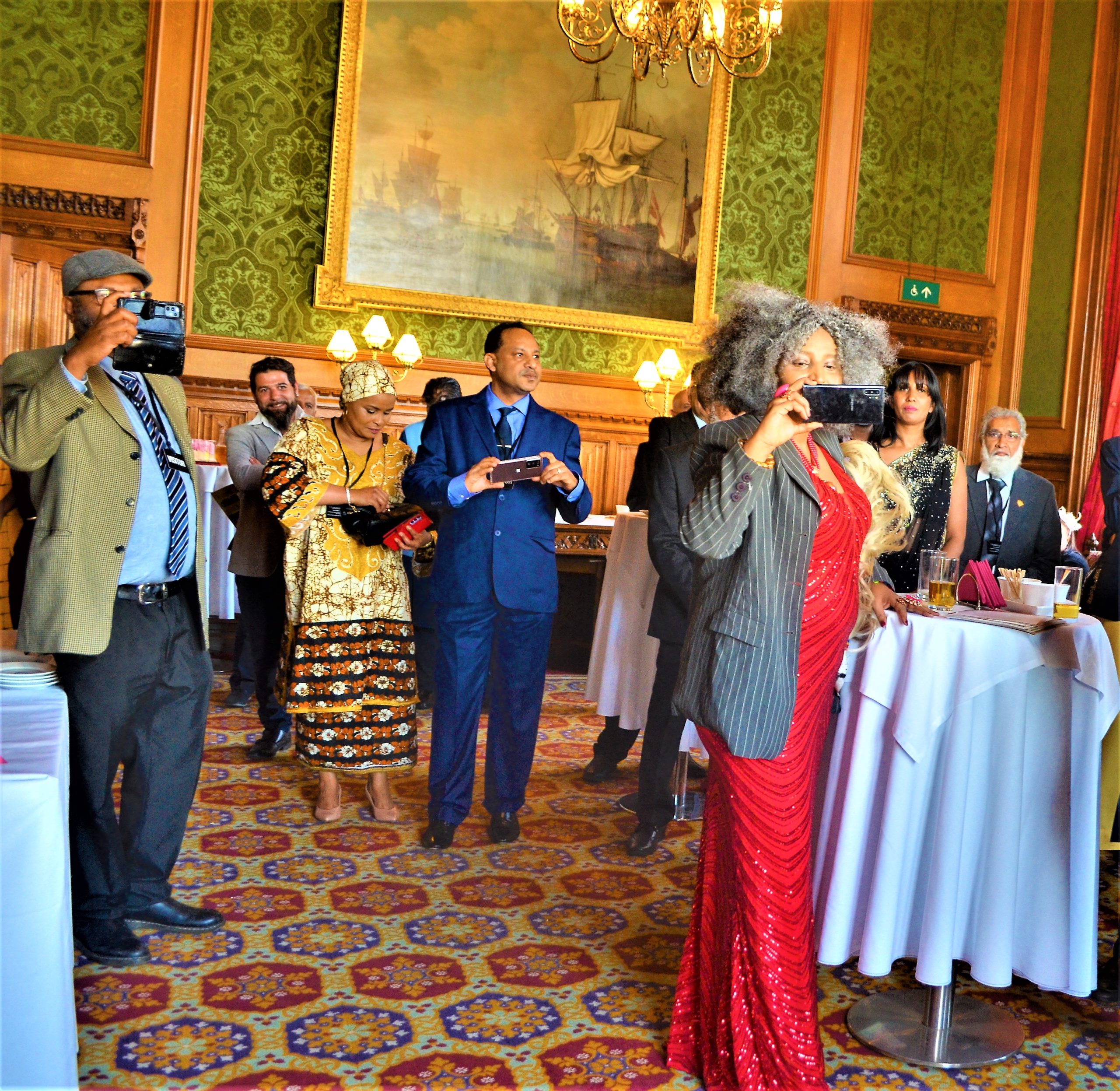
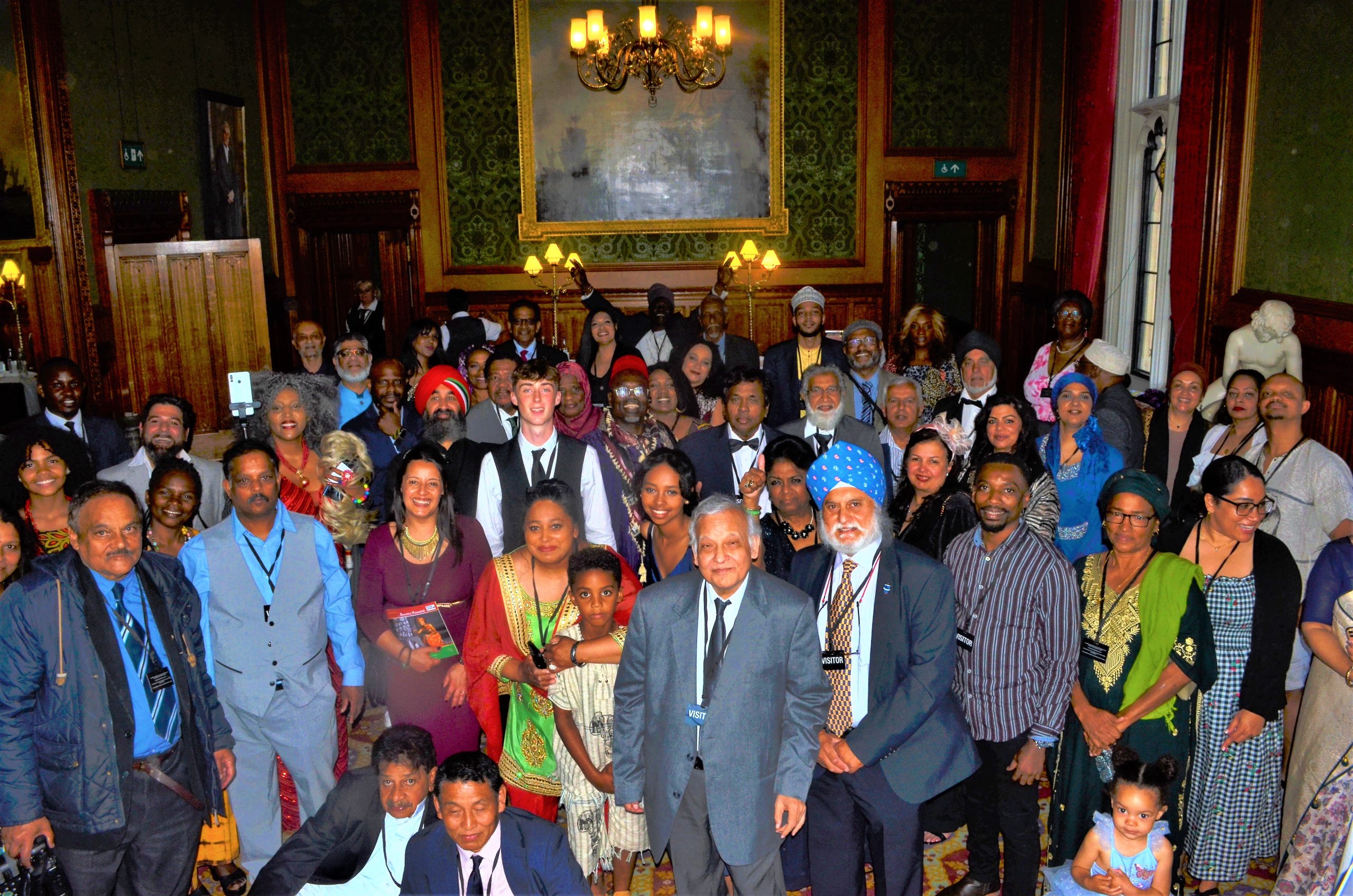
Guests were in the best traditional East African attire at the House of Lords. Photo _ SHAMLAL PURI
SEMA JAMBO, SAY HELLO – UK AFRICAN DIASPORA CELEBRATES WORLD KISWAHILI DAY IN LONDON
By SHAMLAL PURI
Associate Publisher & Senior Editor – UK
shamlalpuri4@gmail.com
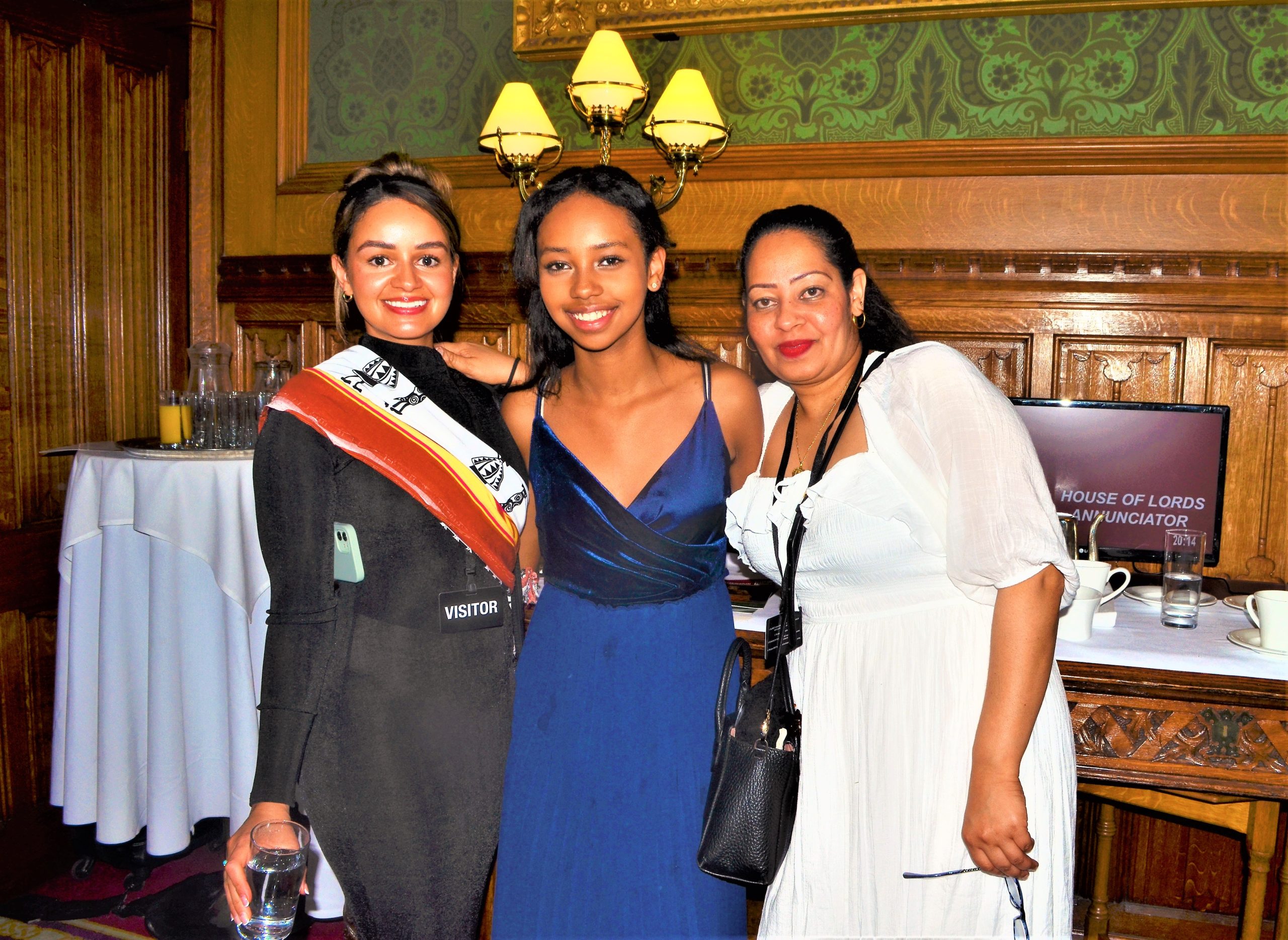
A rich local cultural language hugging the East African coast along the Indian Ocean region is winning received much-deserved global acclaim as the African diaspora living abroad beat the drum to celebrate the second World Kiswahili Day last Friday, 7th July, with music, dance and fanfare.
The event was marked with several ceremonies in London and other parts of the United Kingdom, as far as Ireland.
The London School of African and Oriental Studies (SOAS) held its celebration involving mainly African diaspora students.
Another eye-catching event was held at the British Parliament House of Lords in London, which I attended.
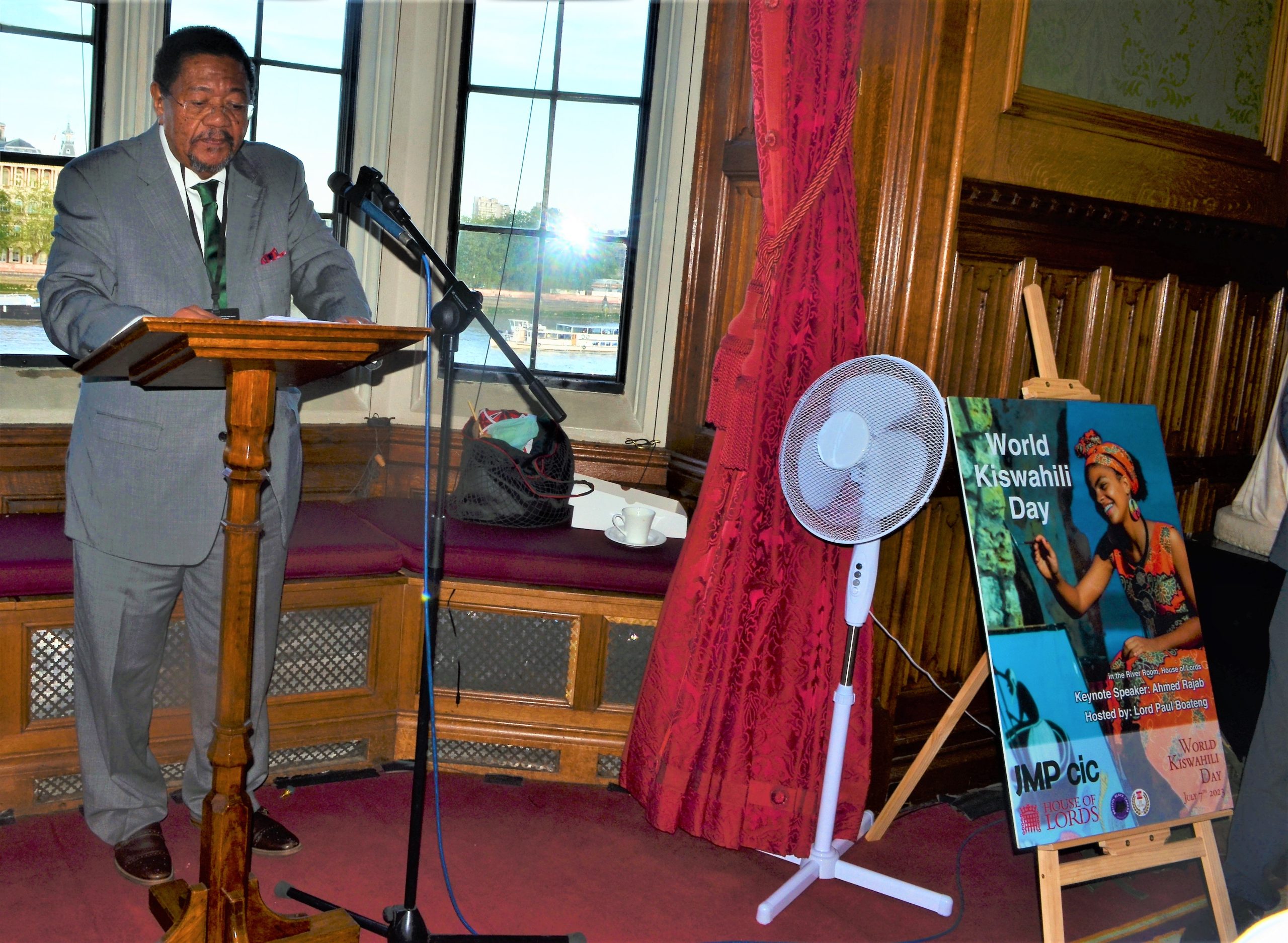
It was an ideal meeting ground for people in the African diaspora.
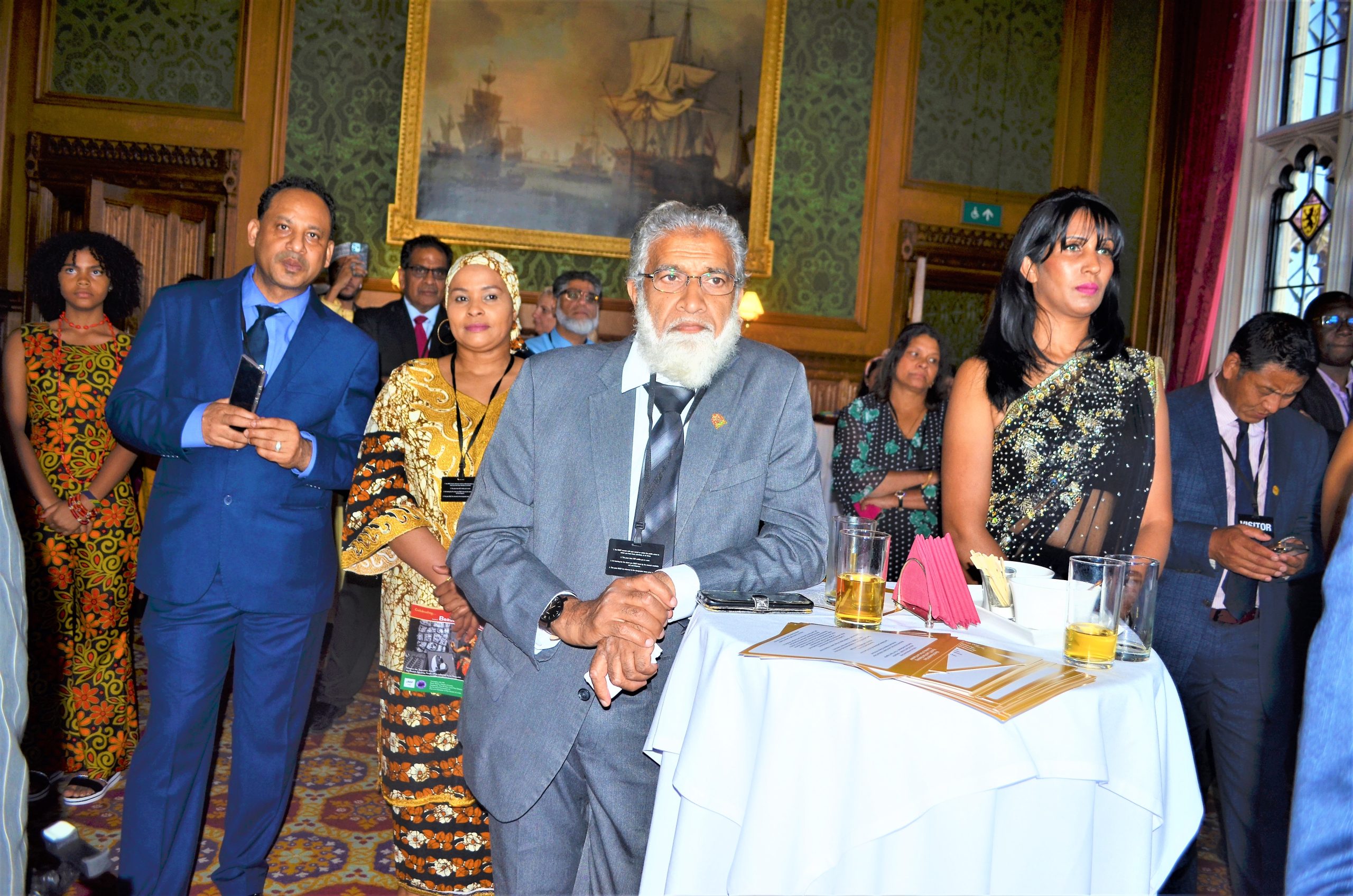
Around 100 members of the African diaspora from all over the United Kingdom, diplomats and pioneers of the Swahili language, joined in a glittering celebration at the Lords where some guests were dressed in their traditional East African finery.
The gathering at the Lords had several VIPs in attendance, including Patsy Moustache Pescatarian, High Commissioner of Seychelles, Kenyan High Commissioner Mr Manoah Esipisu, Adam Mhagama from the High Commissioner Tanzania; BBC legend Ahmad Rajab, who was the keynote speaker at the event.
Others were Ayesha Omar Rajab, Jean Pierre Uwetonze Charge d’Affaires Burundi, Minister Patrick Mwakalobo, Minister Plenipotentiary at the Tanzania High Commission. Dr M Salim EAE, Mrs Christine Nunn, Mumtaz Kassam, Pradeep Bhardwaj, Hafiz Zaheer Shabir, Hafiz Zaheer Shabir, Ahmed Said Hansdot, Nalin Parmar, Gyan Gurung, President Nepalese Association Wiltshire, Salim Kikeke BBC popular broadcaster and Zainab Aziz from Radio Deutsche Welle.
There was an attractive programme of music and dance with performers, including Di Namite, a Tanzanian diasporan living in Italy who rendered Miriam Makeba’s the world-acclaimed Swahili song Malaika.
The famous Taarab singer, Nasri Mohammed Abdullah ‘Brother Nasssir’ from Mombasa, Kenya, made history when he gave a beautiful rendering of the mix of a Bollywood song and music intermingled with Kiswahili lyrics. It was well received and was the first ever Taraab song to be sung in the British parliament building.
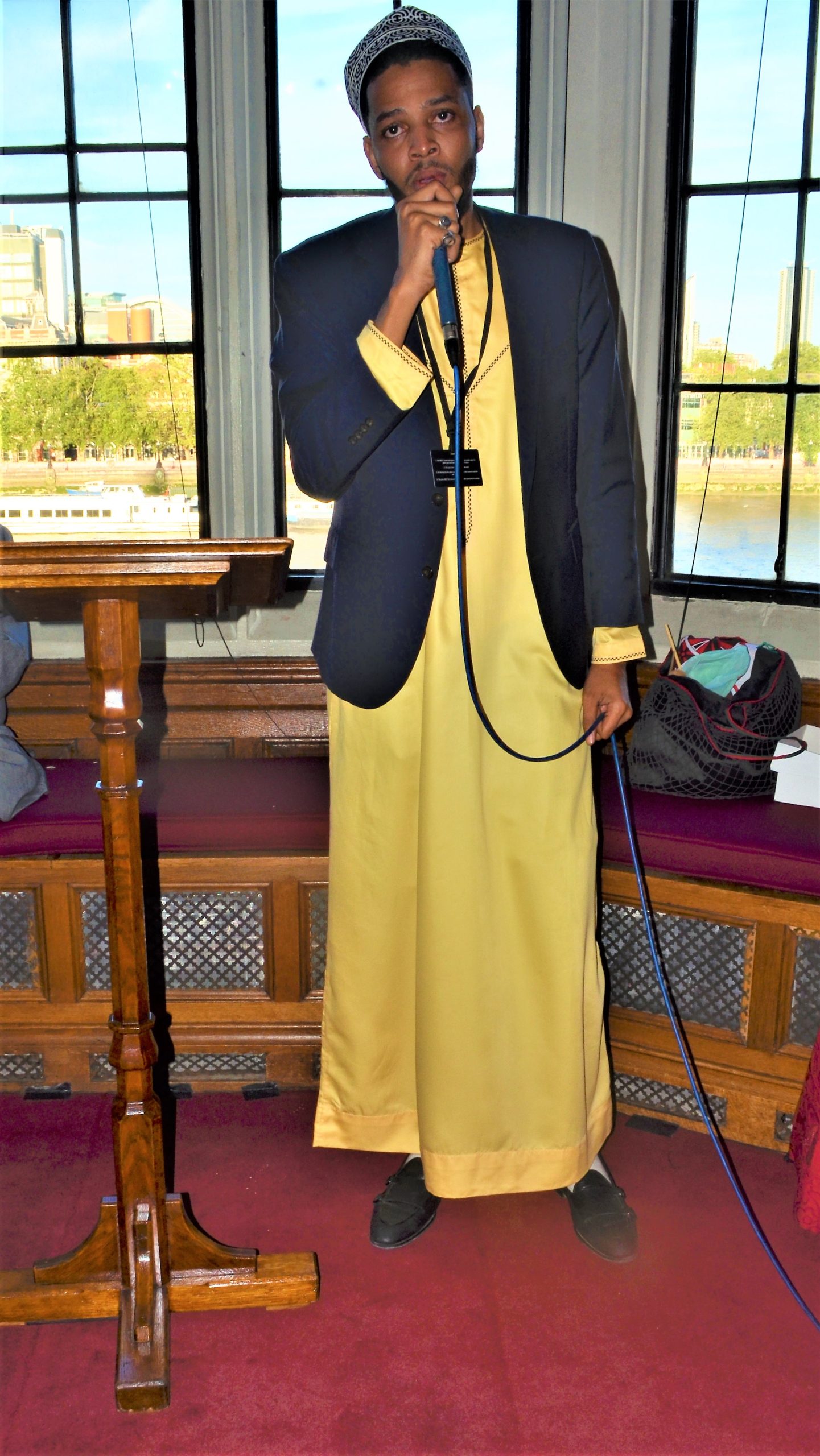
Others who added their talents were Kuklee Ali, Ugandan-born Rnb soul singer and Drummer Anthony Kalume.
There was plenty of goodwill and warmth, and the organisers had prepared an exciting programme. It ended with the organiser and compere Abdul Sheikh leading the guests to an exciting dance to the tune of the popular hit song Jambo Bwana with drummer Anthony Kalume on the loud drum beat. Guests joined in the dancing on the floor of the River Room at the Lords and ended the evening with a music and drumming climax.
Jambo Media and Production (JMP) organised the memorable evening. JMP is an off-shoot of the well-known MTM Awards founded by the tireless Bristol-based diaspora community worker veteran Kenyan broadcaster Abdul Sheikh and his son Junior Sheikh.
The veteran BBC Swahili Service broadcaster Ahmed Rajab gave the keynote speech in which he underscored the growing importance of the Kiswahili language in Africa and beyond the continent’s borders.
His speech, full of important information, was well received.
The event was hosted at the historic House of Lords by the Baron Lord Paul Boateng of Akyem and Wembley.
Baron Boateng is a Ghanaian diasporan, who was born in London and brought up in Ghana.
He is a civil rights lawyer, politician and diplomat.
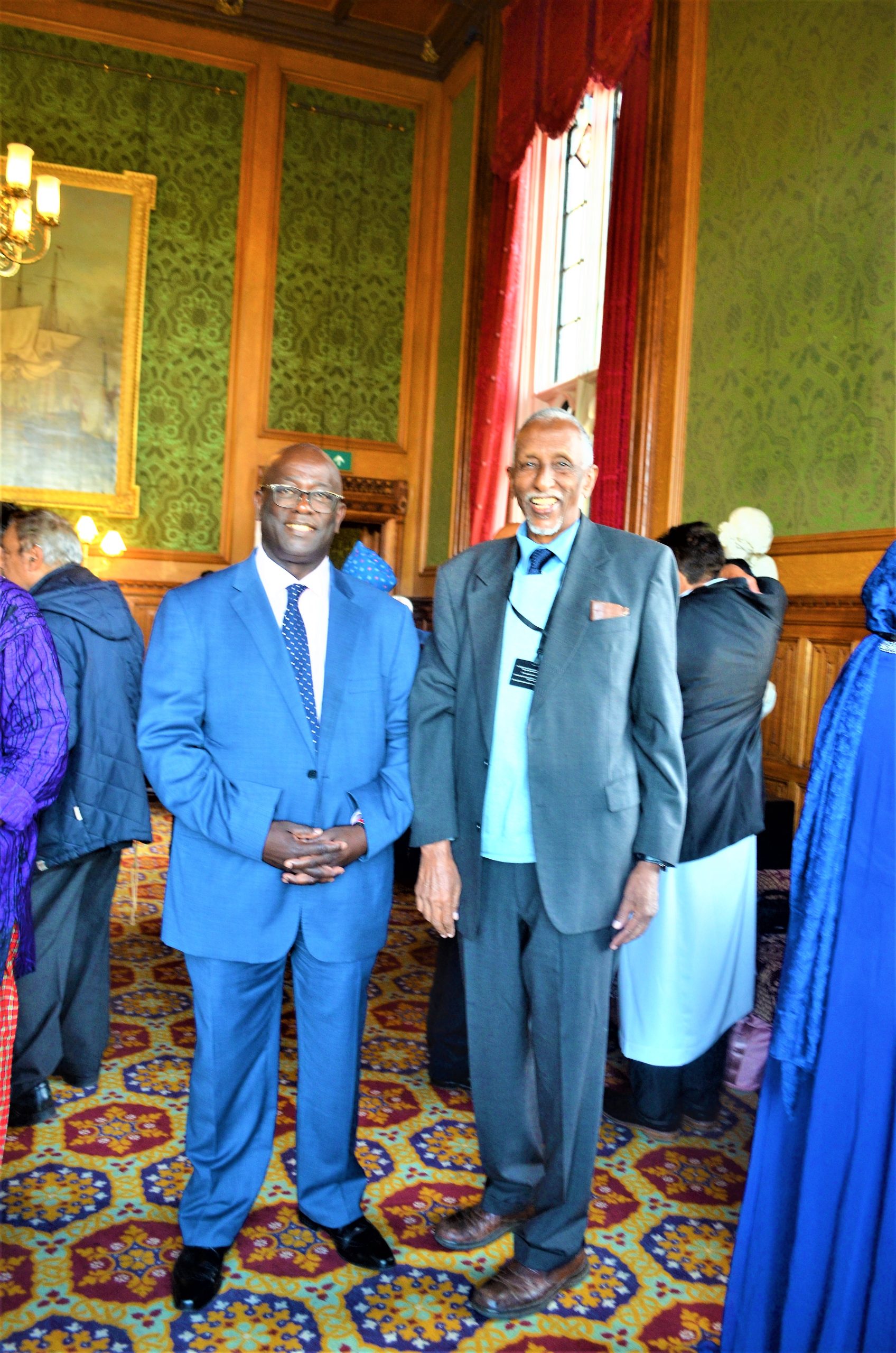
He was Britain’s first Black Cabinet Minister in 1997 when he was appointed Minister for Social Services and Mental Health and later Minister for the Police.
He returned to Ghana as the British High Commissioner and was later posted as the High Commissioner to South Africa.
He was an MP representing Brent South in the 1980s, an area in northwest London with an extensive diaspora community. He had succeeded Laurie Pavitt in that constituency.
Kiswahili is a Bantu language with a vibrant vocabulary borrowed from other languages – mainly Arabic, Portuguese, Urdu and Hindi.
It is the national language of Tanzania, Zanzibar, Kenya, and Comoros. It has been around for centuries and is spoken by over 200 million people in the region and now beyond its borders.
Swahili speakers are called Waswahili. They have a vibrant and highly developed culture, dance and music.
Kiswahili, or Swahili, as it is widely known, has rich literature and literary legends, including those known for their oral tradition folklore.
The noted Swahili literature names are Shaban bin Robert, Mohamed Said Abdulla, Ali Mazrui, Hamisi Akida, and Katama Mkangi, all late.
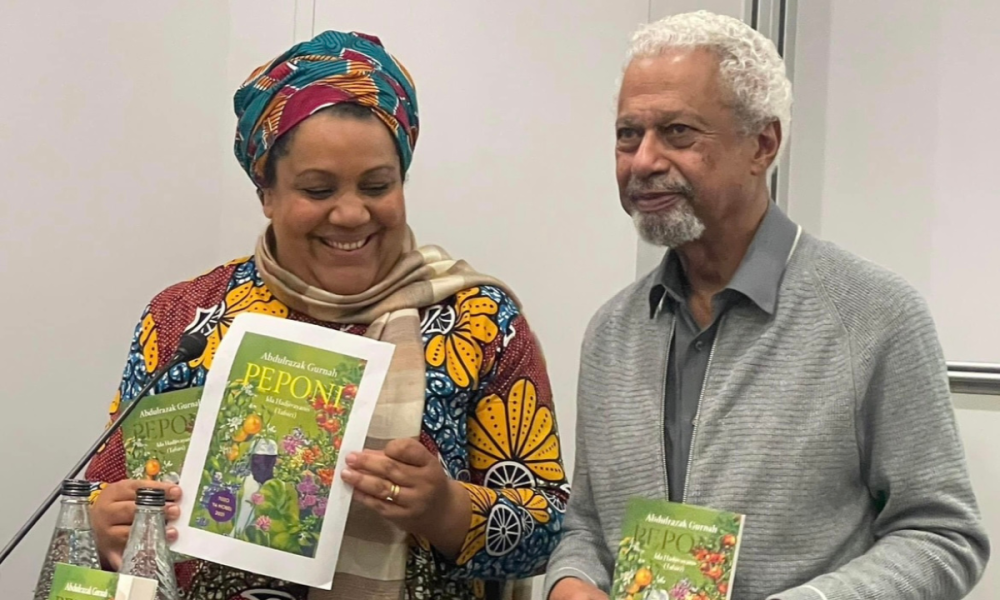
Modern-day Swahili writers include the 2021 Nobel Prize winner for Literature, UK-based Tanzanian author Abdulrazak Gurnah whose book Peponi translated by Dr Ida Hadjivayanis) is read widely.
Others are Christopher Mwishinga, Ebrahim Hussein, Fadhy Mtanga, Farouk Topan, Abdulatif Abdalla, Adam Shafi Adam, Said Khamis, Mohamed Suleiman Mohamed, Kyalo Wambi Wamitilla, Said Ahmad Mohamed, Kyalo Wadi Wamitiila and Haji Gora Haji among many others.
Swahili is among the three official languages of the East African Community, the economic grouping of Kenya, Uganda and Tanzania, the other two being English and French.
In recent years, Burundi, the Democratic Republic of Congo, Rwanda and South Sudan have joined this common market grouping.
While Swahili speakers are concentrated in the East African region, it is also the lingua franca of the people living along the borders of countries in the African Great Lakes Region which takes in the Democratic Republic of Congo, Malawi, Mozambique, southern Somalia, and Zambia.
The influence of Swahili is also strong in this part of Africa and is one of the working languages of continent-wide.
Kiswahili language is one of the official languages of the African Union (AU), Southern African Development Community (SADC) and East African Community (EAC). It is, therefore, an indispensable tool in achieving the Sustainable Development Goals 2030 and facilitating regional integration, particularly in implementing the African Continental Free Trade Agreement (ACFTA).
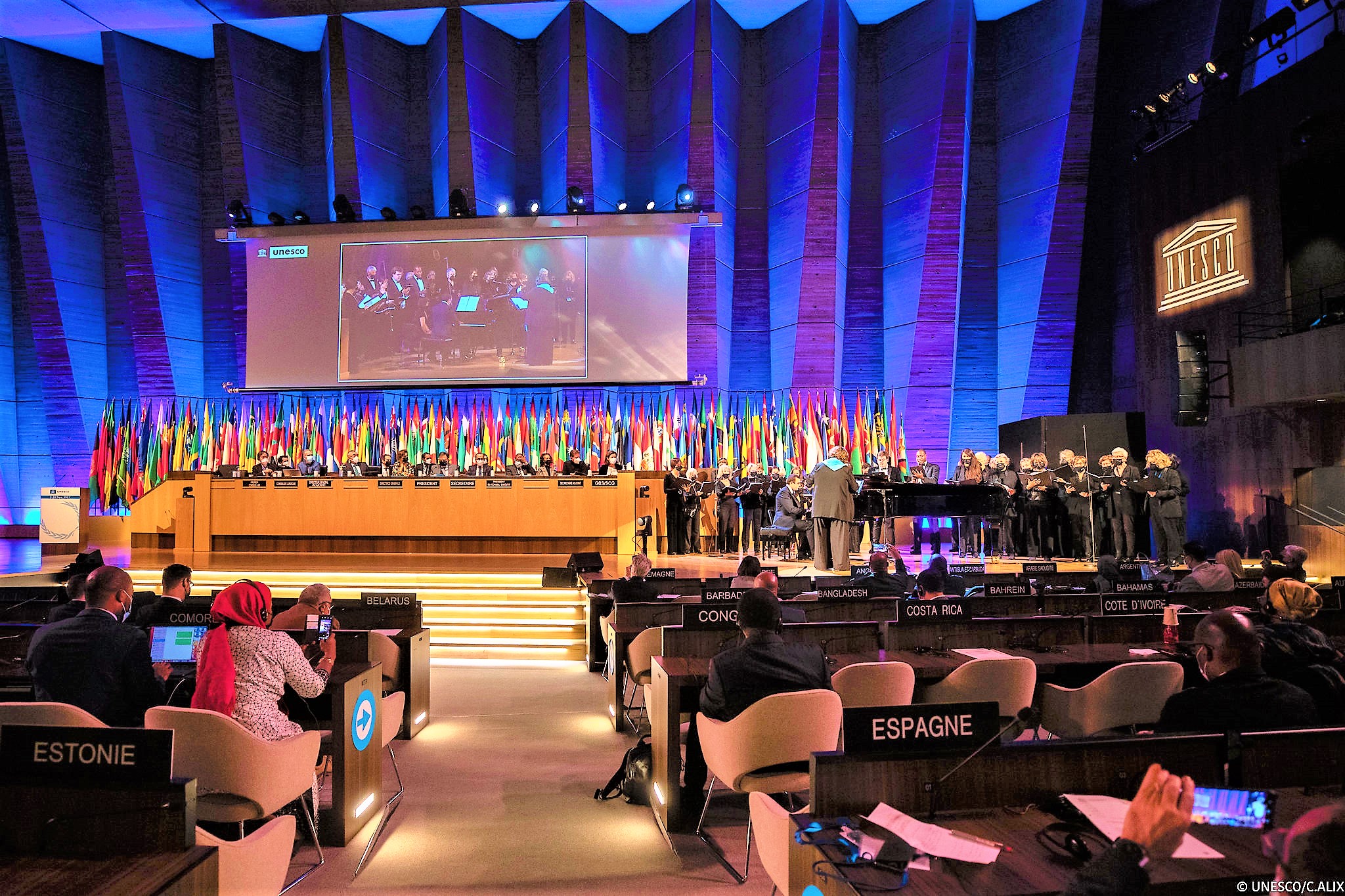
Even though Kiswahaili has been there for centuries, the world recognised it as an international language only in 2021 at the Session of the General Assembly Conference of the United Nations Educational, Scientific and Cultural Organisation (UNESCO) in Paris.
UNESCO proclaimed the 7th of July of each year as the World Kiswahili Language Day following the endorsement by the Executive Committee at the 212th session.
The date selected to mark World Kiswahili Day, 7th July, is significant to Tanzania.
This is the day the country marks Saba Saba Day (meaning the 7th of the 7th month) because of its political significance.
This was the day in 1954 that Tanganyika African National Union (TANU) under the late Mwalimu Julius Kambarage Nyerere (himself an author of Swahili works), the first President of Tanzania, adopted Kiswahili as a unifying language for independence struggles, to be proclaimed a World Kiswahili Language Day at the United Nations.
Indeed, the first President and Father of the Nation of Kenya, the late Mzee Jomo Kenyatta, also used the Kiswahili language through the popular “Harambee” slogan in mobilising the people of Kenya in the struggle against colonialism.
Very little is known about the origin of the word Harambee. Historians say Mzee Kenyatta was inspired by this word from the railway workers recruited from India were building the Kenya railways when that country was under the British rule.
When they lifted the heavy rail tracks, they said: “Har Har Ambe” (invoking the Hindu Goddess Ambe). The joint call from these workers was to pull together in an atmosphere of pulling together.
When he devised the slogan Harambee (Har Har Ambe), it was accepted in the Kiswahili dictionary.
In addition, on 7th July 2000, the East African Community (EAC) was re-established to rekindle the spirit of cooperation and integration among the East African people of Tanzania, Kenya and Uganda, where the Kiswahili language is widely spoken. Rwanda, Burundi and South Sudan later joined the EAC and are now members.
The 39th SADC Summit of Heads of State and Government held in Dar es Salaam, Tanzania, in August 2019, approved Kiswahili as the fourth SADC official working language in recognition of its contribution to peace-building and liberation struggles of Southern Africa and Africa in general.
The proposal put to the 2021 UNESCO summit delegates at the conference explained the grounds for their plan to honour Kiswahili.
“Language is not merely a tool for communication, but the bearer of a whole nexus of cultural expressions and conveys identity, values and visions of the world. It is a vessel which contains cultural diversity and dialogue among civilisations. It is a bridge that enables closer relations between societies, a richer diversity of forms of expression and interaction, and the exchange of support and empowerment.”
The delegates were told, “Kiswahili is one of the most widely used languages of the African family and the most widely spoken in sub-Saharan Africa. It is among the world’s ten most widely spoken languages, with over 200 million speakers.”
“It is one of the lingua franca in many countries within East, Central and Southern Africa and the Middle East, particularly Oman, which once ruled Zanzibar. It is also taught across major universities and colleges globally.
“In the 1950s, the United Nations established the Kiswahili language unit of United Nations Radio, and today Kiswahili is the only African language within the Directorate of the Global Communications at the United Nations,” the delegates were told.
London is famous for its BBC Kiswahili service. It was launched on 27th June 1957. It has 24.9 million listeners, mainly in Africa. It recently celebrated its 65th anniversary, an impressive milestone.
The international recognition to Kiswahili was based in the spirit multilingualism.
“Multilingualism, a core value of the United Nations, is an essential factor in harmonious communication between peoples, as it promotes unity in diversity and international understanding, tolerance and dialogue.
“The United Nations General Assembly, through its resolution 71/328 of 11th September 2017, on multilingualism, welcomed the implementation of a day dedicated to each of its official languages to inform and raise awareness of their history, culture and use, and encouraged the Secretary-General and institutions such as UNESCO to consider extending this important initiative to other non-official languages spoken throughout the world. ”
The significance of Kiswahili in Africa and globally, where the diaspora is settled, cannot be lost. UNESCO’s decision has added a new feather to a language loved by those who understand and speak it.
The world community realised the importance of the role of the Kiswahili language in promoting cultural diversity, creating awareness and fostering dialogue among civilisations. It is also a language worth learning.
For example, in China, there are special training schools where Swahili is taught to Chinese expatriates before they arrive in Tanzania to take up posts.
When the Chinese built the Tanzania-Zambia Railway (TAZARA), some Chinese workers and supervisors spoke Swahili fluently.
Many East Africans are surprised, but in the background, the Chinese assimilated with the Swahili language.
Once travelling from Dubai to Nairobi, I sat in economy class with a plane load of Chinese passengers heading to take jobs in Tanzania. They spoke fluent Swahili, almost like locals.
I am sure this would have left locals wondering, especially if they had come to Tanzania for the first time.
Similar Posts by Shamlal Puri:
- KENYAN HOCKEY LEGENDS HONOURED IN LONDON
- Tourism bonanza for the Middle East: FOUR DAYS WHEN THE WORLD CAME UNDER ONE ROOF IN DUBAI
- LONDON PACKAGING WEEK WITH TOP GLOBAL BRANDS ATTRACTS THOUSANDS OF VISITORS
- UK’S NATIONAL HEALTH SERVICE IN BIZARRE COLOUR BAR CRISIS
- UK’S NATIONAL HEALTH SERVICE IN BIZARRE COLOUR BAR CRISIS:
About the Author