The Mt Kenya Times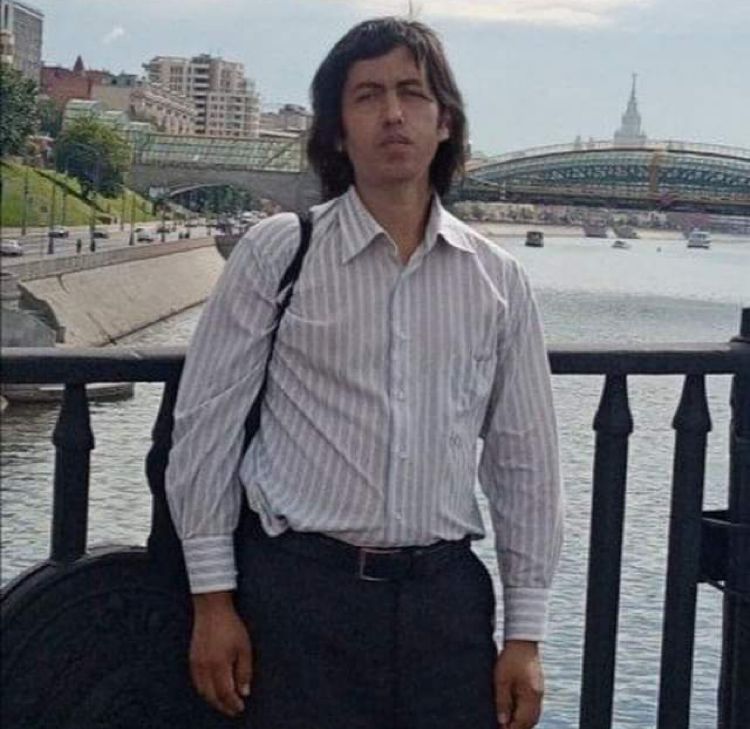
Sherzod Komil Khalil
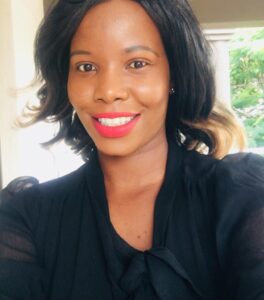
By: Paula.O.M.OTUKILE
Correspondence
Gaborone, Botswana
BIOGRAPHY
Sherzod Komil Khalil was born on September 13, 1982 in Kitob District, Kashkadarya Region, Republic of Uzbekistan. In 1999-2003, he studied at the faculty of philosophy of UzMU as a bachelor; in 2003-2005 he studied at the master’s degree of the same faculty, and received a master’s degree in modern western philosophy and history. In 2005-2007, he was a student of the Higher Literature course at UzMU and the Writers’ Union of Uzbekistan. In 2016, the book “I left poetry” (“I left poetry”) was published in English. His works have been translated into more than twenty languages and published in foreign countries. In 2019, Sherzod Komil Khalil was the laureate of the international youth writer award named after Magjon Jumaboy in Kazakhstan. In 2021, the writer was awarded the Mother Teresa Peace Prize in India. Sherzod Komil Khalil currently lives in Moscow, in the writer’s town of Peredelkino.
1) I consider myself a writer first. I always thought so.
Sherzod Komil Khalil is a writer, then a poet, and a philosopher by specialty. I have few scientific works on philosophy. I’m more into social anthropology. I study the disappearing northern peoples. This theme has become the main theme of my artistic works. My nation is Uzbek – a great nation. But I will not limit myself to being the writer of this great nation. As I study the cultures of small, disappearing peoples, I consider myself a writer of them too.
2) My homeland is Uzbekistan.
A country located in the center of an ancient civilization with a history of three thousand years of statehood. I was born in this place, which embodies the rich cultural layer of Central Asia. Commander Amir Temur was born in the country where I was born. Timur conquered the world with a sword in the Middle Ages. And I have a pen. We want Central Asian writers to become one of the centers of world literature of the literature of our region. For this, it is enough to translate and read our works. We want to win hearts through literature. Personally, I always wanted it.
3) I am a specialist in modern western philosophy and history by profession.
But I sacrificed my field for literature. Yes, I occasionally dabble in philosophy and social anthropology. But I admit, I am more interested in literature. I sit at my desk for six hours every day. At this time, I write a story or a novel, I write a poem. I translate from English, German, Russian. Yes, I usually do literature.
4) My works have been translated into more than twenty languages.
My first book “I left poetry” was published in North Carolina, USA. My stories and poems are always published in my homeland. They are often published in foreign publications. I would be happy if my works were published in African publications. After all, I write about ordinary people, about their strange world.
5) I wrote The Book of Imaginary Creatures of the Turks last year in Moscow.
This is a wonderful book about the legends of the Turkic peoples, written in the bestiary genre. Just like the historians who wrote down the Greek legends, I collected the imaginary images of the Turkic peoples in forty bestiaries. I drew the appearance and image of these imaginary creatures with words. The talented Uzbek artist Chori Shams embodied my texts with his illustrations. The joint work of the writer and illustrator ensured that this wonderful book reached the hands of readers as a wonderful bestiary.
6) The cover of my first book, “I left poetry”, depicts a man’s footprints on a field.
Every time I see this cover, I think about where the steps of humanity will lead us, not just mine. After all, who are we in this bright world, what kind of industry are we? What will be our today, tomorrow, future? Will people be happy? Or will it destroy itself and the world by destroying each other with nuclear war? Will the shouts of poets and writers remain only on the covers of our books? If we are true writers, when will we penetrate the human heart? When I look at the covers of my books, I remember them and the skill of the designers.
7) Writing good poems is not easy.
I’ve always said that. For me, a good poem is a poem that successfully summarizes its aesthetic and philosophical content. A good poem is always the poet’s voice, his words that can be heard all over the world. Maybe it’s a cry, maybe it’s a rebellion, maybe it’s a kiss. A good poem is like an iceberg. It has a surface and a bottom layer. If I give an example from my work, I can say my poem “Wolf”. It pits the wolf against the flock of sheep and the shepherd who leads them. The wolf embodies the symbol of freedom. And sheep are seen as a symbol of the herd following the shepherd. The poem is built in this direction. Of course, it’s hard to say. It is better to read and feel its spiritual and ethical lines once.
8) I think my writing was first influenced by my grandmother, who told me fairy tales from a young age, and my mother, who gave me books every summer vacation. Then, when I started reading our national literature and world literature, I felt a great urge to write. Our Central Asia had great poets like Abdulla Оrif and Oljas Sulayman. Great writers like Chingiz Aitmatov and Temur Polatov. Also, the trust and guidance of my mentors, such as Ne’mat Arslon, the unique master of Uzbek fiction, Shukur Kholmirzaev, the master of storytelling, and other mentors, Abdulla Sher, Kholdor Vulkan, always convinced me to write and have a perspective.
9) At the age of thirteen, I started creating with a simple hobby.
Then I believed that I could write professionally in the process. I saw that I could win the trust of the literary community with my talent. I realized that if I wanted to, I could write like the good writers of Uzbekistan Khayriddin Sultonov, Nazar Eshonqul, and Shodiqul Hamro. Everything depends on the knowledge, work, talent given by the Creator, and at the same time this perspective was not alien to me. These were enough for me to write. I had a strong desire to write. In one of my interviews, I said that literature is not interesting without me, the charm of literature will die without me. It wasn’t just a joke, it was real for me. I also deeply felt Kafka’s statement that literature is me.
10) I have enough readers. Both in my country and abroad.
I will be happy if they translate my works and become my readers. The quality of any writer is easily accepted by readers. The German writer Hermann Hesse attributed the lack of fans of unknown talented writers to the fact that they simply did not read. I agree with him. For example, our writer Erkin A’zam writes no less than the Japanese writer Haruki Murakami. But the world chose Murakami, not him. Literature is largely dependent on such choices. In fact, it is enough to read it once to know the possibilities of a talented writer. I’d love for non-fan readers to add me to their list of favorite authors from time to time. That’s what every writer wants. Because whether we like it or not, we still write for readers in some sense.
11) You face lies every day, every breath.
He will be waiting for you. What is important for the writer is not to be with the lie, not to participate in it is a matter of conscience. Solzhenitsyn is the best example for us. I live in Peredelkino in Moscow near the house where he lived for some time. I always feel Solzhenitsyn’s figure when I pass by the house where he lived. The best catalyst for revealing a writer’s identity is not to engage in falsehood. I will never support a lie.
12) I have participated in many public anthologies as a translator.
The last time I actively participated in the translation of the anthology of modern German poets into five languages of Central Asia. There were meetings with German poets at the international poetry festival in Tashkent, and our books, the fruit of our cooperation, were distributed to students as gifts. I myself often share books with readers. It is a good practice for a writer to share a book. In the alleys of Tashkent, the Writers’ Union organized small library corners. From there, you can get free books to read, and in exchange, you can share another book you’ve read for others to read. I leave my favorite books for other readers to read in these public service street libraries. This is my favorite job. Books are the benchmark for our future. Under any renaissance lie books. That’s why I’m proud to share books.
13) I will never use my creativity for money.
Yes, even though it makes me money sometimes, I don’t use it to make money. To me it seems like a betrayal of creativity. But writers live behind books. I can write a bestseller, but I don’t create to write a bestseller. I am a writer who writes what I want.
14) As I said before, I am not writing the book to sell it.
I write it so that I cannot write it. Yes, it may not work out well sometimes. In the USА in 2016, when my book was published, it only sold 11% during the year. As a result, the publisher refused to print my next book. Private publishing works with market capitalism. However, I believe that such events cannot determine the true worth of a writer. If that were the case, foreign magazines and newspapers would not be interested in my works. Readers were not waiting for my new works. I am currently writing a new series of stories about the disappearing northern peoples. I feel that there is much interest in this series of stories of mine, just as there is great interest in Fenemore Cooper’s works on American Indians. In particular, my short story “We will disappear” was translated into twenty-two languages of the world in a short period of time. I would very much like the people of Africa to read it in their native languages. Because my stories in this series are sad chronicles about the ethnic loss of mankind. It contains moral standards that can be a lesson for all of us.
15) I have three big novels in hand.
I want to publish them in the next few years. I am writing new stories and essays. I translated the stories of Gabriel García Márquez into Uzbek. My collections of poems have been collected. I feel like Borges sometimes. I consider the works I have written and am writing to be my great wealth. In general, I have many creative plans. After all, I just turned forty years old. There is still great potential to achieve more. Jose Saramago began his work after the age of fifty-five, but he managed to receive the Nobel Prize. If I had died at the age of sixty, I would not have written anything, he recalls in his biography. When a writer like me, who started his work many years ago, has just turned forty years old, why should I not hope for the future?!
16) As long as you have a great thirst for literature, you should not stop writing.
The worries of life sometimes throw you off, but you should know that only literature can save a writer. The most important thing I can say to young writers is this! Because a soldier who does not dream of becoming a general is not a soldier.
17) My books are available for purchase online.
The book “I left poetry” written by serb professor Milutin Jurikovich with a foreword is still available at “lulu.com” publishing house. The book is sold for 19.57 euros. Online shopping is available. Marketing staff of the publishing house will deliver the book to the desired address in three to five days. You can find and read my works online in Russian, English, Spanish magazines and websites. For this, it is enough to search by the name of Sherzod Kоmil Khalil.
18) I have such a plan.
I publish more and more electronic editions to make my works easy to find and read. We enable our publishers to create more free online platforms. Because for most readers in the world, this is the best way. As a writer, I support this too. Because I want more readers to read my books.
19) What can I say as a writer instead of an afterword?!
Read more books friends! As long as you read a book, you think. You can look at the world with a deep rational look. Books change your life, add meaning to it. No matter where and in what circumstances you live, do not be deprived of fiction. Always eager to read new books by your favorite authors! Life is short, don’t waste it. Use life wisely!
Similar Posts by The Mt Kenya Times:
- Mt Kenya Times ePAPER October 26, 2026
- Sakaja challenges Kamukunji police over Eastleigh suspect bail
- Muturi demands binding livestreaming rules for 2027 polls to prevent repeat of 2022 chaos
- NTSA calls for road safety to be declared a national disaster after 24 die in Mtito Andei crash
- Ruku turns on Waiguru over deputy president ambitions: ‘That seat is not being contested for’
About the Author