Poetry And Journalism Are Not Just Two Creative Fields That Occasionally intersect or collide, But Two Different Ways Of Creating Meaning In Modern Society
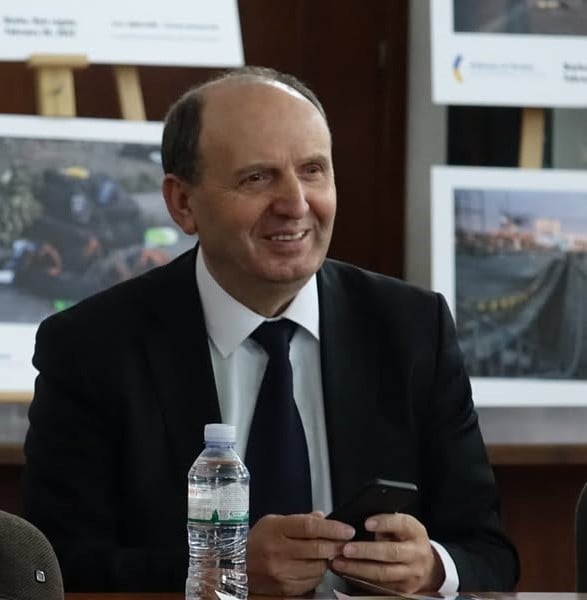
Mujo Bucpapaj
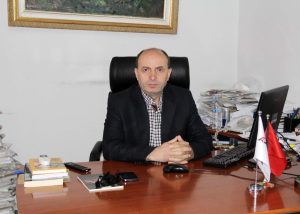
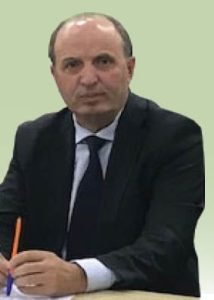
Interview with the poet, scholar, public intellectual, and publisher and editor-in-chief of the literary and cultural newspaper Nacional published in Albania, Dr. Mujë Buçpapaj
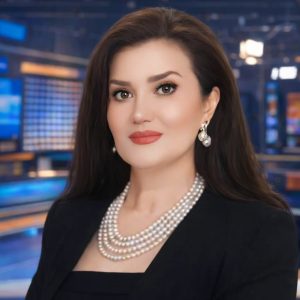
Interviewer: Prof. Dr. Terane Turan Rehimli, Azerbaijan
T.T.Rahimli: Poetry and journalism, one the voice of the inner world, the other a chronicle of time. At what moment in your creative work do these two fields converge, and at what moment do they collide?
- Buçpapaj:
From a theoretical perspective, the relationship between poetry and journalism may be read as an interdisciplinary interaction among aesthetics, hermeneutics, and media studies. Poetry and journalism are not merely modes of expression, but discursive systems governed by different regimes of truth, in Foucauldian terms. Journalism operates within a referential and verificatory paradigm, whereas poetry functions within a symbolic regime, where truth is not proven but experienced and interpreted.
From an aesthetic standpoint, poetry represents what Theodor W. Adorno defined as the “relative autonomy of art”: a space in which social reality is not mechanically reproduced but transformed through form.
Journalism, by contrast, belongs to what Jürgen Habermas calls the public sphere, where language performs a communicative, rational, and mediating function between the individual and society. The convergence of these two fields occurs precisely at the moment when aesthetic form and the public function of language intertwine, producing a hybrid discourse in which factuality and sensibility coexist.
Hermeneutics offers another interpretive key. According to Hans-Georg Gadamer, meaning arises from the dialogue between the text and the reader’s historical horizon. Journalism operates within a narrow temporal horizon dictated by immediacy, while poetry expands the hermeneutic horizon by granting historical experience a trans-temporal dimension. In this sense, my poetry has often functioned as a delayed hermeneutics of realities experienced through journalism: what could not be said immediately due to political, ethical, or professional constraints later found expression in poetic form.
From a media-theoretical perspective, modern journalism is conditioned by the logic of speed, what Paul Virilio calls “dromology,” namely the tyranny of real time. Poetry, by contrast, resists this logic by imposing its own inner rhythm and by creating a counter-hegemonic space against the inflation of information. The collision between poetry and journalism occurs precisely here: one demands immediate reaction, the other requires reflective distance.
Yet this collision produces a creative synthesis. As demonstrated by the tradition of “new journalism” and literary reportage—from Kapuściński to Tom Wolfe—journalism can absorb narrative and symbolic devices without losing its informative function. In the same way, my poetry has absorbed the factual sensibility and ethical responsibility of journalism, becoming a form of what may be called a “poetics of testimony.”
In conclusion, poetry and journalism are not merely two creative domains that occasionally converge or collide, but two distinct modes of meaning production in modern society. They embody the tension between aesthetics and ethics, between eternity and actuality—a tension that, in my creative experience, has not been an obstacle, but a necessary condition for intellectual and artistic depth.
T.T.Rahimli: In the modern world, where truth is often relativized, by which criteria do you measure it?
- Buçpapaj:
As a scholar of literature and a practicing journalist, I perceive truth on two levels. On the journalistic level, it is measured through rigorous fact-checking, documentation, and the courage to speak even when there is personal cost. On the literary level, truth is what Milan Kundera would call “the truth of existence,” that is, the correspondence between human experience and artistic expression. The relativization of truth is always a sign of moral crisis; therefore, for me, the ultimate criterion remains conscience, professional integrity, and human honesty.
T.T.Rahimli: Do moral and ethical limits of language exist?
- Buçpapaj:
The history of Western thought, from Aristotle to Hannah Arendt, teaches us that language is always bound to responsibility. Freedom of expression is not a license for destruction. As a media director and as a former head of the Albanian copyright institution for several years, I have always been convinced that language without ethics turns freedom into farce. The boundary is not censorship, but human dignity.
T.T.Rahimli: Can the poet still be the conscience of society in the 21st century, or is this a romantic expectation?
- Buçpapaj:
If the poet imagines himself as a prophet, that is romantic. But if he understands himself as a witness, then his role remains essential. In the 21st century, the poet does not lead the masses, but resists the banalization of language. As Czesław Miłosz said, poetry is “an act of memory against forgetting.” This makes it still indispensable.
T.T. Rahimli: As editor-in-chief and founder of the newspaper Nacional, how do you balance poetic sensibility with journalistic responsibility?
- Buçpapaj:
As editor-in-chief and founder of Nacional, I have conceived the balance between poetic sensibility and journalistic responsibility as a complementary relationship, not as tension or compromise. My referential model has always been elite European cultural journalism, where language is not reduced to an instrument of rapid information, but preserves aesthetic, ethical, and intellectual density. In this sense, I have been guided by Albert Camus’s principle that “the writer’s task is to serve both truth and freedom,” an axiom that remains as valid for cultural journalism as for literature.
In this spirit, Nacional has been built as a consolidated platform of intellectual and aesthetic communication, with a distinct international impact in promoting contemporary literature, the arts, and critical thought. Poetic sensibility helps me preserve the human, symbolic, and reflective dimension of the text, transforming it into a dialogical space where authors, poets, scholars, and artists from diverse cultures interact through interpretation and debate; journalistic responsibility, on the other hand, imposes methodological and ethical discipline, ensuring that factuality, verification, and truth remain non-negotiable principles.
In this way, Nacional functions not only as an informative medium, but as a meeting point for international cultural exchange, where national literary traditions enter into comparative dialogue with global currents of art and thought, positioning the Albanian word in a transnational space and affirming culture as an instrument of dialogue, understanding, and intercultural conscience.
T.T.Rahimli: How has the historical burden of the Balkans influenced your way of thinking and writing?
- Buçpapaj:
The Balkans have often been described by outsiders as a place that “produces history” more than it consumes it—that is, a region where historical events, conflicts, and major political changes abound, yet often without relief or stability for the people. The Albanian writer Ismail Kadare has frequently addressed this “historical burden” in his essays and novels, emphasizing that people live under the weight of the past while history appears to repeat itself.
The Balkans are a European region marked by brutal wars and ethnic cleansing, even as recently as the late twentieth century in Bosnia and Kosovo. World War I itself began in the Balkans with the assassination of the Austro-Hungarian heir. Throughout history, the region has remained a zone of recurring tension, where conflict can erupt at any moment.
For Albanians, this historical burden is even heavier, as they represent one of the oldest autochthonous nations in the world, with roots extending back millennia. European and American studies in history, archaeology, and linguistics identify Albanian civilization as approximately eight thousand years old, and the Albanian language as one of the three oldest living languages still spoken today. This antiquity is not merely a historical fact but a symbolic and moral burden, placing the Albanian nation in constant tension between cultural continuity and violent historical ruptures.
After five centuries of Ottoman occupation, Albanians emerged politically, economically, and demographically crippled. Yet the Albanian tragedy did not end there. The London Conference of 1913, organized by the European Great Powers, partitioned the Albanian nation, leaving more than half of its territories and population outside the newly created Albanian state of 1912, assigning them to Greece, Serbia, and Montenegro. This historical injustice became a structural wound in our collective consciousness.
Albanians were born and raised with this injustice, with a sense of historical deprivation. The liberation of Kosovo on June 12, 1999, from Serbian occupation was not only a political and military act, but also a belated moral correction of an injustice inflicted by early twentieth-century Europe upon the Albanian nation. In this sense, Kosovo is also a historical response to a historical injustice.
Today, Albanians are a nation with a Euro-Atlantic orientation, seeking peace, freedom, and coexistence in the Balkans, not domination. This historical experience has profoundly shaped my thinking and writing. Epistemologically, it has taught me distrust of simplified and justificatory narratives, and the necessity of a critical, interdisciplinary, and ethical approach to history.
My poetry and scholarly work reflect this Albanian drama in the Balkans. I have been formed and inspired by it. In the last two centuries alone, within my extended Buçpapaj family, twenty-three members have given their lives defending Albanian lands from foreign invaders. I know the history of the Balkans and my nation intimately. I have written two books of publicistic essays and dozens of scholarly studies on this subject, and my poetry also keeps this historical experience alive. The Albanian tragedy is felt in my verse not as rhetoric, but as memory, as aesthetically processed pain, and as a moral act of testimony.
In this context, language is never neutral. It is always responsibility. To write about the Balkans and Albanians means to write with the awareness that language is a form of resistance against forgetting and an effort to give meaning to historical suffering without transforming it into empty mythology.
T.T.Rahimli: Do profoundly philosophical and psychological literary texts still have the power to change people?
- Buçpapaj:
Yes, because the human being remains essentially the same. Technology has altered the rhythm of life, but not existential anxiety. Dostoevsky, Kafka, and Camus continue to be read because they speak to universal tensions. Even today, a true literary text does not immediately change the world, but it changes the way a person perceives themselves within the world.
Literary texts with philosophical and psychological depth retain their transformative power because they operate not merely on an informational level, but on the inner structures of consciousness, empathy, and self-understanding. Such literature, as Fyodor Dostoevsky suggests, “descends into the abysses of the human soul” in order to expose moral conflict, existential anxiety, and individual responsibility, compelling the reader to confront themselves.
From a contemporary philosophical perspective, Martha C. Nussbaum argues that literature cultivates moral imagination, because through identification with characters, the reader exercises the capacity to understand the life of another, directly shaping ethical judgment and social sensitivity. Likewise, Paul Ricoeur’s hermeneutics emphasizes that the act of reading is a process of reconfiguring the self, in which the subject is transformed through interpreting the narratives of others. In this sense, even in an age overwhelmed by rapid information, profound literature remains a privileged space of reflection, because it does not seek to provide immediate answers, but to shape critical thought and existential sensitivity, transforming the individual in a durable and inward way.
T.T.Rahimli: What does the world lose when a poet falls silent, and what happens when a journalist falls silent?
- Buçpapaj:
When the poet falls silent, the world loses symbolic depth and the language of aesthetically processed pain. When the journalist falls silent, transparency and civic freedom are lost. In my personal history, I have seen that enforced silence is always an ally of violence.
T.T.Rahimli: Can media and literature be real instruments of resistance against power?
- Buçpapaj:
Yes, media and literature can be real and essential instruments of resistance against the abuse of any form of power, but only if they preserve moral autonomy, intellectual independence, and professional integrity. They are not merely instruments of communication, but spaces of critical conscience, where truth confronts fear and language opposes violence.
Modern history demonstrates that in closed societies or during violent transitions, free media and engaged literature are often the earliest forms of civic resistance. They create memory, articulate injustice, and give voice to those whom power seeks to silence. George Orwell remains the classic example of the writer-journalist who understood that critical language, grounded in truth and reason, is the most enduring and long-term form of resistance to totalitarianism.
My personal experience as a writer, poet, scholar, pedagogue, and journalist has confirmed this principle in a dramatic manner. From the early years of pluralism, when at a very young age I was a co-founder of the first opposition party and likewise of the first opposition newspaper after nearly fifty years of communist dictatorship, to the founding and leadership of Gazeta e Tiranës, Tribuna Demokratike, and later my long-term engagement with Rilindja Demokratike, I never compromised with the truth. This editorial independence and professional integrity were paid for with extreme violence: in August 1997, I was shot six times with Kalashnikov bullets in the center of Tirana by gangs linked to the power that emerged from the insurgent rebellion of spring 1997, which overthrew a democratically elected government and plunged the country into chaos and fear.
The fact that I survived and returned to journalism without retreating or yielding to fear is evidence that media and literature are not merely professions, but moral missions. They fail only when they become extensions of power, propaganda, or commerce in fear. As long as they remain instruments of truth and freedom of thought, they not only resist, but actively shape the democratic conscience of society. This is also the message I convey to my students in the lecture hall.
- T. Rahimli: If language is your destiny, what is the heaviest burden of that destiny?
- Buçpapaj:
If language is my destiny, the heaviest burden of that destiny lies not merely in the act of speaking or writing, but in the very impact that each word leaves upon the world and upon time. Heidegger teaches us that language is the house of Being (Unterwegs zur Sprache, 1959), and thus every word that moves from thought to page or from voice to hearing carries a silent execution of existence, a weight that reminds us we never speak only for ourselves, but always for the world that listens.
Hannah Arendt raises the question of responsibility toward language, viewing it as action that shapes history and collective memory (The Human Condition, 1958); thus poetry and scholarship are not merely ways of expressing a personal vision, but moral and civic acts, in which every word may build or destroy, reveal the hidden or conceal the truth. Bakhtin, through his theory of dialogism (The Dialogic Imagination, 1981), emphasizes that every word lives among other voices, becoming part of a living network of interactions. This doubles the burden, because it is not enough to speak; one must listen, sense contradictions, and accept that language is always a mirror of the world and its emotions.
For me, as a poet and scholar, language is both a key to the mysteries of Being and a weight that carries the tremor of time, an inner obligation to pursue truth, to listen to silence, and to respect the dialogue between writing and the future, between what is said and what remains unsaid. This is my destiny: to speak, to weigh every sound, and to bear upon my shoulders the immortal burden of language. I have fought intensely in my country to defend freedom of speech and freedom of expression, and for this I have paid a high price.
T.T.Rahimli: Leo Tolstoy gave world artistic thought the concept of the “dialectics of the soul,” while Fyodor Dostoevsky shaped the model of the polyphonic novel. In your view, what are the distinctive signatures of writers who have exerted such profound and lasting influence on the history of modern artistic thought?
- Buçpapaj:
Writers who have exercised a deep and enduring influence on the history of modern artistic thought are distinguished above all by their capacity to reveal new forms of knowing the human being and the world, transforming literature from a mirror of reality into an epistemological instrument. Tolstoy and Dostoevsky are paradigmatic of this foundational power: the former understands the human being as a moral and psychological process in continuous development, while the latter conceives the individual as fragmented and plural, a being in whom the voices of conscience, faith, doubt, and revolt coexist without merging into a single authority.
The distinctive signature of these authors lies not only in narrative mastery, but in the creation of models of artistic thought. Tolstoy’s “dialectics of the soul” marks the transition from static to dynamic character, where the individual is never complete, but always in a process of moral choice. This renders his literature an ethical space in which narration becomes an analysis of conscience. Dostoevsky, through the polyphonic novel as conceptualized by Mikhail Bakhtin, liberates the character from the author’s absolute authority, allowing each voice to speak with its own philosophical autonomy, transforming the novel into an arena of competing ideas.
In modernity, writers of comparable influence share several fundamental qualities: first, the courage to challenge inherited forms and to create new aesthetic structures, as Kafka did with ontological absurdity, Proust with inner time, Joyce with stream of consciousness, or Faulkner with fragmented perspective. Second, they possess philosophical depth that manifests not as thesis, but as aesthetic experience, compelling the reader to think rather than merely follow a story.
Another distinctive signature is universality rooted in locality. Tolstoy is profoundly Russian yet universal; Dostoevsky likewise. This is also evident in Márquez, where Latin America becomes a global myth, or in Camus, where the Algerian experience of modern man acquires universal philosophical dimensions. These authors do not write to illustrate ideas, but to uncover the fundamental tensions of human existence: guilt, freedom, responsibility, faith, and the absurd.
Finally, the most important quality that distinguishes these writers is the organic bond between aesthetics and ethics. In their work, artistic form is not ornament, but a mode of thinking. Their literature does not age because it belongs not merely to its own time, but to the enduring dimension of human questioning. For this reason, Tolstoy, Dostoevsky, and their great successors remain not only writers to be read, but thinkers to be engaged in dialogue even today.
T.T.Rahimli: What are the defining signatures of writers with deep and lasting influence on modern artistic thought?
- Buçpapaj:
Writers with deep and lasting influence on modern artistic thought are distinguished not merely by stylistic mastery, but above all by their capacity to produce interpretive models that rearticulate individual perception, social relationships, and historical trajectories. Their ability to create a “hermeneutic paradigm of meaning” for human experience places them at the center of global literary discourse and guarantees the durability of their influence.
On the aesthetic and philosophical level, Tolstoy, through what may be conceived as a dialectics of conscience, shifts the novel from external narration to profound moral and psychological analysis, making ethical consciousness central to narrative configuration.
Dostoevsky, through his well-known polyphony, articulates a heterogeneous system of autonomous voices that reflect ideological pluralism and the tension between individual ethics and social structures, a model that has influenced modern theories of narrative multivocality.
In the twentieth century, Hemingway’s minimalism functions as an aestheticization of silence, where linguistic economy exposes the existential weight of human experience, while Gabriel García Márquez’s magical realism operates as a narrative hybrid in which myth, history, and collective experience intertwine within a symbolic universe, repositioning cultural peripheries as epistemological centers.
Within the Balkan literary context and its global circulation, Ismail Kadare represents a particularly emblematic paradigm. He integrates history, myth, and individual tragedy into a universalist narrative in which aesthetics, ethical reflection, and political awareness coexist in a hermeneutic unity. Through his widely translated and internationally analyzed works, Kadare not only places Albania on the map of world literature, but also demonstrates literature’s capacity to engage collective history and articulate social critique with universal resonance.
Figures such as Kafka, Joyce, and Faulkner further illustrate transformations in literary and epistemological perception: Kafka articulates existential anxiety and alienation before bureaucratic power; Joyce conceptualizes stream of consciousness as an epistemological instrument for exploring subjectivity; Faulkner fragments narrative time, creating a complex memory-space in which past and present coexist in a polyphony of time and identity.
In conclusion, the defining signatures of writers with lasting influence do not consist merely in stylistic innovation, but in their ability to intertwine aesthetics, philosophy, and ethics into a hermeneutic narrative unity. They offer not only interpretive models, but complex paradigms for understanding human reality, thus constituting enduring points of reference for both theory and practice of modern artistic thought and the global literary canon.
T.T.Rahimli: To what extent are the press and publishers responsible for the circulation of weak texts?
- Buçpapaj:
To a great extent. As a publisher and editor, I know that every compromise with mediocrity is an anti-cultural act. The publisher is a guardian of standards, not merely a market manager.
T.T.Rahimli: Your message to the poets and readers of the world…
- Buçpapaj:
Poets are not merely creators of words; they are witnesses of infinity, architects of perception, and guides of silence. Homer teaches us that the journey is not merely movement through space, but a voyage of the soul, a testament to courage and fate: every breaking sea is an inner mirror of humanity. Dante Alighieri challenges us to enter hell and heaven, teaching us that the meaning of life requires confronting inner darkness and recognizing ourselves at every step.
Walt Whitman reveals that words are body and spirit, that poetry is a space where every individual becomes part of the universe. Pushkin reminds us that poetry binds the individual to history and nationhood; Sergei Yesenin teaches that nature reflects the soul; Pablo Neruda invites us to see poetry as an act of love and revolt; T. S. Eliot confronts us with the fragments and voids of modernity; Victor Hugo teaches poetry as moral engagement; Paul Éluard and Rumi remind us that love and transcendence find expression only through sanctified language; Odysseas Elytis and Ali Podrimja show that poetry is a perpetual dialogue with time and existence.
The reader is not passive, but a traveler and a seeker of truth. Literature does not simplify life; it reveals its complexity and offers the mirror in which human spirituality recognizes itself.
My message to poets and readers of the world is simple and modest: poets, write with honesty and courage; readers, read with patience and open your hearts. Live with the word, read with daring, and remember that poetry is the bridge that binds us to one another, to time, and to the infinite sense of existence.
Thank you !
– I thank you for your valuable thoughts.
WHO IS DR. MUJO BUÇPAPAJ?
Dr. Mujo Buçpapaj, poet and scholar of literature, is one of the most distinguished exponents of contemporary Albanian poetry, enjoying remarkable national and international recognition. His work has been published in dozens of foreign languages, and he has been honored with several prestigious international literary awards.
He is a poet, literary scholar, publicist, translator, essayist, and a committed promoter of international literature and culture, widely regarded as a highly influential cultural figure in the region and beyond. He also serves as a university lecturer.
Dr. Mujo Buçpapaj holds a PhD in Literary Studies. He is the founder and editor-in-chief of the weekly literary and cultural newspaper Nacional (www.gazeta-nacional.com
), which is printed in Tirana and distributed in its print edition in Kosovo, North Macedonia, and other regions. The online edition of Nacional is published daily.
He is also the founder and director of Nacional Publishing House, which publishes works by many prominent regional and international writers and poets.
Dr. Buçpapaj lives in the capital city, Tirana, Albania, with his wife, who is a teacher, and their two daughters, who are university students.
Similar Posts by The Mt Kenya Times:
- Direct hospital access to KEMSA cuts drug delays, says PS
- Africa can’t wait: Continent seeks $1 trillion for climate adaptation
- Ruto passes the baton as Africa’s trade bloc faces a fragmenting world
- Kenya’s recall law: Parliament sets the threshold — but the real test comes in 2027
- Kenya’s deadliest bridge to be replaced in KSh7.5B project
About the Author