So, To Access Development You Must ‘Talk Nicely’ To The President? My Oh My……………
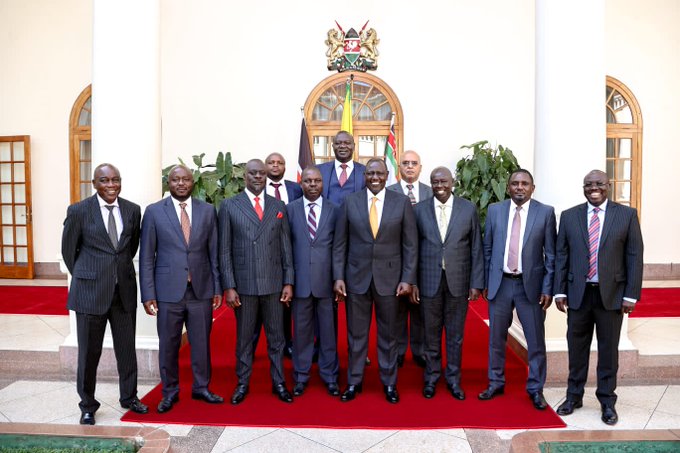
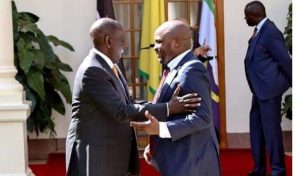
President William Ruto holds consultative meeting with Nyanza MPs

By Jerameel Kevins Owuor Odhiambo
Worth Noting:
- The human right to development also implies the full realization of the right of peoples to self-determination. The human person is the central subject of development and should be the active participant and beneficiary of the right to development.
- All human beings have a responsibility for development, individually and collectively, taking into account the need for full respect for their human rights and fundamental freedoms as well as their duties to the community, which alone can ensure the free and complete fulfilment of the human being and they should therefore promote and protect an appropriate political, social and economic order for development.
Development is crucial for a nation because it increases its standing in the world. It means they are better able to build relationships with other influential countries. Development is integral because it increases a countries international prestige. Increasing development is vital for many nations because it allows them to improve their infrastructure.
Better infrastructure helps a country immensely, improving roads, railways, airports, communications and utilities makes a country more efficient. It allows people to move and send information more easily, as well as transport goods and provide services more widely. Better infrastructure improves a countries economy, which in turn allows countries to spend more on better infrastructure. This economic feedback-loop is a major reason why development is so important for a nation.
Infrastructure is also key for a country’s connection to the wider world. It increases international trade and also makes a country more appealing to external investors. As a country develops it should focus on building quality and lasting infrastructure. Developed countries have shown the importance of having good infrastructure and how it is key to achieving prosperity.
Development is crucial for countries for it improves the economic opportunities of people. The more a country develops the more jobs are created. This gives more people access to quality, stable work and to be able to provide for themselves and their families. Better economic opportunities have shown to reduce the likelihood of conflict. Better jobs are also related to improved quality of life for people.
The United Nations adopted ‘Declaration on the Right to Development’ on 4th December 1986 via General Assembly Resolution 41/128. In consonance with the above declaration. Right to development is an inalienable human right by virtue of which every human person and all peoples are entitled to participate in, contribute to, enjoy economic, social, cultural and political development, in which all human rights and fundamental freedoms can be fully realized.
The human right to development also implies the full realization of the right of peoples to self-determination. The human person is the central subject of development and should be the active participant and beneficiary of the right to development. All human beings have a responsibility for development, individually and collectively, taking into account the need for full respect for their human rights and fundamental freedoms as well as their duties to the community, which alone can ensure the free and complete fulfilment of the human being and they should therefore promote and protect an appropriate political, social and economic order for development.
States have the right and the duty to formulate appropriate national development policies that aim at the constant improvement of the well-being of the entire population and of all individuals, on the basis of their active, free and meaningful participation in development and in the fair distribution of the benefits resulting therefrom. States have the primary responsibility for the creation of national and international conditions favourable to the realization of the right to development. States have the incumbent duty to take steps, individually and collectively, to formulate international development policies with a view to facilitating the full realization of the right to development.
Development can be deemed as both a physical reality and a state of mind. The two aspects of development have in them combinations of social and economic processes which have the objectives of increasing the availability and widening the distribution of life sustaining goods, raising living standards and expanding the range of economic and social choices available.
Chronologically, in Kenya the person who became the President had a wide range of powers and controlled the government and the resources that is inform of taxes. It is for this reason that most politicians had to bootlick the President so as to get development projects such as housing, water, electricity, standard roads, hospitals name it. That is why there was struggle by an array of politicians to ascend to the highest seat of the land for they were sure that they could use the resources towards the benefits of their followers and supporters. Unfortunately, those who couldn’t make it and remained in the opposition had to, in the words of Former President Uhuru Kenyatta, ‘Meza mate’ from a far off.
This was the norm for quite some time. Perhaps this explains why there are counties or some communities that have been marginalized. It is an historical problem that led to the current stalemate. The President then could reward those who were loyal to him and those who voted for him and forsake others. The president’s treatment of others was akin to them being children of a lesser God. But surely, who does that? That was Kenya for you by then. In short, you had to be in harmony with the President and pay him homage not forgetting tell him sweet nothings as you praise him apparently for ‘doing nothing.’ Just to raise his ego and in effect, the President can make it possible for a road to pass through some area. Long were those days. I did not get a chance to experience the same. Regardless of how, history emphatically supports whatever I have stated above; thus don’t be disillusioned to take them as hot air statements. If you doubt the same, have some time and have a date with the history of this small country.
Having noted these anomalies, Kenyans were fed up and decided to bequeath unto themselves a new Constitution which was to be the new social charter between themselves and the government in 2010. August it was. Birth of a new nation. Dr. Willy Mutunga commenting on the 2010 Constitution posited as follows: ‘In their own wisdom, the Kenyan people decreed their past to reflect a status quo that was unacceptable and unsustainable through: provisions on the democratization and decentralization of the Executive; devolution; the strengthening of institutions; the creation of institutions that provide checks and balances; decreeing values in the public service; giving ultimate authority to the people of Kenya that they delegate to institutions that must serve them and not enslave them; prioritizing integrity in public leadership; a modern bill of rights that provides for economic, social and cultural rights to reinforce the political and civil rights giving the whole gamut of human rights the power to radically mitigate the status quo and signal the creation of a human rights state in Kenya, mitigating the status quo in land that has been the country’s Achilles heel in its economic and democratic development among others reflect the will and deep commitment of Kenyans for fundamental and radical changes through the implementation of the Constitution.’
The sentiments are definitely on point on the transformative nature of the 2010 Constitution by all means. Post the 2010 Constitution, one can dare ask himself whether as of now right to development is still a replica of the pre-2010 Constitution. Former President Uhuru Kenyatta took in the reins of power in 2013 following the divisive election that was then. He did not fail folks for he made sure he continued with the unwanted legacy of former Presidents. I was almost persuaded that there is some unwritten code for the Presidents.
Through the rein of President Uhuru Kenyatta he made sure that development was a preserve for those who supported him. This definitely was an affront to the Constitution among other laws that Kenya is a party to. But in spite of that, following the handshake between Former President His Excellency Uhuru Kenyatta and Former Prime Minister Right Honourable Raila Amollo Odinga, things suddenly changed. And Luo Nyanza which was part of the opposition started getting awakened by massive development projects. I won’t make mention of the same, kindly make Google your friend if you are that interested on the projects that saw light of day courtesy of the region being ‘politically correct.’ Worse luck, other areas seemed as opposition areas did not benefit from the same.
His Excellency Uhuru Kenyatta gave the reins of power to Doctor William Samoei Ruto last year September after a heavily contested elections. I just don’t know it seems the unwritten code on matters development was passed over to President William Samoei Ruto. This perhaps might inform the reason why the President overtime has been hosting delegations after delegations each time so as to woo them; or should I say blackmail them? Lest I get misconstrued wrongly, but do I care? I don’t unfortunately. The president hosting political leaders is right by all means. But using it as a bait to ensure that these leaders support his cause and in return he initiates development projects. My oh my…. That’s isn’t permissible unto a fisher folk like me.
One question has been mindboggling my three pound grey matter is; who will ever redeem the occupants of the house on the hill from this misguided thought? I then remember that the occupants in the house have been having some folks in the name of consultants and advisers. What is their role? I conjecture. Pursuant to the edicts of common sense and the law perchance, development is a reserve for all and sundry and isn’t a clique of some citizens. This ideation of the President serving some citizens at the expense of others is the uttermost form of dull-headedness; and should be done away with.
For a start, all citizens are entitled to pay taxes and an array do the same faithful without employing situational ethics. After one does his part of giving Caesar what belongs to him; he expects Caesar to as well deliver his part of the bargain. A contract is as good as the parties doing their duties and obligations. A contract in which one part is the only one doing his part is a ticking time bomb.
Secondly, the President before assuming office takes an oath or solemn affirmation of allegiance of the President. The said oath is as follows:
I………….in full realization of the high calling I assume as President of the Republic of Kenya, do swear/solemnity affirm that I will be faithful and bear true allegiance to the Republic of Kenya; that I will obey, preserve, protect and defend this Constitution of Kenya, as by law established and all other laws of the Republic; and that I will protect and uphold the sovereignty, integrity and dignity of the people of Kenya. So help me God.
Wait a minute, the oath is to the effect that the President will serve the people of Kenya. Unfortunately, I did not see anywhere encoded that the President will serve only specific Kenyans. He has a duty to serve all. In serving all, development must reach unto all. It comes as a surprise to me each time I see the situation in the Northern Frontier areas of Kenya still face same challenges over fifty years after us getting independence. Someone must have pointed the bone at us.
Thirdly, a regime or government may be legal but isn’t legitimate. Does that come as a surprise? Let me expound. Legitimacy is commonly defined in political science and sociology as the belief that a rule, institution or leader has the right to govern. It is a judgement by an individual about the rightfulness or a hierarchy between rule or ruler and it subject and about the subordinate’s obligations toward the rule or ruler. Legitimacy is a crucial aspect of all power relations. Legitimacy lies at the core of state-citizen relationships and thus of the whole state building agenda. The logic used in the state building agenda is that an authority which lacks legitimacy will be challenged, resulting in increased instability. Without legitimacy, power is exerted through coercion; with legitimacy, power can exerted through voluntary or quasi voluntary compliance. Legitimacy can be understood as an acceptance of authority by both elite and non-elite groups. When the President decides to play politics with development, doubtlessly the legitimacy of that regime is in question by all means.
Before you throw the first stone at me for perhaps not being in line with thine line of thought; I was looking at this argument from a purely legal stand point and not political point of view. Maybe, political scientists have better arguments as to why the President has to be visited for development to occur in a certain area. Woefully, the sentiments of political scientists will be more gratuitous unto me. Right to development should be guaranteed to all. If I have to go the President to access development that shows a sorry state of affairs. Incontrovertibly, if that continues to be the case, then why should I even pay taxes? Please tell me in a loving tone. Let it go on record, right to development should be accorded to all, in fact the President should not be visited for the same to happen. Common sense demands better.
Jerameel Kevins Owuor Odhiambo is a law student at University of Nairobi, Parklands Campus. He regularly comments on social, political, legal and contemporary issues.
Similar Posts by The Mt Kenya Times:
- Mt Kenya Times ePAPER October 23, 2026
- Ruto’s parting COMESA call: Remove the barriers, honour the commitments
- Direct hospital access to KEMSA cuts drug delays, says PS
- Africa can’t wait: Continent seeks $1 trillion for climate adaptation
- Ruto passes the baton as Africa’s trade bloc faces a fragmenting world
About the Author