Stop Dragging The Name Of Ruto In State Corporations Privatization Saga
 The Mt Kenya Times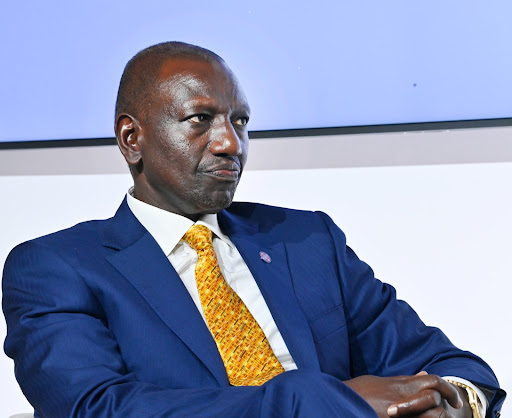
President William Ruto
By: Joseph Mutua Ndonga
Worth Noting:
- It is worth noting that the laws are made by parliament. The President is not a member. As the law required, the Treasury Cabinet Secretary organized public forums during which public views were collected and collated. Thereafter, the privatization bill was drafted with their views being captured and presented to parliament for debate.
- After this, the vote was taken and the bill received overwhelms support from members in both sides of political divide.
- Pursuant to power conferred on him by the constitution, the President William Ruto consequently signed the Privatization Bill into law.
- I would have expected Raila to do two things if he didn’t not agree with Bill. First, mobilize his Azimio troops to reject the bill on floor of parliament. If he fails to marshal enough numbers, move to court immediately after the President assented to it.
A few days ago, the Raila Odinga-led Orange Democratic Movement (ODM) Party filed a petition in the High Court seeking to stop the privatization of 11 state corporations.
The judge declined to grant the prayer but he halted the privatization until February next year when the case will be heard and determined.
The ODM had argued that the due process had not been followed to the letter and spirit.
The parastatals are owned by the people of Kenya. So, this is a weight matter. You cannot sell them without involving them.
In earlier statements, Raila and other party luminaries had pointed an accusing finger at President William Ruto.
The President is fully behind this move and he is working with Treasury Cabinet Secretary.
The Azimio brigade would not point out sections of laws that the President had violated.
I’m not holding brief for Dr Ruto but allow me to demonstrate further that dragging his name bordered on malice and hypocrisy.
It is worth noting that the laws are made by parliament. The President is not a member. As the law required, the Treasury Cabinet Secretary organized public forums during which public views were collected and collated. Thereafter, the privatization bill was drafted with their views being captured and presented to parliament for debate.
After this, the vote was taken and the bill received overwhelms support from members in both sides of political divide.
Pursuant to power conferred on him by the constitution, the President William Ruto consequently signed the Privatization Bill into law.
I would have expected Raila to do two things if he didn’t not agree with Bill. First, mobilize his Azimio troops to reject the bill on floor of parliament. If he fails to marshal enough numbers, move to court immediately after the President assented to it.
He failed to do this. With this, his decision to move to court is being interpreted as an afterthought.
The question is. What prompt him to change his mind? Many avers it is not because of Wanjiku’s interests but rather his personal interests.
Since the law was passed, a section of the leaders in the minority side had been making noises at the funerals, church pulpit, homecoming parties. Why wait until when the government starts to actualize this law?
It therefore means they were contented.
The decision to move to court had been preceded by Raila’s remarks four days earlier. Are you ready to go back to the streets? Raila asked a crowd in Nyamache, Kisii county, where he attended the homecoming party of Governor Simba Arati. Then, wait for my whistle.
We all know that Raila’s political game plan is to continue engaging President William Ruto in a smear campaign.
This is not because the President is not doing his job of serving Kenyans, it is because he is yet to shed off misplaced and warped thinking that Dr Ruto stole his victory.
Raila was the candidate of the outgoing government. Dr Ruto was an outsider. So, how did an outsider stole your victory?
In light of this, this is my considered view. If he make good his threat, Raila’s game plan would fail miserably.
Why I would not expect his supporters to heed his call to participate in demonstrations?
He failed to try organize protests when President Ruto assented to the Bill.
His turnaround is suspect. The other day I heard a group of the people in the estate saying.
Raila was angling himself to play the role of a big broker in the privatization of some of the entities. He knew he would mint millions of shillings. It seems he has been elbowed out.
He is pursuing selfish and personal interests. Therefore, we cannot put our lives in danger for a course that has no bearing to public interest.
He used us last time. A fool has now become clever. He will be in for a rude shock.
It is worth to recall that during the electioneering period, Dr William Ruto, the presidential candidate of United Democratic Alliance (UDA)/ Kenya Kwanza, kept reiterating.
If I win the elections, I will give priority to the privatization of loss making State Corporations and Parastatals plus those that had already collapsed and shut down.
The leadership of the previous governments fully bore the brunt.
They just watched helplessly as these state entities crumbled down due to four main reasons: High levels of corruption, mismanagement, laxity and don’t care altitudes. These vices would be committed by big fish entrusted to manage them.
To make the matter worse, the previous governments resorted to bailing out the entities.
Billions of shillings of taxpayers were being pumped but none of them will get back to its feet. Kenyans would not get value for thier hard-earned monies. As such, they would end up being the biggest losers.
For Dr William Ruto, he had conceived a workable plan which would be a game-changer in terms of changing this narrative. God heard his prayers and he won the elections.
He knew the power to make this decision lied with members of the National Assembly.
He was however optimistic that he will succeed to lobby members to support and adopt this proposal.
The Privatization Bill originated from the cabinet in line with the rule of collective responsibility.
This reaffirmed the commitment of President Ruto to walk the talk. This is in terms of following the dictates of the constitution and law to the letter and spirit.
The Finance Law 2023 listed the 11 entities which are earmarked for privatization
It is worth noting former President Mwai Kibaki was a renowned economist but he failed to resuscitate them.
He was unable to deal with vested interests which were out to make a kill.
Reason? The political class played a key role in the appointment of the chairpersons and chairmen of these State Corporations.
As a result, the holders of these offices owed their loyalties to them. This cleared the way for each to dip their fingers into cookie jar and get a share of the looting.
Kenya Cooperative Creameries (KCC), Kenya Meat Commission and pyrethrum Ginneries were among profit making factories that had already collapsed. The loss making ones were: Kenya Airways, Mombasa Port, Kenya Pipeline, Kenya Seed Company, National Oil Cooperation among others.
Given this background, President William Ruto is on the right course.
Having served the previous governments, he understands where the problem lies.
Once advertised, the bidders’ history should be thoroughly scrutinized.
The two main considerations should be. First, the proprietors of the firms that qualify have the interest of the Kenyan people at heart.
Secondly, the investors have success stories of managing and turning around the fortunes of similar entities that had been run down by the state.
You would expect the multinational companies to buy some of the State Corporations.
For them, their success stories would go beyond the border.
Besides, the government would be expected to review the tax regime and enact laws that will attract both local and foreign investment.
As I conclude, allow me to say this. The good thing with privatization is that this create room for competition.
So, the new owners will work very hard. This is because they want to make profits out of this. They know the Kenya government will also collect a huge chunk of monies as taxes.
Again, if the entity collapses, they will become the biggest losers. They will not only lose the capital but also the assets which they had aquired through sweat.
To avoid these pitfalls, I’m sure they will manage the entities in a professional, disciplined and precision manner.
Joseph Mutua Ndonga is a writer and political analyst based in Nairobi
Similar Posts by The Mt Kenya Times:
- Mt Kenya Times ePAPER August 28, 2026
- Kenya is losing fifteen mothers a day — and the numbers are getting worse
- Consolata International University opens new academic year with call to humanise artificial intelligence
- Written in gold, wielded in iron: Katiba@16 and the realities of power
- Mang’eni challenges universities to put entrepreneurship at the heart of learning
About the Author