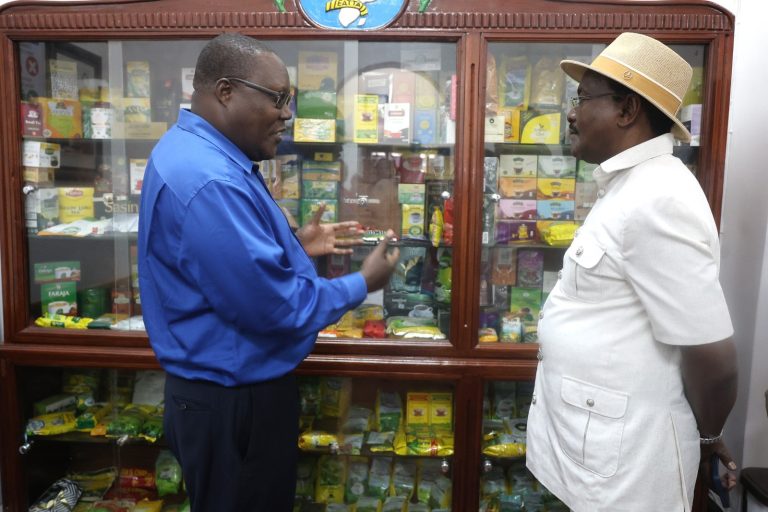
Tea Board of Kenya chairman addressing journalists at FK Resort after a stakeholders meeting last week

By Our Correspondent
The Tea Board of Kenya (TBK) has raised concerns over the increasing incidents of green leaf hawking in 16 tea-growing counties, accounting for Sh 50 billion in lost revenue by smallholder tea farmers. The malpractice, which focuses more on volume, could negatively impact the quality of tea, leading to poor absorption rates at auctions.
The board is warning factories and farmers of dire legal consequences, including revocation of licenses for factories and a sh100,000 fine for a farmer found engaging in malpractice.
Green leaf hawking is illegal according to Section 6(4) of the Tea Act of 2020, which prohibits a farmer from selling green leaf to anyone other than the registered tea factory where they are registered.
If a farmer sells tea to another factory where they are not registered, the penalty is Sh 100,000, or six months in prison. If a factory buys tea from a farmer who is not registered under the factory, the fine is Sh 5 million, or three years in jail. The board is trying to enlighten farmers and factories that are taking this tea so they understand that what is happening is an offense.
A survey conducted by the Kenya Tea Development Agency (KTDA) across its seven regions showed that a total of 200 million kilograms of green leaf were hawked in 2021.
Last year, hawking escalated, with 60.3 million kilogrammes of green leaf being sold, leading to a loss of Sh 15.36 billion in earnings for farmers.
The board is currently reviewing factory licenses to ensure that both private and KTDA-managed factories are processing tea according to their license capacity.
Similar Posts by The Mt Kenya Times:
- Mt Kenya Times ePAPER August 26, 2026
- Mt Kenya Times ePAPER August 25, 2026
- Mt Kenya Times ePAPER August 24, 2026
- Diaspora Times Global Aug 22 – Aug 28, 2026
- Mt Kenya Times ePAPER August 21, 2026
About the Author