Bro. Isaac GM Andabwa ( OGW) National General Secretary - KNPSWU

By: Our Correspondent
Worth Noting:
- Depression is a mental health condition that interferes with a person’s ability to carry out his or her daily functions. It’s characterized by feelings of sadness and a loss of interest in once enjoyable activities—either at the workplace or at home.
- Salary remuneration package remains a weighty and thorny matter; as these officers toil and brave under severe conditions day and night to render service in different sensitive assignments.
- There exists a difference between living wage and minimum wage. Minimum wage is an amount set by law, whereas the living wage is determined by average costs of expenses incurred to live, including housing, medical, food and transport costs.
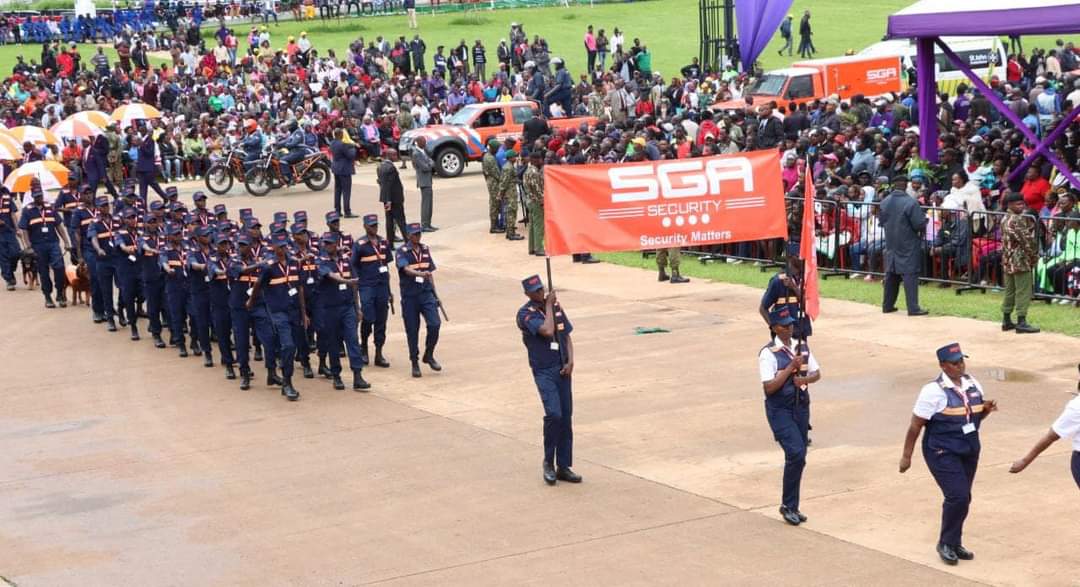
The focal role of government gazetted security service providers is to prevent, control, detect and investigate crime. It is charged with protection of life and property. Private security officers posture as the first basic line of grip and render reciprocal roles to state security officers including information and intelligence gathering.
There is an upsurge in incidents involving security officers in killing each other, family members and themselves in suicide, femicide or homicide under bizarre circumstances. It is traumatizing and heart-breaking—with far-fetching and cross-cutting effects—to see those legally mandated to protect life and entrusted with firearms and other tools of trade acting contrary.

Several factors have been attributed to the increased levels of stress and depression among the security officers. It stands worthwhile refreshing ourselves on the same in the spirit and effort of seeking to highlight, recommend, generate opinion and seek solutions towards a problem that touches on life—at either individual, institutional or national level—bearing in mind security officers originate from a family unit.
Stress and depression work-related challenges, among others, largely revolve around working conditions and aura, remunerations, housing, insurance, career stagnation, nepotism, tribalism, professional misconduct, welfare and love/marital-related crisis. Stress is not a mental health condition but tends to have an obvious trigger. Like any minor or major illness, it can resolve as life events change. However, stress can lead to mental health problems like anxiety and depression if it persists over long periods without relief.

Depression is a mental health condition that interferes with a person’s ability to carry out his or her daily functions. It’s characterized by feelings of sadness and a loss of interest in once enjoyable activities—either at the workplace or at home.
Salary remuneration package remains a weighty and thorny matter; as these officers toil and brave under severe conditions day and night to render service in different sensitive assignments.
There exists a difference between living wage and minimum wage. Minimum wage is an amount set by law, whereas the living wage is determined by average costs of expenses incurred to live, including housing, medical, food and transport costs.

The minimum wage concept has failed. It has not kept pace with inflation and the rising cost of living, causing many security officers to live below the poverty levels.
The housing policy for the police service was timely. It provides for the management of housing in the National Police Service with a focus on decent accommodation for the officers. It seeks to ensure that all staff are adequately housed through direct provision of standard housing units and amenities or house allowances. It also provides a clear-cut criterion for the management and allocation of houses in the service. “All members of the National Police Service are entitled to provision of a standard house within the area of jurisdiction or their duty station. In the absence of above they shall be provided with flat rate house allowances at an approved rate based on rank,” the policy reads.

“An officer shall be allocated a single house and shall not be required to share with any other officer. Officers not allocated police housing will be free to rent housing within their area of jurisdiction”
This has not been effective but is in limbo so far, with a majority of the police officers still residing in camps sharing tiny rooms separated only by curtains. Such a housing environment poses threats to families lest the growing numbers of love triangle affairs, incest, teenage pregnancies and HIV-Aids infection within the force.
Corruption has been cited on the management and allocation of houses and allowances meant for that. While tackling the increase and in order to enforce the “minimum wage”, legislators should be taking a hard look at the amount of money required to live, not simply exist; with a focus on typical family, standard, extended and individual living wage.
The government has a legitimate role in setting up laws, sectoral policies and enforcement of the same to the latter.
Reform drivers should professionally and diligently execute their mandate devoid of corruption, victimization, intimidation and sexual advancement favors for promotions and career growth within the rank and file to ward off stress and depression catalysts.
They must foster virtues and programmes that bring down social psychological depression trends. Apart from physical, there is a need to reemphasize and allocate more resources for mental and emotional state training of the men and women in the security service, their general welfare, counselling, chaplaincy, conflict of interest and guidelines for engagement in trade and business as we seek to accommodate each other.
The current taskforce on police and prisons reforms ought to consider or otherwise advise the government to dedicatively address the growing plight of private security officers. Private security officers’ terms of service and welfare regarding remuneration, overtime, allowance, training, career progression and empowerment should be scrutinized. Policing cannot thrive without involving and working with the people and in particular private security officers and nyumba kumi. We should abandon regime policing and embrace a democratic policing model that engages the community with accountability measures in place.
The stakeholders in the sector should focus on exploring avenues of strengthening and enforcing the private security regulation Act and the associated laws. The need to fully operationalize the Private Security Regulatory Authority(PSRA) and professionalize the industry through establishment of a private security academy that will foster modern training and equipping, ranking and accreditation as well as a progressive career growth. There is a need to empower guards through establishment of a giant sector Sacco.
It is fair and humane for stakeholders to positively re-engage and hasten reforms in the private security sector. This will make the industry more competitive, attractive in the job market locally, overseas and objectively address sectoral gap challenges. Reforming the private security industry will boost the fight against insecurity, terrorism, violent extremism, radicalization and banditry.
Bro. Isaac GM Andabwa(OGW)
National General Secretary
Kenya National Private Security Workers’ Union
Executive Board Member- COTU (K)
Steering Committee Member- UNI Property Services
Similar Posts by The Mt Kenya Times:
- Diaspora Times Global Aug 29 – Sep 5, 2026
- When soldiers turn on the junta they helped create
- Educational empowerment: A non-negotiable investment in Kenya’s future
- What aging parents want their adult children to understand
- Zimbabwe to roll out emotional learning programme to all 72 districts
About the Author