

In a country where formal jobs are scarce, a practical skill remains the most reliable route from unemployment to self-reliance.
By Stephen Githinji
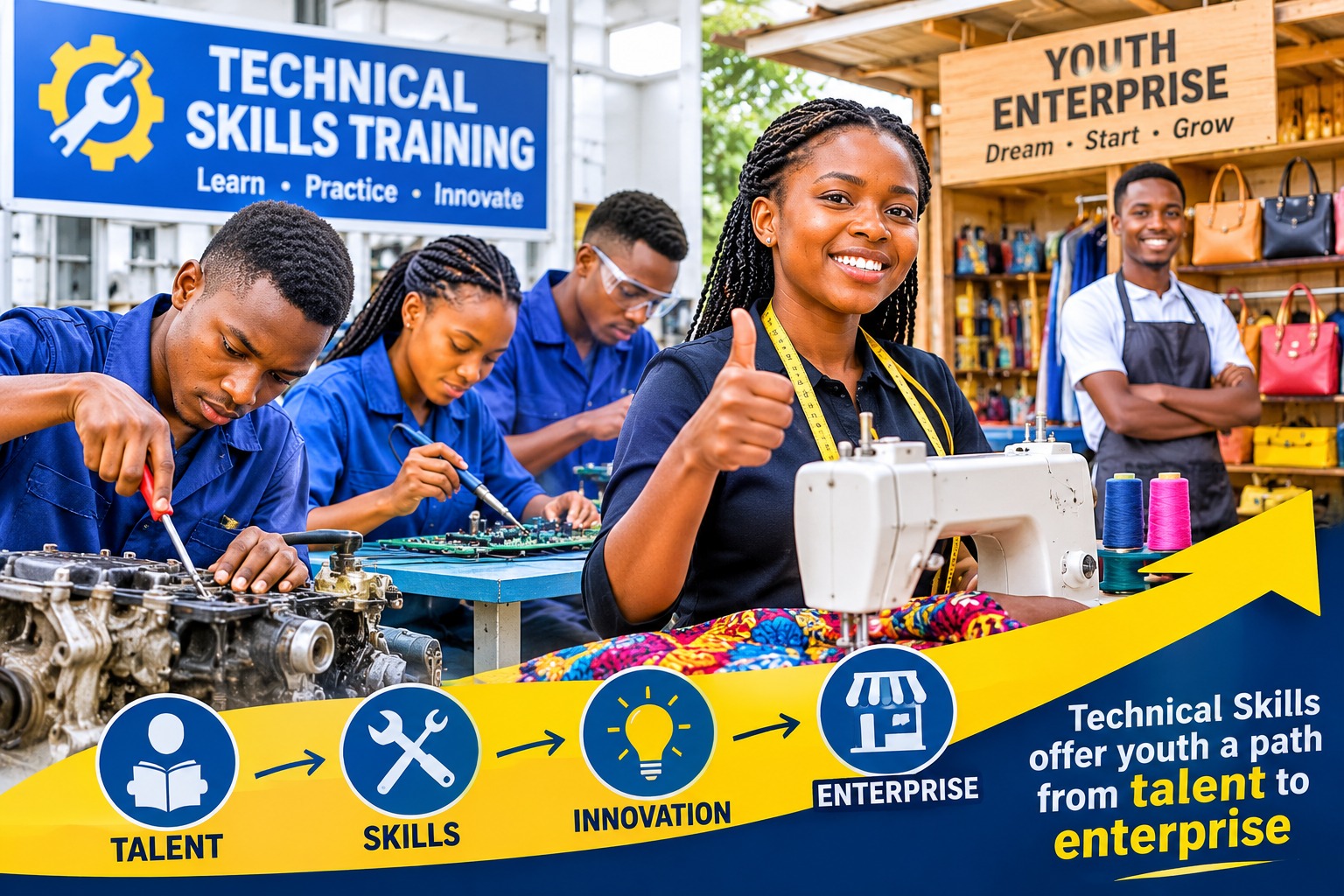
Technical skills are quietly building the futures that formal employment has failed to deliver for Kenya’s young people. Across barber shops, garages, welding workshops, beauty salons and construction sites, practical training is proving more bankable than a certificate gathering dust while its holder waits for a job that may never come.
The journey starts with honest self-knowledge — understanding what you are good at, what problems you can solve and where your curiosity naturally pulls you. Passion rarely arrives with a syllabus. It begins with interest and the courage to start.
But talent alone is not enough. Discipline, punctuality and consistency determine whether a skill becomes a sustainable livelihood. A barber who opens two hours late loses clients. A welder who delivers poor work loses the next job. Trustworthiness is not a soft skill — it is the foundation of every lasting business relationship.
Professionalism extends to how pressure is handled. Mistakes are inevitable in every trade; what separates the skilled from the struggling is the ability to respond calmly, take responsibility and improve. Customer care matters equally — clients remember how they were treated long after they forget the price.
Business literacy converts skill into enterprise. Understanding working capital, mobile payments and simple record-keeping transforms a one-person operation into something that can grow, employ others and endure.
The future belongs not to those who wait for opportunity, but to those who build it with their hands.