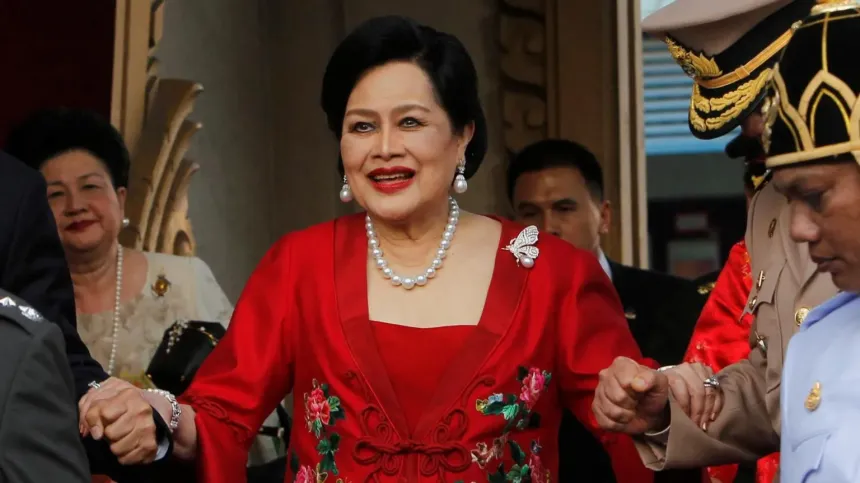
Thailand former Queen Sirikit
Thailand is mourning the death of its former Queen Sirikit, who passed away peacefully at the age of 93 on Friday night, October 24, 2025, at Chulalongkorn Hospital in Bangkok. The Royal Household Bureau confirmed her death, stating that she succumbed to complications from a bloodstream infection after years of declining health. Queen Sirikit was the widow of King Bhumibol Adulyadej, Thailand’s longest-reigning monarch, and the mother of the current King Maha Vajiralongkorn. Her passing marks the end of an era for the Thai monarchy and has prompted a nationwide outpouring of grief and remembrance.
Born Mom Rajawongse Sirikit Kitiyakara on August 12, 1932, she was a descendant of the royal family and married King Bhumibol in 1950. Throughout their 66-year marriage, she played a prominent role in national affairs, often stepping in as regent during the king’s absences and serving as a symbol of unity and maternal care for the Thai people. Her birthday became Thailand’s official Mother’s Day, and her image adorned homes, offices, and public spaces across the country. Sirikit was revered not only for her royal status but also for her humanitarian work, particularly in rural development, traditional crafts preservation, and environmental conservation.
Queen Sirikit’s influence extended beyond ceremonial duties. She was known for her elegance and fashion sense, often compared to international style icons such as Jacqueline Kennedy. Her wardrobe, which blended Thai silk with Western haute couture, helped promote Thai textiles on the global stage. She founded the SUPPORT Foundation in 1976 to encourage traditional handicrafts and provide economic opportunities for rural communities. Her efforts earned her international recognition and endeared her to many Thais who saw her as a compassionate and proactive queen.
In 2012, Queen Sirikit suffered a stroke that significantly limited her public appearances. She was hospitalized in 2019 and remained under medical care until her death. Despite her absence from public life in recent years, her legacy remained strong, and her passing has reignited national reflection on her contributions. The government has declared a one-year mourning period for the royal family and household, with flags flying at half-mast for a month. Public officials have been asked to wear black and observe mourning protocols, while citizens have gathered outside the hospital and royal residences to pay their respects.
Prime Minister Anutin Charnvirakul expressed deep sorrow over the queen’s death, calling it a great loss to the nation. He canceled his planned trip to the ASEAN summit in Malaysia to remain in Thailand during the mourning period. Political leaders, foreign dignitaries, and members of the public have sent condolences, recognizing Queen Sirikit’s role in shaping modern Thailand and strengthening the monarchy’s bond with the people. Her death has also prompted renewed interest in the history of the Thai royal family and its role in the country’s cultural and political evolution.
Queen Sirikit’s legacy is intertwined with the reign of King Bhumibol, who ruled from 1946 until his death in 2016. Together, they were seen as stabilizing figures during periods of political unrest and economic change. Their commitment to development and national unity helped maintain the monarchy’s revered status in Thai society. With her passing, Thailand closes a chapter on a royal partnership that defined much of the 20th century and early 21st century. The queen’s contributions to social welfare, cultural preservation, and national identity will continue to be celebrated in museums, educational programs, and public commemorations.
The Royal Household Bureau has announced that Queen Sirikit will lie in state, allowing the public to pay their final respects. Details of the funeral arrangements are expected to follow, with traditional rites and ceremonies honoring her life and service. The event is likely to draw large crowds and international attention, reflecting the queen’s stature and the deep affection in which she was held. As Thailand enters a period of mourning, the nation reflects on the values she embodied—grace, compassion, and dedication to the people.
Queen Sirikit’s death comes at a time when Thailand is navigating complex social and political dynamics. Her passing may serve as a moment of unity and reflection, reminding citizens of the enduring role of the monarchy in Thai life. While the royal family continues under King Vajiralongkorn, the memory of Queen Sirikit remains a powerful symbol of continuity and care. Her life story, from royal consort to national matriarch, offers a narrative of resilience and service that will inspire generations to come.
Similar Posts by The Mt Kenya Times:
- Mt Kenya Times ePAPER October 17-18, 2026
- Ruto bets billions on Kerio Valley — with one eye on 2027
- Ruto’s health ministry kills Murang’a’s digital hospitals
- Kenya bets on Mount Kenya to drive a billion-shilling tourism revival
- Do you have a wealth vision? Or are you just working until you die?
About the Author