

Hamidov Suhrob

By: Hamidov Suhrob
Worth Noting:
- According to information, in 1964 the area of the island was 68,900 square km. and the volume of water in it exceeded 1083 cubic km. Every year, 30-35 thousand tons of fish were taken from the island, 38 species of fish lived there. Most importantly, these numbers made up 80 percent of the fishing industry of Uzbekistan.
- In the 60s of the 20th century, the demand for water increased as a result of the increase in irrigated cropland. As a result of the cotton cultivation policy of the Soviet Union, new land development began in the Central Asian region. in the years 1955-1959 alone, more than 160,000 hectares of land were appropriated from the territory of present-day Uzbekistan.
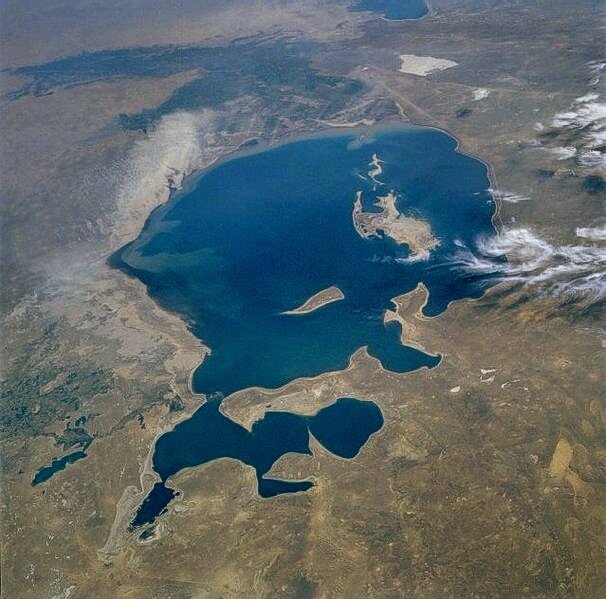
The change in the state of the natural environment as a result of human activity has caused a strong anthropogenic effect on living and non-living components, causing local, regional and global environmental problems. among others, as a result of such effects, the “Aral problem”, which is considered the most dangerous point of the ecological crisis in the Central Asian region, arose. In this article, the causes of the tragedy of the island and its impact on the ecology and environment of the region, as well as a number of issues related to the ways of solving the problems related to this tragedy are explained.
The shallow Aral Sea was once the world’s fourth largest inland water body. its remains are located east of the Caspian Sea, in a climatically unfavorable point of Central Asia. The Aral Sea and its end are causing great interest and concern among scientists, because the significant reduction of its area began in the second half of the 20th century, when the region was part of the Soviet Union, and has continued to this day. this change is primarily related to the flow of the waters of the rivers Syrdarya (ancient Yaksart river) in the north and Amudarya (ancient Oks river) in the south into the Aral Sea and its main water sources.
According to information, in 1964 the area of the island was 68,900 square km. and the volume of water in it exceeded 1083 cubic km. Every year, 30-35 thousand tons of fish were taken from the island, 38 species of fish lived there. Most importantly, these numbers made up 80 percent of the fishing industry of Uzbekistan.
In the 60s of the 20th century, the demand for water increased as a result of the increase in irrigated cropland. As a result of the cotton cultivation policy of the Soviet Union, new land development began in the Central Asian region. in the years 1955-1959 alone, more than 160,000 hectares of land were appropriated from the territory of present-day Uzbekistan. These ill-advised actions later caused serious problems. in particular, the large-scale planting of cotton, which requires a lot of water, on newly acquired lands, on the one hand caused the drying up of the Aral Sea, and on the other hand, tied the economy of the republics of the Central Asian region, especially Uzbekistan, to cotton raw materials put it is true that the implementation of this project has made Uzbekistan one of the world’s leading cotton exporters for many years.
even if it was brought out, but this achievement was achieved at the cost of the ecological crisis and the tragedy of the island. It is obvious that in the economy, harvesting mainly from one type of raw material (in the case of Uzbekistan – from cotton) and the high level of export leads to the absence or low production of products from it, the slow development of several types of industry. As an effective solution to these problems, we can use investments not to grow cotton, but to use it wisely. in general, for the improvement of cotton cultivation in Uzbekistan, the import of Israeli cotton growing technology, which is currently developing rapidly, as an investment, may bring certain results.
Of course, the construction of a canal for large-scale irrigation works is the most important stage. The construction of canals in the Central Asian region began mainly in the 1930s and reached its peak in the 1960s. but due to the mistakes of the engineers who neglected the construction of the canal, 30 to 75% of the water from the Karakum Canal, the largest in Central Asia, was wasted. According to estimates of 2012, only 12% of irrigation canals in Uzbekistan were built waterproof. from this factor it can be understood that the field of hydrometeorology was not well developed in the countries of the Soviet Union at that time, and not enough attention was paid to this field of education.
As a result, by 1960, 20 to 60 km3 of water began to flow to the land instead of the Aral Sea. sea level has halved by the beginning of the 21st century. It is a pity that certain shortcomings are still visible in the field of hydrometeorology in Uzbekistan. In 2020 alone, a flood occurred due to water leakage from the Sardoba reservoir and caused the evacuation of more than ten thousand people. in turn, as a solution to these problems, it is possible to raise the quality of education in this field, to attract qualified personnel and specialists. The disappearance of the Aral Sea was not a surprise for the Soviet government. .In particular, in 1964, the professor of the Hydroproject Institute Alexander Asarin noted that the lake was destroyed and said, “It was part of the plans approved by the Council of Ministers of the USSR and the Politburo of the Communist Party. although they knew what the fate of the Aral Sea would end with, the representatives of the lower stratum could not say anything.” Another factor that caused the biggest ecological disaster of the Aral Sea was salinization. The sea water rose sharply above the ocean water. the tragedy of the sea has created more serious problems with vast plains covered in salt and toxic chemicals from weapons testing, industrial projects, and pesticide and fertilizer runoff. pesticides used to increase the efficiency of the cotton crop further polluted the water with toxins. As a result of the sharp increase in the concentration of these toxic substances, it caused serious health problems for the local population. Usually, these problems arose due to the use of contaminated water and breathing in toxic air. In 2009, child mortality was 75 per 1000 peoplematernal mortality increased to 12 out of 1000.Evacuation of the local population from the most poisoned and harmful land to a relatively healthy area and providing the population with the necessary medicines can be used as a way to prevent and eliminate problems related to public health. but it is becoming increasingly difficult to escape the dusty air of the Aral Sea. According to international experts, the poisonous salty air of the Island is found on the coast of Antarctica, in the glaciers of Greenland, in the forests of Norway and in many other areas of the globe.
The most important task of the current period is the impact of the Aral Sea crisis on the environment and the lifestyle of millions of people living on the shores of the Aral Sea.
is to reduce. in this regard, the First President of the Republic of Uzbekistan Islam Karimov established the “International Fund for Saving the Island” or the UN
his thoughts on eliminating the consequences of the Aral Sea tragedy in the sessions caused the world community to pay more attention to this ecological crisis. It is a pity that saving the island is becoming an impossible task today. In order to prevent the water crisis in Central Asia, especially in Uzbekistan, the heads of states of the region agreed on water.
It is necessary to take into account the interests of millions of people in the distribution of resources. in this, the leadership of Uzbekistan is required to conduct a very responsible and skillful diplomatic policy.
In his speech at the 72nd session of the UN General Assembly, the President of the Republic of Uzbekistan, Sh. Mirziyoyev, drew the attention of the participants of this prestigious global structure to the ecological tragedy of the Aral Sea, because eliminating the consequences of the drying up of this lake is an international issuerequires active and continuous efforts.taking into account this real situation, on August 24, 2018, at the high-level meeting of the leaders of the founding countries of the International Fund to Save the Island, which was held in the city of Turkmanbashi, the leader of Uzbekistan presented environmental innovations and technologies to the Aral Bay regionA proposal was made to declare it as a zone.in short, the environmental ecology has suffered unprecedented damage due to the loss of 90% of its water in one of the largest lakes in human history – the Aral Sea – as a result of human activities. the central Asian region, in particular, the inland lake, which is the main water reserve of Uzbekistan, has turned into a desert today. Due to the unforgivable mistakes made in the 60s of the last century, the nature of the island died in the next 50 years. More than a thousand plants and animals were destroyed. Thousands of people died due to the outbreak of various diseases. This ecological disaster serves as a call for awareness and protection of ecology and the environment.
Hamidov Suhrob, 2nd year student of the Faculty of International Relations of the International Islamic Academy of Uzbekistan.
Similar Posts by The Mt Kenya Times:
- A passport or a laptop: How young Kenyans are finding work beyond home
- Why schools lose parents — and how words can win them back
- Her pen is your lifeline
- Kampala’s last cathedral
- Xadicha Sulaymonova was the First Uzbek Female Legal Scholar
About the Author


graet job