The Art of the Abyss: Representations of Despair and Darkness in Literature

The Art of the Abyss

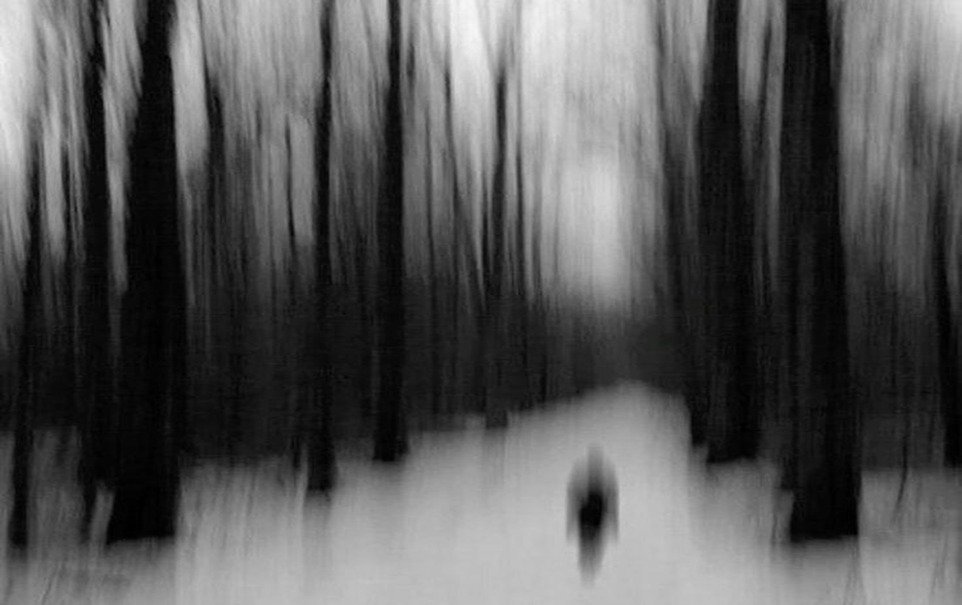
Literature has been longwindedly fascinated with the expressions that unveil the depth of darkness, languages of hopelessness, and the abyss that reveals innerness. From the existential musings of classical texts to the modern portrayals of demonstrative torment have sought to picture the true essence of despair and its profound impacts on humanistic conditions. Additionally, emotional bounds and repressed fits lead to a trapped situation where destruction welcomes the innocent veins. Darkness has deceived the glints and glows from the decades until now.
Embark on imprints in literature from the centuries to highlight the illustration of darkness and despair, eventually showcasing a testament to the intricacy of thoughts and complexity of human experience as a reflection. Therefore, the dimensional stickiness, dreadful disorders, and barren plots point toward the stream of conciseness. Being a keen observer, I sensed that Thread-like beliefs often unglued the soul from reality.
To begin with, the ancient influence of darkness, and replication of despair, the Greeks and Romans: Aeschylus, Sophocles, and Euripides stand firm in reflecting the idea of despair and darkness in literature. Suffering has been since the beginning of mankind and maybe it will end with the end of this universe. It`s an on-song approach that hits with the wall of calmness.
Additionally, in “Oedipus Rex” by Sophocles (Circa 429 BCE), the elements of despair, hopelessness, and misery are depicted through the tragic downfall of Oedipus, who despite his efforts to avert his destiny, fulfills a prophecy that he will kill his father and marry his mother. The darkness reflected by Sophocles in Oedipus Rex is not just physical but existential, as he grapples with realizing his inadequacy and the inescapable nature of fate. Sophocles unveils the rudiments as Oedipus`s torment to highlight the confines of human knowledge and control, setting the stage for future exploration of despair. Endurance and belief make the accuracy achieve. Hence darkness imitates through the mental approach, cuts the nerves, and makes a healthy blind. I extracted a few verses from “Oedipus Rex” that truly conveyed the sediment of Lamentation upon discovering the fact, Metaphorical, and literal blindness to the truth. The following expressions exemplify the despair, darkness, and senseless concepts throughout the journey.
“Oh, woe is me! Oh, fate! Oh, cursed fate!” (Line 1182)
“Darkness, darkness, everywhere! I am lost, I am blind!” (Line 1318)
When the stars aligned in a perfect harmony, “Medea” by Euripides (431 BCE) delves into the depths of darkness, and the consequences of unchecked emotions. The interplay between despair and darkness creates a sense of certainty, underscoring the tragic outcomes. Hopelessness and despair fuel the darkness within and out. Medea`s despair is transformed into a vengeful fury; how personal betrayal can lead to profound psychological and moral darkness. Darkness, a sense of stress, and despair wrench the identity internally and as a result, it manifests extremeness in actions and internal turmoil. Here I mentioned some lines from “Medea” that truly illustrate the expression of despair, hopelessness, declaration of emotional sorrow, and lamentation.
“Oh, cursed fate, that has brought me to this pass!” (Line 163)
“I am undone, lost, and utterly betrayed!” (Line 166)
“I am a woman, and women are weak, but in sorrow, I am stronger than any man!” (Line 243)
On the flip side, during the Middle Ages and Renaissance, the exploration of despair and desperateness was often crisscrossed with religious and existential aspects. On the other hand, the darkness depicted in this period echoes both spiritual crises and moral struggles. “The Divine Comedy” by Dante Alighieri (early 14 century) offers an intense and vivid representation of despair through its portrayal of Hell, Purgatory, and Paradise. Dante`s journey through the infernal realms reveals a spectrum of human grief and moral worsening, highlighting the consequences of sin and the pathway to redemption. I grab a few lines from “The Divine Comedy”, here below that truly portray the situational despair, sense of being trapped, and a trace of being caged with heaviness, hecticness, and thickness
“In the middle of the journey of our life, I found myself in a dark wood, for the straight path was lost.” (Canto I, lines 1-3)- Dante`s renowned introductory lines, conventional the tone for his journey through despair.
“I felt a heavy sorrow, for I knew I was banished from the human race.” (Canto I, lines 4-5) – Dante`s frame of mind with the isolation and despair as he instigates his ascent.
“In the depths of Hell, I saw the darkest night, but here, I see the radiant light.” (Canto XXXIII, lines 85-86)- Dante`s contrast between the despair of Hell and the hope of Heaven.
Thereupon, “Hamlet” by Master William Shakespeare reconnoiters the psychological dimensions of despair. Hamlet`s soliloquies, especially the eminent “To be or not to be” reveal the clear and compact depth that deals with and contemplates life and death. Shakespeare`s skillful and artistic approach to writing about internal conflict and madness mirrors a sophisticated understanding of despair that blocs psychological, philosophical, and existential essentials. I believe that when uncertainty clicks in the form of terrible tears, wrenching hearts, and shattered thoughts, it ruins the spark, the glory, and the artistic story. It`s like a Spider`s web that stretches an emotional ditch to a vulnerable that habitually imagines a sense of darkness in a horrible dimension where vultures clap and bamboozle the glint, intricately woven from the threads of grief, betrayal, and despair. In “Hamlet”, his father`s murder was a wound that refused to heal, similarly, there are some wrenching overwhelming smidgeons that lead to psychological, physical, and emotional crashes and cracks.
“I have of late—but wherefore I know not—lost all my mirth” (Act 1, Scene 1)
“How weary, stale, flat, and unprofitable seem to me the uses of this world” (Act 1, Scene 1)
“I am but mad north-north-west. When the wind is southerly, I know a hawk from a handsaw” (Act 2, Scene 2)
“Something is rotten in the state of Denmark” (Act 1, Scene 4)
Like a canvas waiting for colors, the Greeks and Renaissance, Moderns contributed their contributions with their perspectives that highly describe despair and darkness. I stated that writers from the 20th century onwards have delved into the complexities of despair, offering new insights into how darkness manifests the individual psyches and collective realities. The modern era more likely reflects the anxieties of a world grappling with rapid change and existential vagueness. Uncertainty and despair are a realm that whispers secrets to the soul that stitched the mouth and pinch the eyes unknowingly and knowingly and there the hidden forces deceptively shape the life, the shadows of a mare.
As the pages turned, “The Metamorphosis” (1915) Franz Kafka probes into despair through psychological depth. I examine Kafka`s protagonist, Gregor Samsa, who undergoes a grotesque transformation into an insect, symbolizing profound alienation and existential dread. He artistically and beautifully shares a portrayal of Gregor`s isolation and consequentially existential crisis, depicting darkness and despair as an internal and external phenomenon that distorts reality and self-perception. I sensed that Kafka`s writing discloses the sentiments of anxiety, despair, and darkness of modern existence. The abyss within, where hope and despair entwine like twisted vines is a patent of obscurity and darkness, a mirror that replicates the innermost anxieties, judgments, appearance, and grief. Yet, only silence speaks volumes and reverberates the murmurs of innocent and vulnerable hearts. I beg for light and delights, glints and glow, sense, and snow that clear the caves of darkness and I believe. I strongly believe. Here I picked a few phrases from “The Metamorphosis” that reveal the isolation and inability, physical and emotional paralysis, and the burden, all collectively demonstrating despair.
“He had become a burden to his family, a constant reminder of their own guilt and shame.” (Chapter 2)
“He would often lie there for hours, unable to move, unable to think, unable to do anything but feel the weight of his own despair.” (Chapter 3)
“His family’s rejection of him was complete, and he was left to face the darkness alone.” (Chapter 4)
“And so he died, alone, unmourned, and unloved.” (Chapter 6)
On the other side of the coin, “The Bell Jar” (1963) by Sylvia Plath is a philosophical exploration of despair, presenting a raw and intimate interpretation of mental illness through the lens of her protagonist, Esther Greenwood. Writing is merely a keen reflection of a writer’s innermost landscape. As the pen swings across the pages, it strongly leaves behind a trail of the writer’s soul. As a writer, my pen often bleeds with vulnerable emotions, the monarchy of terrible thoughts, and untold experiences that transform the blank sheets into a canvas of my signature. Words are like tender shoots, sprouting from the fertile soil of fancy flight. Correspondingly, “The Bell Jar” also highlights the sensitiveness and hecticness through despair and darkness in her leading character, reverberating Plath`s scraps and scuffles. Plath`s narrative is the metaphor of “The Bell Jar” which reveals the overpowering nature of her protagonist`s depressive phase. I grab a few images from Plath’s “The Bell Jar” which spotlights the sense of inaccessibility and entrapment as I said before. Plath descends into mental sickness so, “The Bell Jar” becomes an all-encompassing barrier, separating her from the outer world and distorting her perceptions in the form of despair and darkness.
“I felt like I was drowning in a sea of unknowing, unable to find a foothold anywhere.” (Chapter 5)
“The darkness closed in around me like a suffocating shroud.” (Chapter 10)
“I didn’t know why I was going to cry, but I knew I was going to cry, and I didn’t know how to stop it.” (Chapter 10).
As the sun dipped into the horizon, Najwa Zebian`s writings offer a nuanced and intense individual exploration of despair and darkness. “The Journey”, a Poem by Najwa Zebain captures the essence of her transformative voyage she writes, “I walked through the darkest nights to find the dawn within me, each step a testament to my strength.” This imagery illustrates that despair is not an eternal state but a phase in a larger journey of self-discovery. I sensed her soulful expressions maintain a focus on the emotive depth of multiple involvements, providing a candid look at the struggles she faces and how artistically she finds the strength in confronting them.
“The shadows that once consumed me are now a backdrop to my growth, the night a canvas for the light I discovered.”
Moreover, In “Trapped” (page 122,), “Let the Pain Hurt” (page 213), and Crystal Ball (page 236) from “The Nectar of Pain”, “The Unspoken”, “I Am Not My Mistakes”, and “The Light” from “Mind platter” ( 2017), “The Darkness We Carry”, “The Phoenix” and “The Echo of Silence” from Spark of Phoenix (2019) imitates despair and darkness through vivid metaphors and reflections. The evocative imagery such as shadows, echoes, and silence, I witness through her poetry is exceptional and wrenching, offering the readers a window into the complexities of despair, identity, and healing. The following lines give justice to my approach.
“I am the shadow that falls in the absence of light, I am the whisper in the dark, the echo of solitude.” (The Light)
“I am a phoenix rising from the ashes of despair, the fire within me burns brighter than any darkness I’ve known.” (The Phoenix)
“In the quiet of the night, I hear the echoes of my silence, the darkness within me speaking louder than words.” (The Echo of Silence)
As the clock struck midnight, I clutched the verses from Great Greeks to Contemporary authors that also depict despair and the dimension of darkness with the fumes of imagery that clasp the thoughts to the thoughts. It vitrines the vulnerability and oversensitivity of an innocent art. Being a poet, I sense the inky expressions and eager aggressions more clearly. I believe that darkness is an envelope that wraps more strongly and remains for a long time, yet it shuffles with a bright ray from the window to keep awake. I have faith in firmness. Yet, Bleeding on paper is better than bleeding into the feet for pity and pace.
Beneath the surface, I unveil the deep isolation that heavenly imitates the twilight before morning, the silence before eagerness, the rain before sunshine, and lastly, the pain before pleasure.
To pack up my discussion, I portray the voyage of despair and darkness from the tragic fates of Greek heroes to the introspective struggles of modern and contemporary protagonists, the heart-wrenching representation of despair and darkness in literature has evolved significantly. I capture the evolution of despair and darkness from Greek to Contemporary Literature. By tracing this journey, we gain a deeper thoughtfulness of how these aspects continue to resonate with readers and also provide a powerful means of exploring the depth of writers’ experiences.

Tajalla Qureshi
Co-founder and Co-Editor of “The Wordsmith Magazine”
University of Lahore, Gujrat
Pakistan
ABOUT THE REVIEWER
TAJALLA QURESHI
Tajalla Qureshi reigns supreme – a literary enchantress who weaves tapestries of thoughts and emotions with the finesse of a master artisan in the realm of words. She is a gifted wordsmith from Pakistan.
Thereupon, she is the visionary Co-Founder and Co-Editor of The Wordsmith Magazine, where words are woven into magic. Her pen swings across the globe, leaving a trail of mesmerizing poems and columns that captivate readers worldwide. She is a multi-talented creative force who wears many fedoras with elegance and flair. She is named as Miss 20th Century Poetry at the University of Chenab, Gujrat.
On the flip, her writings have been glorified in Pakistan, Germany, Canada, Africa, America, and India in many E-papers, Anthologies, Magazines, and Websites. She was highlighted as the top-ranked Author in many poetic presentations and poetic competitions at international forums. Her published poem: My Phoenix had been arranged in the final term exam for the students of literature at the University of Lahore, Gujrat.
Coupled with that, her articles have been printed in German Magazine and American Newspapers and her poetry has been published in more than 30 International and National Anthologies, in German, Indian, Canadian Magazines, and African Newspapers. Like a shooting star, her literary presence blazes across the firmament, leaving an indelible mark on the hearts and minds of all who encounter her work.
Similar Posts by The Mt Kenya Times:
- Nigeria Starts Making Its Own Next-Generation Malaria Nets
- Diaspora Times Global Oct 3 – Oct 9, 2026
- Kwale’s electricity push moves from grid to growth
- Linguistic Features Of Chromatonyms In English And Uzbek
- A Poem, a Universe: A poetry book gaze at Jumaniyoz Jabborov’s “Ko‘zgudagi sanam”
About the Author