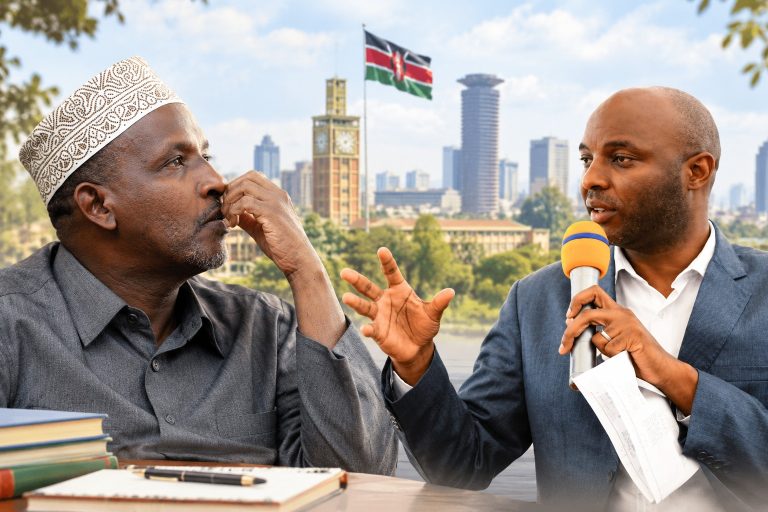
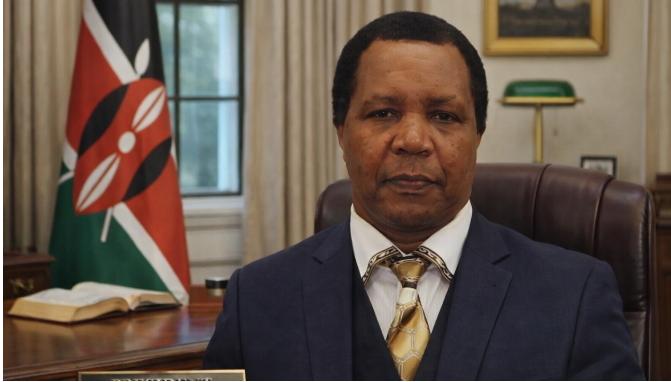
The goon question: What Ruto’s vow to act personally really means for Kenya
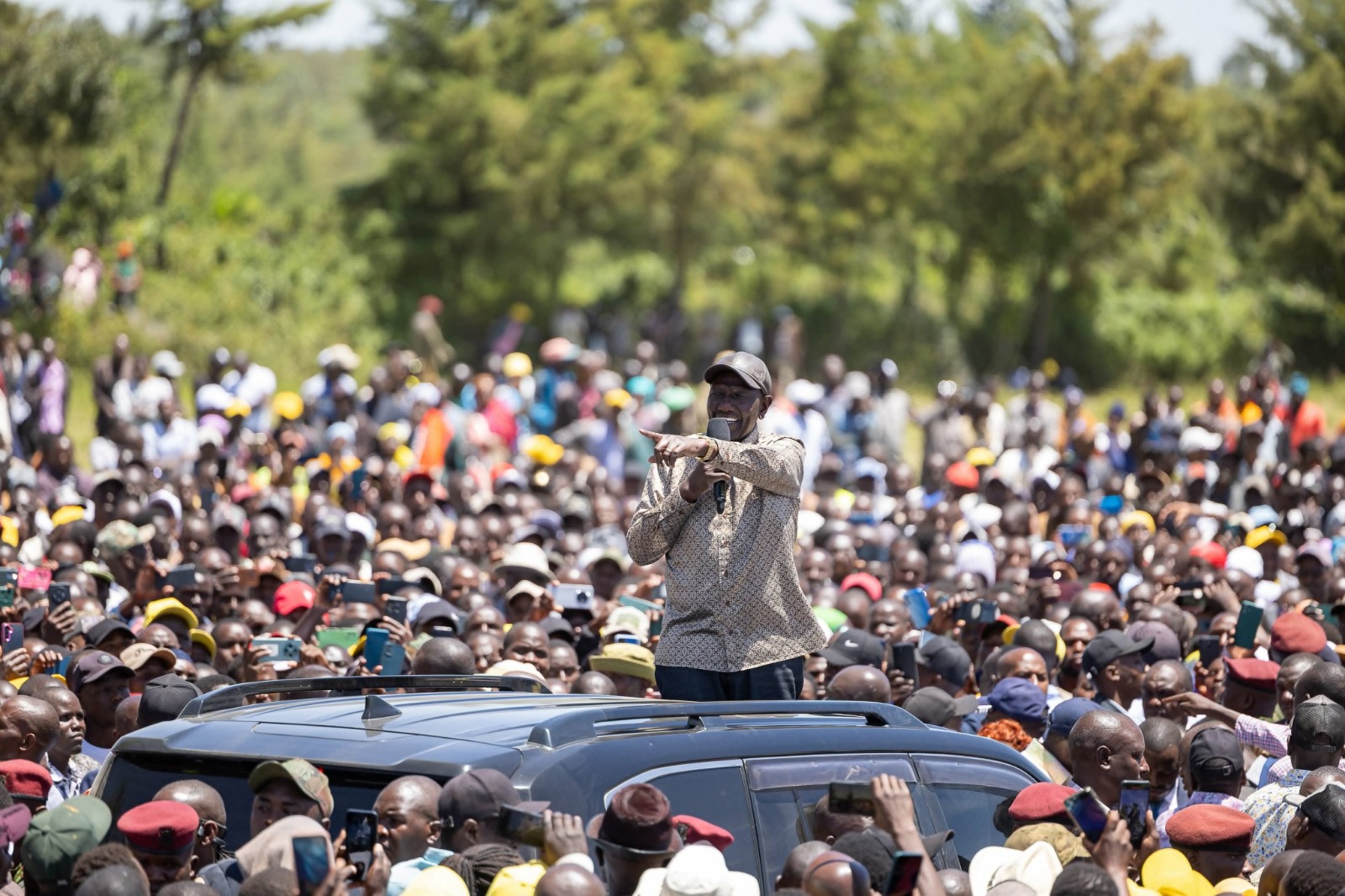
President William Ruto
With two men dead, the ICC invoked and the 2027 election eleven months away, the president’s repeated promises to crush political violence are being tested against a darkening reality
By David Kimani
President William Ruto yesterday pledged again to personally confront the wave of political violence sweeping Kenya, but with two voters already dead, the ICC watching and the 2027 election approaching at speed, the country is beginning to ask whether his words will ever be matched by action.
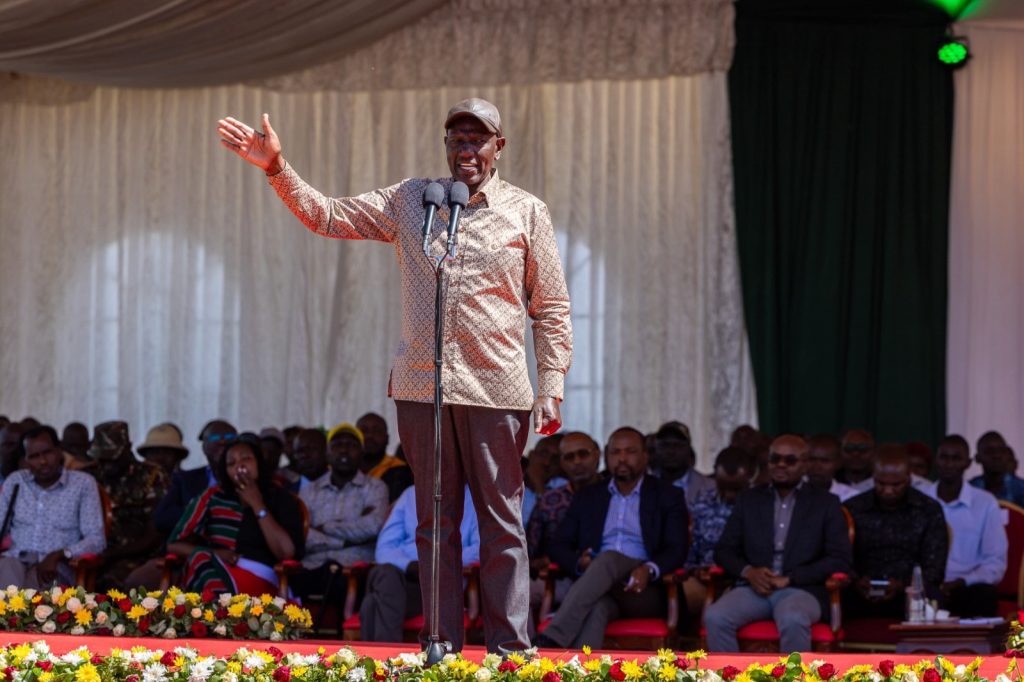
Speaking at Emurua Dikirr in Narok County yesterday during a development tour, Ruto was unambiguous. “We want peace in this area. We want unity among the people here so that we can plan and pursue development together. We do not want hostility, we do not want war, and we do not want chaos,” he said. Then, in the phrase that has since dominated national commentary: “As for the issue of goons, we will deal with it. We are saying we want peace so that we can move forward together.”
It was not his first such vow. It will likely not be his last. And that, precisely, is the problem.
Every time political violence has erupted in Kenya, Ruto has tended to be abroad. When he returns, the assurances follow — that his administration will end goonism, that the police have been directed, that law and order will prevail. The words have become so familiar that they carry the cadence of ritual rather than resolve. Yet the violence keeps coming. The rallies keep being disrupted. The bodies keep being counted.
The most damning evidence of this gap between rhetoric and reality came on 16 July, when the Ol Kalou parliamentary by-election turned into a spectacle of organised terror. Hooded gunmen carrying assault rifles attacked unarmed voters and journalists at the AC Primary School polling station in full view of uniformed police officers. Two men — James Muigai Mwathi, 30, and Zachariah Gakinya Mukora, 42 — were killed in separate attacks at different polling stations. Muigai had stayed behind to protect the vote after casting his ballot. Gakinya was shot as he walked home from the polls.
A resident summed up what many Kenyans now believe: “We now have police officers identified as goons, goons who work alongside police during demonstrations, and goons attached to politicians.” It is a taxonomy of organised violence that cuts to the heart of the state’s credibility.
Democracy for the Citizens Party leader Rigathi Gachagua, whose party won the by-election by a landslide, has not been restrained in his response. After an attack on his convoy in Nakuru, he alleged that armed attackers used axes, stones and other weapons while police watched, and has dismissed Ruto’s anti-goon directives as political rhetoric. Interior Cabinet Secretary Kipchumba Murkomen, for his part, has blamed Gachagua himself for the Ol Kalou violence — an accusation Gachagua has rejected with equal force.
The mutual accusations reveal how completely the goon crisis has become entangled in Kenya’s broader political war. Both sides claim victimhood. Both sides point fingers. And in the middle of this political theatre, the families of Muigai and Gakinya are still waiting for answers.
Ruto has at various points drawn a comparison between the goon threat and Kenya’s previous campaigns against terrorism and cattle rustling. “The same way we dealt with terrorists and cattle rustlers is the same way we will deal with goons,” he said. It is a striking analogy. Those campaigns involved systematic state operations, intelligence coordination and, at times, contested use of lethal force. If the president means it, the implication is significant: the state intends to treat organised political gangs as a security threat to be neutralised, not merely a political nuisance to be managed.
But intent is not the same as execution. Ruto has directed security agencies to deal with goons within the law and drawn a distinction between peaceful demonstrations, which are constitutionally protected, and criminal acts committed under the guise of protest. The distinction is legally correct. Whether it is being enforced is another matter entirely.
The opposition has now taken the argument to a different arena. On 19 August, a coalition of opposition leaders urged the ICC prosecutor to closely monitor developments in Kenya and undertake a preliminary assessment of whether credible information exists warranting a probe under the Rome Statute. People’s Liberation Party leader Martha Karua, reading the joint statement, warned that should evidence emerge of widespread or systematic attacks against civilians being organised, financed, directed or tolerated by those in authority, the prosecutor should consider investigating Ruto himself — a former ICC indictee.
The government’s response was swift and dismissive. Prime Cabinet Secretary Musalia Mudavadi rejected the calls, arguing that Kenya has always respected the rule of law and that domestic courts are fully capable of handling political violence cases. Under the Rome Statute, the ICC’s threshold for crimes against humanity is high — violence must be widespread, systematic and directed against a civilian population. A single by-election, however bloody, does not automatically meet that bar. But the opposition’s move is not primarily a legal one. It is a political signal: they are framing the violence as a pattern, not a series of isolated incidents, and they are internationalising that frame deliberately.
The timing could not be more consequential. Kenya’s general election is scheduled for August 2027 — eleven months away. The political temperature is already at levels that would normally be associated with the final weeks before polling day. Rallies are being disrupted. Convoys are being attacked. Journalists are being assaulted. Two voters are dead. Amnesty International Kenya has documented voter inducement, misuse of government projects to sway voters, and violent clashes that it described as a systematic assault on Kenyans’ constitutional right to free and fair elections under Article 38.
For Kenya, this is a recognisable landscape. The country has been here before — in 2007, in 2017 — when political violence and contested electoral processes combined with devastating results. The institutional memory of what can go wrong when the state fails to hold the line between political competition and organised violence is seared into the national consciousness.
What makes this moment different, and more dangerous, is the speed at which the pre-election environment is deteriorating. The 2027 polls are still nearly a year away, and the political violence already has a body count.
The pattern is clear: violence flares, the president issues a directive, investigations are announced, and the country waits. Waiting, as the families of James Muigai and Zachariah Gakinya now know, can be a very long business — and in Ol Kalou, it came at the cost of two lives.
Ruto’s vow to deal with goons personally will be judged not by what he says in Narok, but by what happens the next time hooded men with guns arrive at a polling station.
Similar Posts by The Mt Kenya Times:
- Dr. Ekrah Ndung’u wins TVET advocacy award after 12 years
- Mt Kenya Times ePAPER October 17-18, 2026
- Ruto bets billions on Kerio Valley — with one eye on 2027
- Ruto’s health ministry kills Murang’a’s digital hospitals
- Kenya bets on Mount Kenya to drive a billion-shilling tourism revival
About the Author