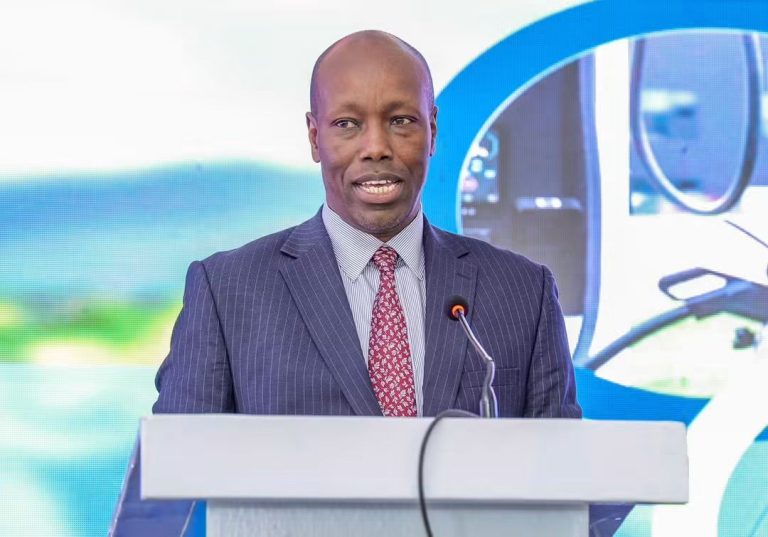
Kindiki: Common African standards are the key to Africa’s $3.4 trillion market
 The Mt Kenya Times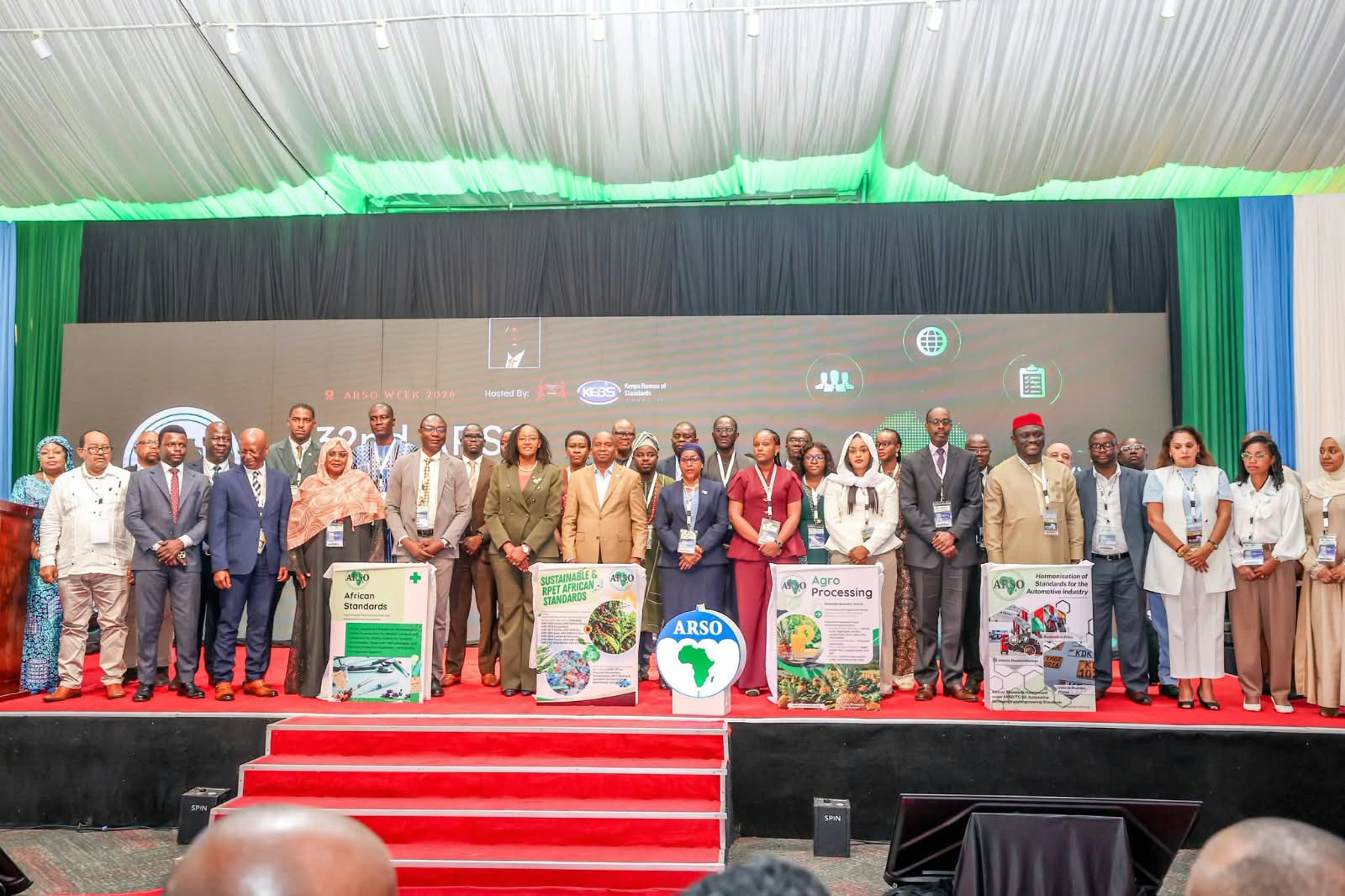
Group photo
Deputy President tells continental standards summit in Mombasa that harmonised testing and certification, not new roads or ports, will finally unlock free trade across Africa
By John Kariuki
Deputy President Kithure Kindiki yesterday told African standards regulators meeting in Mombasa that the continent’s economic freedom depends less on ports, roads and railways than on a system most citizens never see: a shared set of rules determining whether a product passes muster from Nairobi to Lagos.
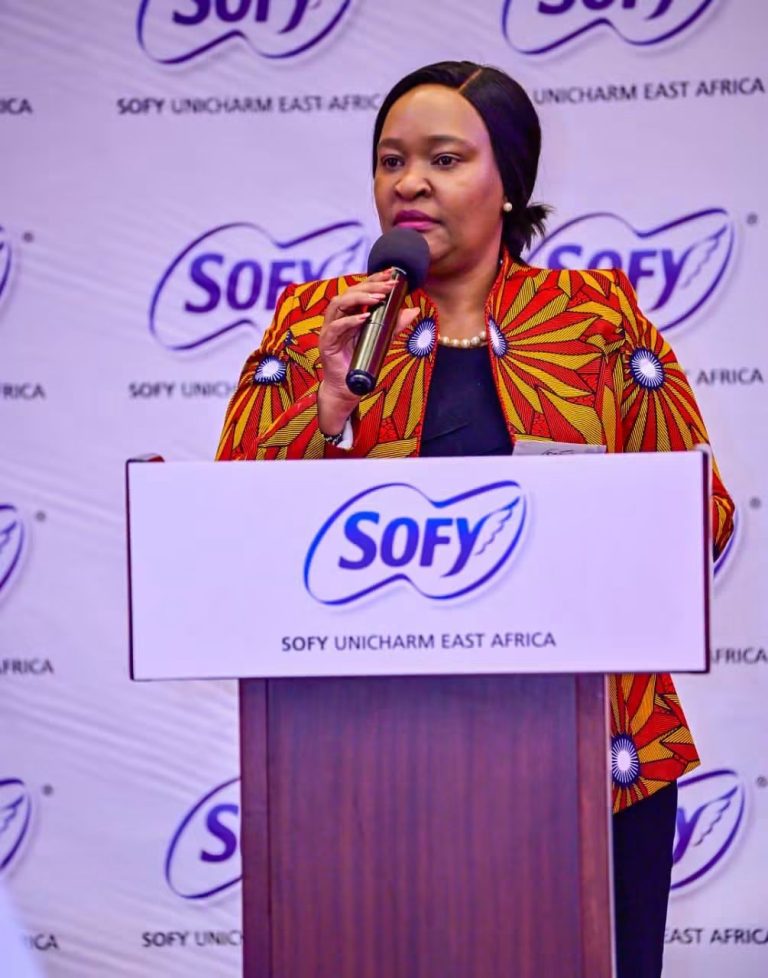
Addressing the 32nd General Assembly of the African Organization for Standardization (ARSO), hosted by the Kenya Bureau of Standards (KEBS) and its managing director, Esther Ngari, Kindiki argued that Africa’s free-trade ambitions will remain theoretical for as long as goods must be tested and retested at every border they cross.
The Assembly has drawn national standards bodies from all 54 African Union member states, along with international partners, for talks on building a single continental system for testing and certifying goods — from cement to pharmaceuticals to solar panels. It is the kind of gathering that rarely makes headlines outside trade circles, yet its outcome will shape whether the African Continental Free Trade Area (AfCFTA) becomes a functioning single market or remains, as critics have long warned, a treaty without teeth.
Kindiki was blunt about the scale of the problem. “A market of 1.3 billion people fragmented into 54 regulatory silos is not one market. It is 54 small ones wearing the costume of a large one,” he told delegates.
He pointed to the everyday absurdities this fragmentation produces: a bag of cement cleared in Nairobi must be tested again in Lagos; medicine certified safe in Cairo is recertified in Accra; a solar panel inspected in Kigali is inspected once more in Dakar. Each additional test, he said, adds cost and delay without adding safety. “Every duplicate test is a tax on African enterprise, paid not to a treasury, but to inefficiency,” he said.
The Deputy President’s argument drew on the World Bank’s 2025 World Development Report, Standards for Development, which he quoted directly: “There is an infrastructure that no engineer draws, no contractor builds, and no photograph captures. Yet without it, any port, road or railway we build risks becoming a bridge to nowhere. That infrastructure is the standard.”
It is a striking reframing of what “infrastructure” means for a continent that has spent decades pouring capital into physical connectivity — highways linking Mombasa to Kigali, railways from Djibouti to Addis Ababa, fibre-optic cable beneath the Indian Ocean floor. Kindiki’s point was that none of it delivers full economic value if a truck loaded with certified goods still has to stop at every border for a fresh inspection, a fresh fee, and a fresh delay measured in days rather than hours.
Economists have made similar arguments for years, though rarely with the political weight of a sitting deputy president behind them. Studies of intra-African trade have found that non-tariff barriers — differing standards, duplicate certification, incompatible inspection regimes — cost the continent more in lost trade than tariffs themselves. Kindiki’s address repositioned that technical debate as a matter of sovereignty rather than administrative efficiency.
He urged the Assembly to rally around a single organising principle for the next phase of continental integration: one standard, one test, one certificate, accepted everywhere. “When a Namibian manufacturer tests a product once and that certificate opens doors in Kinshasa, Lusaka, Abidjan and Maseru without a second inspection, that is not a technical achievement. That is African economic sovereignty made real,” he said.
As evidence that the model can work, Kindiki cited the East African Community, where a Kenyan-made good, in his words, “no longer feels foreign” in Kampala. He challenged ARSO to replicate that across the continent, rather than treat it as a regional exception confined to a handful of neighbouring states with closely aligned institutions.
The comparison is instructive, though not without complications. The East African Community’s own harmonisation project, launched more than a decade ago, took years of negotiation and still faces periodic disputes between member states over non-tariff barriers and inconsistent enforcement. Delegates in Mombasa this week were candid in private conversations that scaling a regional success story to 54 countries — with vastly different regulatory capacity and levels of industrial development — will be far harder than the podium rhetoric suggested.
The summit also produced two concrete commitments from Kenya. Nairobi will host the 2028 annual meeting of the International Organization for Standardization (ISO) — a signal, Kindiki said, that Africa intends to help write the rules of global quality rather than simply comply with them. Kenya will also provide land in Nairobi for a permanent, purpose-built ARSO headquarters, expanding the organisation’s footprint beyond its current premises. “This is Kenya’s investment in the institutional future of African standardization,” he said.
Both announcements reflect a broader pattern in Kenyan foreign policy: positioning Nairobi as the natural hub for continental institutions, from trade to climate finance. Whether that ambition translates into tangible returns for Kenyan industry, or remains largely symbolic, will depend on how quickly the harmonisation agenda advances.
Beyond the announcements, Kindiki set out five priorities for ARSO’s next strategic plan, covering 2027 to 2032: accelerating harmonisation of standards in agriculture, pharmaceuticals and manufacturing; strengthening mutual recognition of certificates between member states; making certification more affordable for small and medium-sized enterprises, which often lack capital to absorb repeated testing costs; promoting a “Made in Africa” brand internationally; and reducing friction at border crossings, where inspection delays remain among exporters’ most persistent complaints.
For KEBS, the summit is as much about domestic positioning as continental diplomacy. Ngari used her role as host to reaffirm Kenya’s ambition to lead the continent’s quality infrastructure agenda, framing it as central to unlocking the AfCFTA’s projected $3.4 trillion market. The free-trade area, in force since 2021 but still hampered by uneven implementation, has long been described by economists as Africa’s single biggest opportunity for intra-continental trade growth — provided the technical barriers behind the political agreement are dismantled.
That, delegates in Mombasa were told repeatedly this week, is the unglamorous work now required: not another summit declaration, but the slow, laboratory-by-laboratory alignment of testing facilities, certification bodies and inspection regimes across dozens of jurisdictions with very different resources and traditions. Harmonising a standard on paper is one exercise; ensuring a laboratory in one country trusts the equipment, training and integrity of its counterpart in another is a considerably longer one.
Kindiki closed his address by casting the stakes in broader terms than trade statistics. “The future of Africa will not be dictated by resources we extract and export raw. It will be built by the value we add, the quality we guarantee, and the markets we open to one another,” he said, formally declaring the Assembly open.
It was a line aimed as much at Africa’s long-standing dependence on raw commodity exports as at the technical business of the conference — a reminder that standards, however unglamorous, are bound up with the continent’s broader struggle to move up global value chains rather than remain a supplier of unprocessed goods finished elsewhere.
Whether that vision survives contact with 54 separate bureaucracies, and the political and commercial interests invested in existing certification regimes, will be the real test of this week’s gathering — one that no single test, standard or certificate can settle on its own.
Similar Posts by The Mt Kenya Times:
- Dr. Ekrah Ndung’u wins TVET advocacy award after 12 years
- Mt Kenya Times ePAPER October 17-18, 2026
- Ruto bets billions on Kerio Valley — with one eye on 2027
- Ruto’s health ministry kills Murang’a’s digital hospitals
- Kenya bets on Mount Kenya to drive a billion-shilling tourism revival
About the Author