The hollow guardianship: ICAO’s abdication in shielding the ozone layer from aviation’s fuel-borne assault under the shadow of international air law
 The Mt Kenya Times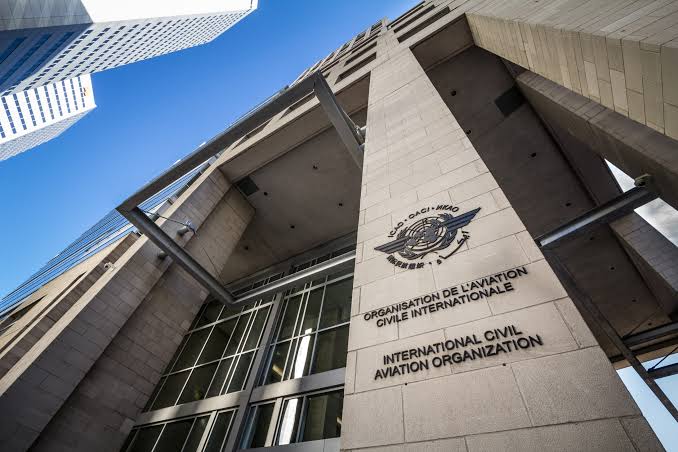
By Jerameel Kevins Owuor Odhiambo
In 1985, scientists confirmed a gaping wound in the stratospheric ozone layer over Antarctica a seasonal void that allowed lethal ultraviolet radiation to pierce the planet’s natural shield. Two years later, the Montreal Protocol forged the most successful environmental treaty in history, binding nearly every nation to phase out ozone-depleting substances. Yet aviation, the very industry that threads the upper atmosphere where ozone is most fragile, continues to release nitrogen oxides and cling to residual halons, while the International Civil Aviation Organization (ICAO) treats the crisis as a peripheral footnote rather than a central mandate. This is not oversight. It is institutional neglect dressed in the language of technical progress.
The ozone layer is no abstract scientific construct. It is the invisible membrane that has permitted complex life to flourish on Earth for hundreds of millions of years. When Paul Crutzen and others warned in the 1970s that nitrogen oxides from proposed fleets of supersonic transports could catalyze ozone destruction, the world listened enough to pause the Concorde-era ambitions. The 1985 Vienna Convention and 1987 Montreal Protocol then delivered near-universal ratification and measurable recovery: chlorine and bromine loadings declined, and projections now place the Antarctic ozone hole’s return to 1980 levels as early as the 2040s if further insults are restrained. Aviation’s contribution is not the dominant historical driver of depletion, yet it remains a persistent and growing one. Subsonic aircraft emit NOx at cruise altitudes of 10–12 km, where chemical lifetimes lengthen and the species can influence both tropospheric ozone production and stratospheric chemistry. Studies estimate that aviation NOx contributes to tens of thousands of premature deaths annually through enhanced surface ozone exposure alone over 53,000 in one high-resolution assessment for a recent baseline year while higher-altitude operations risk direct catalytic loss.
International air law, born of the 1944 Chicago Convention, was never designed for planetary boundaries. Its architects sought safe, orderly skies for commerce and sovereignty after the wreckage of two world wars. Article 24 exempts fuel already on board from customs duties, a provision later expanded through bilateral agreements into a near-total tax holiday for international aviation fuel. ICAO, the specialized agency created by that Convention, inherited a mandate focused on safety, navigation, and economic facilitation. Environmental protection arrived late, formalized only in Annex 16 decades after the ozone crisis erupted. Even then, the Annex’s volumes prioritize noise, local air quality, and, more recently, carbon dioxide through the Carbon Offsetting and Reduction Scheme for International Aviation (CORSIA) and aspirational net-zero goals for 2050. Sustainable aviation fuels receive attention as carbon reducers; their potential co-benefits for particulate and sulfur emissions are acknowledged, yet the deeper interplay between fuel composition, NOx formation, and stratospheric chemistry remains secondary.
Consider the historical parallel. When the Montreal Protocol confronted halons potent bromine carriers used in fire suppression the aviation sector secured essential-use exemptions and then dragged its feet. Decades later, replacements for engine and cargo-compartment systems remain incomplete; stockpiles dwindle while demand persists. The Protocol’s own technical assessments have noted the industry’s procrastination. ICAO, as the global standard-setter for civil aviation, possesses the authority and the technical committees to accelerate phase-out and certification of alternatives. It has not done so with the urgency the science demands. The same pattern repeats with fuel: cleaner energy frameworks adopt modest targets a collective 5 percent CO₂ reduction by 2030 through sustainable and lower-carbon fuels while the physical chemistry of combustion at altitude continues to inject reactive nitrogen into regions where ozone chemistry is finely balanced.
The correlation is stark. Montreal succeeded because it treated the atmosphere as a shared commons subject to precautionary, science-driven controls with differentiated responsibilities and trade measures that enforced compliance. ICAO operates under a consensus model that privileges non-discrimination and equal opportunity for market access, principles written into the Chicago Convention’s DNA. The result is governance by lowest common denominator. CORSIA offsets carbon after the fact rather than preventing emissions at the source. Fuel standards lag. States that might tax aviation fuel domestically or impose stricter NOx limits confront the gravitational pull of ICAO’s global framework and the fear of competitive disadvantage. The sky becomes a tragedy of the commons written in kerosene exhaust.
This is not mere technical shortfall; it is a failure of moral imagination. Every commercial flight that climbs through the tropopause carries the legacy of an industry that profits from the very medium it chemically alters. The ozone layer does not negotiate. It does not accept aspirational goals or phased pilots. Ultraviolet radiation that slips through elevated columns raises skin-cancer rates, damages crops, and disrupts marine food webs impacts that fall heaviest on the vulnerable populations least responsible for aviation’s growth. Data from atmospheric models show that even modest fleets of future high-altitude aircraft could produce percentage-level ozone column reductions in critical regions. Subsonic growth already embeds non-CO₂ effects that rival or exceed pure carbon forcing in near-term climate impact. To pretend that carbon-centric schemes alone discharge the duty of care is intellectual evasion.
Original insight demands we recognize the deeper structural flaw: international air law still treats the atmosphere primarily as a highway rather than a life-support system. The Chicago Convention’s silence on environmental integrity created a vacuum that ICAO has filled with incrementalism. Contrast this with the Montreal Protocol’s adaptive architecture adjustments, amendments, and a Multilateral Fund that transferred technology and finance. ICAO’s environmental instruments lack equivalent teeth. They measure, report, and offset; they rarely prohibit. The word “governance” itself becomes ironic when the governing body prioritizes the continuity of traffic growth over the continuity of the protective shield.
The actors who must act are clear and numerous. ICAO’s Assembly and Council must elevate ozone and non-CO₂ atmospheric chemistry to co-equal status with carbon in Annex 16, mandating rigorous standards for NOx at altitude and accelerated timelines for halon elimination. Member States must cease hiding behind the Convention’s tax exemptions and negotiate, within ICAO or bilaterally, the fiscal and regulatory space for cleaner fuels and cleaner engines. Airlines and manufacturers must abandon the rhetoric of “essential use” for substances whose alternatives exist or can be engineered; the same ingenuity that produces next-generation airframes can produce next-generation suppression systems and low-NOx combustors. Scientific bodies and civil society must refuse to allow the narrative of recovery to become complacency; every new emission inventory that shows rising aviation NOx is a warning, not a statistic. And the Parties to the Montreal Protocol itself must close remaining loopholes and demand coordination with the aviation regime rather than polite coexistence.
The ozone layer recovered because humanity once chose binding rules over convenient growth. Aviation’s environmental governance under international air law has not yet made that choice. It continues to fly on the borrowed time of a healing atmosphere while the chemical ledger of its fuel remains unpaid. The shield thins not only from past sins but from present inertia. Words alone will not restore it. Only categorical action measured, enforced, and unapologetic can ensure that the sky we cross does not become the sky we destroy.
The writer is a social commentator.
Similar Posts by The Mt Kenya Times:
- Mt Kenya Times ePAPER October 17-18, 2026
- Ruto bets billions on Kerio Valley — with one eye on 2027
- Ruto’s health ministry kills Murang’a’s digital hospitals
- Kenya bets on Mount Kenya to drive a billion-shilling tourism revival
- Do you have a wealth vision? Or are you just working until you die?
About the Author