The Mt Kenya Times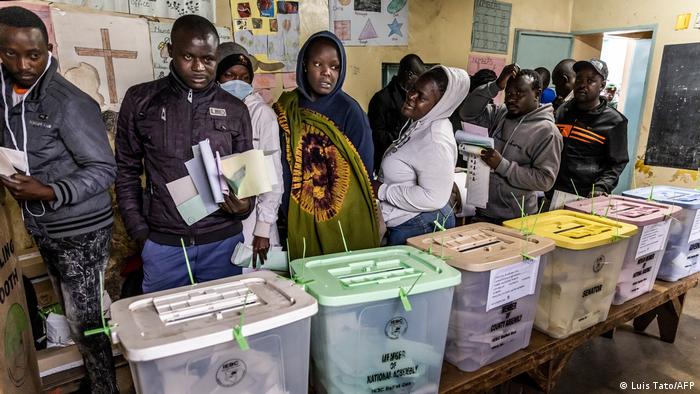
Kenyan Voters
By: Midmark Onsongo
Worth Noting:
- Voters are often lured by charismatic politicians who manipulate their emotions. One common tactic is the use of sympathetic terms, such as when Silvanus Osoro used the word “entakana,” a Kisii word meaning orphan, to invoke pity. Politicians like Osoro tap into voters’ sense of compassion, making themselves appear as underdogs, fighting for justice for the downtrodden.
- Another irrational element that drives voter stupidity is tribalism. Despite Kenya’s progress, tribal alliances remain strong, and politicians skillfully use this to their advantage. It is astonishing to think that in the 21st century, a voter would choose their candidate based on tribal affiliation rather than competence. Yet, this remains a reality in Kenyan politics. The reasoning behind it is deeply rooted in the fear of “the other,” a fear politician’s fuel to divide and rule.

“There is no worse fool than the man who thinks he knows what he does not.” This old saying aptly describes the state of many voters across Kenya, and indeed the world. In every election, we witness men and women, educated and uneducated, marching confidently to the ballot box, convinced they are making informed decisions about their future. They trust their chosen candidates to be their saviors, to deliver on promises that often sound too good to be true. But how often are these voters aware that they are, in fact, pawns in a grand political game?
Politics, they say, is the art of deception. It’s about making empty promises, offering quick fixes, and providing just enough sympathy to gain public favor. Kenyan voters, like many others globally, fall victim to this deception. They allow politicians to exploit their ignorance and insecurities, promising miracles where only hard work and integrity could produce real change. And yet, election after election, they repeat the same mistake—voting for individuals who appeal to their emotions rather than their reason. Let us now examine this phenomenon in more detail.
The Emotional Trap
Voters are often lured by charismatic politicians who manipulate their emotions. One common tactic is the use of sympathetic terms, such as when Silvanus Osoro used the word “entakana,” a Kisii word meaning orphan, to invoke pity. Politicians like Osoro tap into voters’ sense of compassion, making themselves appear as underdogs, fighting for justice for the downtrodden. It’s an effective strategy, especially in communities where historical injustices still haunt the collective memory. The sympathy vote is dangerous, for it blinds people to the actual capacity of the candidate to lead.
In reality, how often do we see these politicians living up to their emotional promises? They speak of unity and justice before elections but immediately forget the voters who put them in power once the votes are counted. As a Kenyan proverb says, “The path to power is long and winding, but the destination is often betrayal.” Once elected, many of these individuals enrich themselves and perpetuate corruption, leaving the very voters who believed in them poorer and more disillusioned.
The Tribe Factor
Another irrational element that drives voter stupidity is tribalism. Despite Kenya’s progress, tribal alliances remain strong, and politicians skillfully use this to their advantage. It is astonishing to think that in the 21st century, a voter would choose their candidate based on tribal affiliation rather than competence. Yet, this remains a reality in Kenyan politics. The reasoning behind it is deeply rooted in the fear of “the other,” a fear politician’s fuel to divide and rule.
Political leaders will gather voters and make them feel that electing someone from a different tribe is akin to inviting an enemy into the family. The strategy is clear: divide the population so that they never unite against the real oppressor—the incompetent and corrupt politician. The result? Voters elect leaders not based on their track record or vision for the future, but purely out of fear of losing tribal supremacy. The Swahili proverb “Mjinga hujua mtu kwa sura, mwenye hekima hujua mtu kwa tabia,” meaning “A fool knows a person by their face; a wise person knows them by their character,” holds true in this context. Tribal loyalty leads to a failure to scrutinize character, which is where real leadership is born.
Empty Promises and Public Amnesia
Let’s talk about promises—big, bold promises that never come to pass. Every election cycle, politicians dangle carrots in front of voters, promising everything from free education to free healthcare, new roads, and jobs for everyone. They claim to have solutions to all of the nation’s problems, painting a picture of an impending utopia. Yet, once in power, many of them become unreachable, disconnected from the very people who elected them.
This happens not because these leaders suddenly forget their promises, but because they never intended to keep them in the first place. They were aware that voters would fall for these empty words, just as they have done time and time again. Why? Because voters are too often blinded by short-term thinking, failing to question how these promises would realistically be achieved. A wise person questions the how and why of promises, but too many voters prefer to bask in the fantasy of a bright future, however unrealistic. As another African proverb goes, “Promises are like clouds; they disappear when the wind blows.”
Public amnesia is another tragedy in this cycle. Politicians who have failed to deliver are somehow re-elected by the same voters who suffered under their previous terms. Corrupt officials who have been exposed, or who are embroiled in scandals, still manage to garner massive support. How can this be explained other than as a deliberate act of forgetfulness on the part of the voters? It seems as though people are content to forget the past as long as new promises are made.
The Power of Slogans
Politicians also rely heavily on catchy slogans to appeal to the masses. A simple phrase like “Tuko Pamoja” or “Uchumi Bora” can galvanize support, even when there is no clear strategy behind it. Voters hear these slogans repeated over and over, creating an illusion that the candidate has a well-thought-out plan. These slogans are like the seasoning in a meal—they add flavor without substance. A Kikuyu proverb fittingly states, “Mti wenye kivuli haufai kula matunda yake,” meaning, “A tree that provides shade is not always the best for its fruit.” Slogans provide shade, but they rarely deliver the promised fruit.
In the end, voters get caught up in the excitement of the election season. They attend rallies, chant slogans, and enjoy the drama that comes with politics, often forgetting that this is their future they are playing with. By the time the reality sets in—that their chosen leaders are not delivering—it is often too late, and they are forced to wait until the next election to repeat the same mistakes.
The Role of Media and Misinformation
Voters’ stupidity is also exacerbated by the media, which often acts as an accomplice in spreading misinformation and sensationalism. During election periods, news outlets and social media platforms focus on controversies, gaffes, and personality clashes, rather than substantive issues. They give airtime to politicians who are adept at spinning stories, while failing to hold them accountable for their actual performance.
In Kenya, radio talk shows and social media are especially notorious for fueling political misinformation. Through memes, manipulated videos, and biased reporting, voters are fed a diet of half-truths and outright lies. Politicians are quick to exploit this, spreading false narratives to smear opponents or inflate their own achievements. Voters, in turn, do little to verify what they hear, often taking this information at face value. As the Kikuyu proverb goes, “Uongo una miguu mirefu lakini ukweli unatembea polepole,” which means “Lies have long legs, but the truth walks slowly.” In the fast-paced environment of election season, lies often win the race.
Breaking the Cycle
Is there a way out of this cycle of stupidity? The answer is education and civic engagement. Voters must be encouraged to think critically, to question their leaders, and to scrutinize political promises. Civic education programs that teach people about their rights, the role of government, and how to hold leaders accountable can go a long way in breaking this cycle.
Moreover, voters must reject the politics of tribalism and emotional manipulation. They must demand transparency and integrity from their leaders and refuse to be swayed by empty rhetoric. The Swahili proverb, “Kidole kimoja hakiwezi kuponda chawa,” meaning “One finger cannot kill a louse,” reminds us that change requires collective action. If voters unite in demanding real accountability, they can dismantle the system that has kept them in ignorance for so long. The stupidity of voters is not inevitable. It is a result of manipulation, ignorance, and emotional decision-making. By fostering a culture of critical thinking and active citizenship, we can help voters see through the deception that has held them captive for so long. Until then, the proverb “Samaki mkunje angali mbichi,” meaning “Bend a fish while it is still fresh,” applies—voters must change their ways early, before they are hardened by bad choices.
This article was scripted by;
MIDMARK ONSONGO
(Sustainable economist,Geopolitics strategizer)
Similar Posts by The Mt Kenya Times:
- Diaspora Times Global Oct 24 – Oct 30, 2026
- America’s baby bust: U.S. birth rate hits record low as women choose later motherhood
- Literary Outreach Incubation Program Instills The Culture From Book Adaption To Spoken Words
- Why starting school too early is failing our children
- Who defines Africa’s destiny? The western lens, African compliance and the struggle for intellectual sovereignty
About the Author