The ivory tower’s shame: Free speech must rise again or higher education dies
 The Mt Kenya Times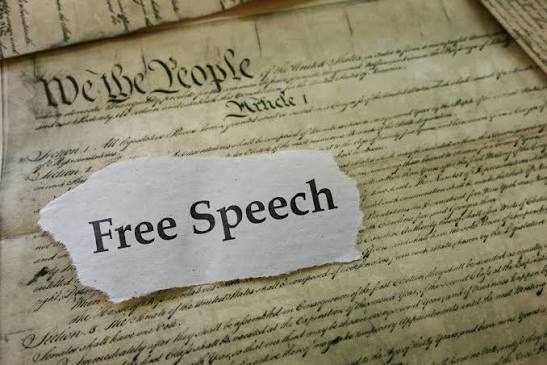
By Jerameel Kevins Owuor Odhiambo
In 2024, a survey of more than six thousand faculty members across fifty-five major American colleges and universities revealed a chilling statistic: 35 percent of professors admitted they had recently toned down their written work for fear of causing controversy. That figure is nearly four times higher than the 9 percent of social scientists who reported the same self-censorship at the height of McCarthyism in 1954. The academy, once the place where ideas were forged in the fire of open contest, now cowers before the possibility of offense. This is not caution. It is intellectual anemia. Higher education exists to test and refine ideas. Open debate, free speech, and the right to speak without fear are not optional ornaments; they are the oxygen of that process. When they are withheld, the university ceases to be a university and becomes a finishing school for orthodoxy.
History does not whisper this lesson; it shouts it. In the late nineteenth century, religious trustees silenced inquiry that challenged dogma. During the First World War, patriotic fervor purged “disloyal” professors. In the McCarthy era, the mere suspicion of leftist sympathy cost careers and warped research agendas. Each wave of zealotry claimed the same justification: the protection of fragile minds or the purity of the institution. Each time the result was the same stunted thought, silenced dissent, and a generation of scholars who learned to prune their sentences before they wrote them. Today’s climate differs only in the fashionable direction of the taboo. The mechanism remains identical: fear replaces argument, and the fear itself becomes the argument.
The data now paint a landscape of institutional failure. In the most recent comprehensive student surveys covering more than a quarter of a million undergraduates across hundreds of campuses, the average free-speech climate score is a failing grade. One hundred sixty-six of 257 institutions earned an F. Majorities of student’s report that certain topics above all the Israeli-Palestinian conflict are simply too dangerous for honest conversation. Record numbers now say it is at least sometimes acceptable to shout down a speaker, block entry to an event, or even use violence to prevent speech. Faculty, for their part, report that only one in five believe a conservative would fit well in their department. Self-censorship has become so normalized that many academics hesitate to answer even anonymous surveys. The correlation is unmistakable: where ideological monocultures harden, the willingness to test ideas evaporates.
Consider the metaphor of the crucible. A crucible does not pamper the metal placed inside it; it subjects that metal to extreme heat so that impurities rise and are skimmed away. The university was designed to be society’s crucible for thought. Ideas enter raw, contested, sometimes ugly. Through sustained argument they are refined or discarded. When administrators, activists, or the loudest faction of students decide certain ideas are too “harmful” to be tested, the crucible is emptied. What remains is not safety but sterility. Knowledge does not advance by consensus; it advances by collision. The heliocentric model, the germ theory of disease, the equal moral worth of every human being each of these truths had to fight its way past entrenched orthodoxy. A campus that treats disagreement as violence is a campus that has forgotten how truth is born.
The emotional cost is profound. A young scholar who learns early that certain questions will cost her career does not merely withhold a sentence; she withholds a part of her mind. The habit of self-censorship becomes second nature, and the second nature becomes identity. Students graduate fluent in the approved vocabulary yet incapable of defending their own conclusions under pressure. Faculty, once hired to pursue truth wherever it leads, become managers of reputational risk. The result is a quiet tragedy: institutions that once produced the intellectual energy of a civilization now manufacture graduates skilled at signaling and silent about everything that matters.
This is not a partisan grievance. Censorship has come from both left and right across different decades, and the recent rise in attempts to punish speech from the opposite political direction only proves the point. The disease is not one ideology; it is the belief that any ideology is entitled to a veto over inquiry. When a majority of students at elite institutions declare that controversial speakers of either stripe should be barred, the problem is no longer political capture. It is the death of the intellectual immune system.
The remedy requires categorical action from every actor who still claims to care about higher education.
Administrators must abandon the fiction that their primary duty is to keep the peace by silencing the discordant. Adopt and enforce institutional neutrality. Defend the right of any invited speaker to be heard, even especially when the speech is despised. Refuse to investigate or punish constitutionally protected expression. Trustees and donors must stop writing blank checks to institutions that treat free inquiry as a public-relations liability. Condition funding on measurable commitments to open debate and transparent free-speech policies. Faculty must recover the courage their predecessors once possessed. Speak the unpopular sentence. Publish the unfashionable paper. Refuse to sign loyalty oaths dressed up as diversity statements. Students must reject the intoxicating simplicity of cancellation. Learn the difference between disagreement and dehumanization. Demand that their education includes the discomfort of genuine argument.
Legislatures and accreditation bodies have a role as well: require public universities to publish clear free-speech guarantees and to report annually on speech-related disciplinary actions. None of these steps is radical. They are the minimum conditions for an institution that claims the privilege of educating the next generation.
The deeper insight is this: a society that cannot tolerate open debate inside its universities will eventually lose the capacity for open debate outside them. The habits of mind formed between the ages of eighteen and twenty-two become the habits of citizenship. When those years are spent learning that certain thoughts are too dangerous to utter, the public square inherits the same silence. The marketplace of ideas shrinks to a boutique of approved opinions. Innovation slows. Trust erodes. Polarization hardens because people no longer practice the difficult art of listening to what they hate.
Higher education does not exist to protect students from ideas. It exists to prepare them to test ideas including the ones that frighten them. The right to speak without fear is not a luxury granted by administrators; it is the precondition of the entire enterprise. Every time a campus chooses comfort over contest, it betrays its own purpose. The data are clear. The history is clear. The moral claim is clear. Restore the crucible, or watch the metal grow soft and useless. The choice is no longer abstract. It is urgent, and it belongs to every person who still believes the university should be a place where the mind is free.
The writer is a social commentator.
Similar Posts by The Mt Kenya Times:
- Mt Kenya Times ePAPER October 20, 2026
- Ruto rallies Kalenjin elders in Rift Valley unity push
- Sonko bid to nullify impeachment judgments fast-tracked in court
- Arrest the sponsors, not just the foot soldiers, Kalonzo tells police
- Police and politics shut down Kitale’s busiest market
About the Author