The Mt Kenya Times
Njonjo Mue
By Njonjo Mue
Worth Noting:
- The other more fundamental half is to reconstruct the soul of our nation. This is the responsibility of every citizen, and cannot be left to politicians and their gatekeepers alone. It is an exercise which defines what the essence of being Kenyan is.
- What is the soul of our nation? What are the ties that bind? What are the criteria for belonging? In other words, what are the core values and beliefs that make us who we are, above our diverse ethnic nationalities and beneath our common citizenship of the human family?
- And so it is vital to reach a consensus on the values we espouse as Kenyans, for we cannot move forward as a nation until we know and internalise what that nationhood entails, until we each, individually and voluntarily, subscribe to a core set of beliefs.
[As Kenyans struggle to find meaning in the protracted troubles surrounding their body politic, Njonjo Mue challenges the nation’s youth to join an army of ordinary people to fight the good fight and to defend Kenyans’ freedom, dignity, heritage and their children’s future by engaging in brutal self-appraisal and refusing to permit decay. Mue’s essay is a call to arms, for men to leave the bars long enough to know what their children will eat for supper, for women to cease their escapism and confront the problems facing Kenya’s communities, and for all Kenyans to individually take responsibility for the future of their country.]
IDENTITY CRISIS?
What is Kenya and what makes you a Kenyan? Is it your ID card? Your blue passport? The fact that you were born here? Do you really feel connected? Do you actually belong? Are you more or less Luo, Kamba, Kipsigis, Mijikenda, Asian, Caucasian or Arab than Kenyan? Are you more or less male or female than Kenyan? Are you more or less Christian, African Traditionalist, Muslim, Hindu, or atheist than Kenyan? How do these multiple identities play out in your psyche? Do you feel the need to run away from any one of your multiple identities in order to embrace your Kenyan-ness?
In other words, what is your identity and what real connection do you have with this place called Kenya? What makes you proud to be a Kenyan? If you had a choice among all the multiple identities that you bear, would you choose to retain or drop your Kenyan identity? Why or why not?
THE TIES THAT BIND…
Our parents’ generation comprised 42 different nationalities brought together by the force of circumstance as a group of arrogant foreigners sat in a room in Berlin and curved out Africa among themselves like a birthday cake. However, our parents became Kenyans as they united to fight the common enemy of colonial domination.
Once that enemy was defeated they proceeded to determine the terms of their social contract – in Lancaster House and at home – representing a commendable effort to birth and build a nation. Did they succeed? How and where did they fail?
What about us? 45 years later, what common enemy do we face? On what basis shall we negotiate our new social contract? Will the glue that held our parents’ generation together remain strong enough to bind us?
The answer seems clearly to be in the negative, for everywhere, we are surrounded by depressing and alarming evidence which indicates that the social compact that once defined Kenya is quickly coming apart. The demon of political tribalism rears its ugly head with reckless abandon. Politicians declare that it is their turn to eat and then form all sorts of diabolical alliances to prepare for the division of the spoils. The politicians appear determined to fight it out to the end, grabbing for power without caring if the nation falls apart in the process.
The need for renegotiating the new social contract has been acknowledged by all, but there is seemingly scarce committed leadership with the courage and vision to lead us in navigating these uncharted waters. We, therefore, continue to wander aimlessly in the wilderness of our despair longing for our land of promise but not even the mirage of social cohesion appears on our troubled horizon.
Yet we have no choice in this matter. We must initiate a genuine national dialogue on how to define our new dispensation. And I do not mean merely discussing how to share power, for a society is more than the power structure to which it subscribes. The more we prevaricate on the need for a national dialogue, the more certain quarters of our society continue to hold destructive monologues that push us ever closer to the brink.
But we cannot leave things to run their own course. The train of liberty does not roll forward on the wheels of inevitability; it must be pushed, sometimes pulled, but always kept on track and moving towards the goal of social justice and the true wholesome development of the human person.
The generation before us appears to have run out of ideas on how to do this. This is hardly surprising considering that those who call the shots have been on the scene forever – many of them are exhausted, old (in ideas if not in age), and without a real stake in the future of our country.
It is now up to us to take a stand and impose an environment of order to eliminate the chaos that has become our daily existence. In so doing, we will start to define a new vision for the country we call home and march decisively towards our collective sustainable future.
HEART OF THE COUNTRY OR SOUL OF THE NATION?
Our politicians pretend to care a great deal about the need for a new constitution, but we all know that for them, the process is little more than a glorified power play. Although the constitution is the heart of the country from which the entire legal system gets its lifeblood, ultimately only a small number of people will dominate the constitution-making process. Further, even if they were to come up with the best document in the world, it would still only be half the job done.
The other more fundamental half is to reconstruct the soul of our nation. This is the responsibility of every citizen, and cannot be left to politicians and their gatekeepers alone. It is an exercise which defines what the essence of being Kenyan is.
What is the soul of our nation? What are the ties that bind? What are the criteria for belonging? In other words, what are the core values and beliefs that make us who we are, above our diverse ethnic nationalities and beneath our common citizenship of the human family?
And so it is vital to reach a consensus on the values we espouse as Kenyans, for we cannot move forward as a nation until we know and internalise what that nationhood entails, until we each, individually and voluntarily, subscribe to a core set of beliefs.
Once consensus on this is attained, then we can ascribe censure to those who choose to transgress our compact through mutually agreed coercion. This is the essence of a society governed by laws, not by men.
Currently, we only belong to Kenya largely by the accident of birth. We largely identify with the state only in its coercive sense; we see policemen telling us what to do on pain of punishment in accordance with a legal code we had little input in promulgating.
We are also Kenyans by virtue of the fact that every 30th day of June we have a date with the Kenya Revenue Authority (KRA) which comes knocking on our doors seeking to know how much income we earned the previous year and whether we have given to Caesar what belongs to Caesar. We also think we belong because we demand rights that are hardly recognised or protected, and services that the government is unwilling or unable to provide.
We understand the workings of government better today than we did ten years ago. But this has not made our lives better because in spite of more transparency there is no corresponding accountability on the part of the government or ourselves as citizens.
We live in an age of lawlessness and impunity as citizens feel no obligation to obey laws that do not bind those who make them. There is no sense of enlightened self-interest in making our systems work for all or in contributing to the public good. Rather, for those who can afford it, we are content to retreat into our gated compounds, take our children to private groups of schools, pay for our own private security, seek treatment in private hospitals paid for by our private health insurance, and apply a myriad of private solutions to public problems.
In addition, there are few role models left to follow, for we have allowed politicians to dominate our public discourse and to perpetually pollute our airwaves with the stench of their incorrigibly bad manners.
We need to find positive things that draw us to our Kenyan-ness, things that will make us assert confidently, ‘We are Kenyans by choice!’ We need to find a new focal point for our allegiance as citizens of Kenya.
BUT WHAT IS KENYA AND WHO ARE KENYANS?
At its most basic, Kenya is a juridical fact in international law. The country is also a prime piece of real estate comprising 583,000 square kilometres occupied by some 37 million people who are as diverse as can be in ethnic belonging, religious affiliation, occupational persuasion, racial origin and social status.
In this dynamic mix, is there value in being called a Kenyan? By all means, I believe there is. But we are yet to fully appreciate it. That is why many of us continue to retreat into our ethnic cocoons whenever we face a crisis. But we must begin to define ourselves in earnest and to clarify what value we as a country and as a people add to the world around us.
This cannot be done within a short period of time, for the search for true nationhood is a long-term project. It is a conversation with ourselves that shall have no end because what constitutes Kenya and Kenyans will continue to evolve as the world around us changes. Nonetheless, as globalisation makes the world ever more homogenous, we need to identify and nurture our core values, those that make us uniquely Kenyan.
This exercise is not the preserve of any one person or group of people, however defined. The endeavour to define these values has to be a national exercise involving all who bear the name of Kenya, reaching across the length and breadth of our nation. It will not be easy to arrive at a consensus. Yet we must remain faithfully on this course until we are able to define ourselves and to know and fully internalise who we really are.
For as long as we keep allowing others to define us, be they politicians and tribal chiefs, Western geopolitical interests, the World Bank, the International Monetary Fund, China, and myriad other amorphous interests and agendas, we shall remain buffeted by winds of change that make one demand of us one day and another the next.
Instead of being the masters of our destiny, we shall forever react to the actions of others, always waiting for them to tell us who we are and what we must do next to water out the fires of self-destruction ravaging our own homes.
In other words, we shall be enslaved to the whims of others, tossed hither by torrents of oppression and thither by waves of despair, all the while becoming the laughing stock of neighbours near and far and the subject of after-dinner conversations from South Korea to South Africa; whispers about a people who once seemed to be going somewhere but who became shipwrecked on the high seas of greed, economic collapse, socio-political confusion and moral decline.
If things appear desperate for us today, it is because they are. The road to our land of promise has been long and treacherous, and there is seemingly no end in sight. One’s heart will certainly bleed as one examines our country today. Low-intensity warfare and conflict violently and routinely disrupt the lives of innocents in urban and rural areas. Meanwhile, Mungiki and other criminal gangs terrorise the populace with impunity and with the tacit support of the political class while trigger-happy policemen gun down perceived criminals and answer to no one but themselves.
Poverty, inequality, and underdevelopment are the defining features of our age. Famine is a persistent reality in many communities, and hunger a constant companion to children across the land. Disease, especially HIV/Aids continues to devastate us indiscriminately, ravaging our fragile economy, and leaving orphans to fend for themselves while frail grandmothers strive to look after helpless grandchildren.
Crime and corruption are eating away at the soul of our nation and responsible political leadership is a concept that has altogether eluded us. We have touched the nadir of despair and darkness has fallen across the land.
We have become exiles and refugees within our own country. Internally displaced people continue to endure life in desolate transit camps, our children find solace in the streets where drugs or regular sniffs of glue help them to accept the morbidity of their daily existence. Our men have taken refuge in bars to consume large quantities of liquor to dull the gnawing pain of helplessness and the silent pangs of despair, and our women have found shelter in religious crusades to be fed generous doses of the sweet by-and-by to enable them to endure the harsh reality of the nasty now-and-now!
The rest of us have become so impoverished and bereft of ideas and morality that we have lost our way altogether and become predators ourselves. We have no qualms about robbing the poor and exploiting the weak in our midst. We have sadly fulfilled Mwalimu Nyerere’s prophecy about Kenya being a man-eat-man society.
Amidst all this confusion, we have pushed politics to the centre of our existence. We continually engage in a strange conversation where everyone is shouting, although no one is really listening.
We conspire against the poor when they cry out for real solutions to real problems by forming endless commissions that only end up creating jobs for ourselves while forcing the same poor victims to pay us astronomical salaries and benefits.
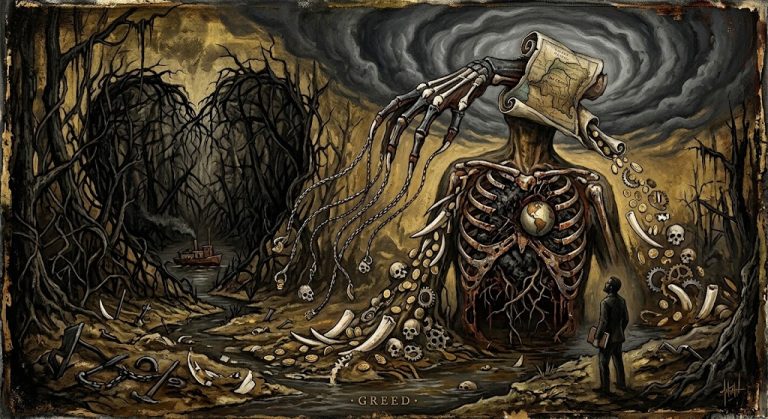
Our politics is a politics of the stomach, of greed and exploitation. Having presided over the wholesale dismantling of our collective hope, the political class can now set the rules, rules that revolve around money – stolen money!
Thus, this cycle goes round and round like the revolving door of the Integrity Centre. I steal money today which I use to bribe you to send me to parliament or the local council tomorrow. I do this with the single aim of stealing more money to purchase my seat the next time around while making a handsome profit in the process.
When shall we stop this cycle of madness?
I say NOW! Now is the time to draw a line in the sand! Now is the time to say to anyone who subscribes to this madness, enough! Now is the time to take a stand against these honourable predators! Now is the time to reclaim our human dignity! Now is the time to start our long march to our true land of promise!
What we do now will determine what kind of country our children will inherit. Do not be fooled by those who say that it does not matter what we do, for the choices we make today shall have irreversible consequences for generations to come. We are the people who shall save or lose Kenya. We are not perfect and we will make our mistakes, but the greatest mistake we can make now is to do nothing.
So, do something!
But first, we must disregard the futile search for a messiah who will come and fix everything for us. The messiah we look for is to be found inside each one of us. We must each take personal responsibility in defining and enforcing our new social contract.
We must say no to any person who seeks to exploit us and use us as a stepping stone to power. We must find the courage to believe in ourselves once again and to say ‘no’ to their destructive favours and demeaning patronage for which we have hitherto sold our birthright. It is time to impose a new set of rules: a paradigm that puts country above personal comfort, and our children’s inheritance and collective security above individual gain.
FIGHTING THE GOOD FIGHT…
Kenya is at war. And this is a fact whether it is acknowledged or not. We may not see tanks or troops on our streets and we may not go to bed with the sound of gunfire ringing in our ears, but we are at war.
The enemies we face are more lethal than a conventional army. They may not destroy our infrastructure or kill our mortal bodies, but they have stealthily found their way through our defences, and are slowly eating away at the soul of our nation. We boast a form of civilisation, but it is an empty shell and it is only a matter of time before the whole edifice comes crushing down. The cost of that eventuality is too ghastly to contemplate.
However, unlike the politicians, I do not dangle the threat of cataclysmic implosion before your eyes in order to paralyse Kenyans into doing nothing, rather I do so in order to galvanise a population into action.
We must urgently retake control of our destiny and our country, and start rebuilding the walls around our nationhood. It is not too late to reconstruct the soul of our nation on our own terms, but the work must start now. Every moment of delay pushes us ever closer to the brink!
THE ARMY OF ORDINARY PEOPLE….
This is therefore a call-up notice:
All Kenyan men and women are hereby requested and required to enrol in the army of ordinary people. Our sole objective is to defend our heritage from all enemies foreign and domestic, to reconstruct the soul of our nation, and to lay a firm foundation for our new republic.
And these are our rules of engagement:
The primary theatre of action shall be within ourselves, for ‘There is only one small corner of the world that we can truly change and that is ourselves.’ We cannot impose rules on others that we are unwilling to adhere to ourselves. We must start by changing our own behaviour, attitudes and mindset to conform to the new Kenya that we seek to create. We must become the change that we seek.
The next theatre of action is the world around us, our homes, our schools and colleges, our workplaces, our communities and on the road, as we walk, cycle, drive or commute. We must politely but firmly point out whenever someone transgresses the human dignity of others or of ourselves.
However, we must also be careful not to demand of others higher standards than we ourselves faithfully subscribe to. We must seek to faithfully influence our colleagues to act in the best interests of Kenya. In everything we do, we must constantly ask, ‘Will it contribute to the reconstruction of the soul of our nation?’
What weapons shall our army wield?
Our conviction, our minds, and our bodies. We shall scale the citadels of oppression to proclaim our humanity to those who have long forgotten what it was to be human.
We shall shun violence in all its forms – violence of thought, language, and action. We shall engage in non-violent direct action when necessary to draw attention to our concerns and to bring about the positive change that we seek.
In everything we do, we shall conduct our struggle on the high moral plane of integrity and honour, not seeking to conquer our opponents but to convert them, for our fight is not against persons, but against injustice, against indignity and against oppression.
COUNTING THE COST….
What risks do we face and what will this fight cost us?
The forces pitted against us are many, varied and vicious and before we engage, we must count the cost.
It will cost us – all of us – our very lives. The cause for which we fight will be here long after we have all passed the baton on to a new generation of fighters in the army of ordinary people. Some of us may have to go before others, for the entrenched forces we oppose are not benign.
Therefore, like any other army, the army of ordinary people requires you to be prepared to pay the ultimate price for your convictions. You and I could die. This is a reality that we must be prepared to come to terms with before signing up.
But if we wage our struggle with honour and discipline, and if we raise our cause above ourselves, even if we die in the struggle, our death will become redemptive, for hundreds and thousands will rise up to take our place and our blood shall water the tree of freedom and invigorate our nation. And we will go out in glory knowing that soon, our nation shall be truly free!
We could go to prison. But this should not perturb us unduly because for countless people who endure life in the slums or live under the spectre of urban insecurity or rural poverty, there is a sense in which our country is one large prison today.
Should we end up behind bars, we should take solace in the fact that in those very prisons are men and women, both jailers and jailed, who need to hear our message of hope. We will go to prison willingly and shall ‘transform our jailhouses from dungeons of despair into havens of freedom’. Soon, both prisoner and prison warder shall be free!
We could endure physical injury, but this is not an unfamiliar occurrence. We are already bleeding from a thousand wounds. We suffer the daily indignities of hunger, oppression and disease.
We must regard every blow that lands upon our unarmed bodies as the blow of a hammer and chisel that will shape the stones that wound us into the forms of men and women. In doing so, we shall liberate both the oppressed and the oppressor and forever throw off the shackles of fear and brutishness from around the neck of our nation. Soon, both the oppressor and the oppressed shall be free!
And what is in it for us?
I can promise you only hardship and persecution. These are the only guarantees. Our country did not get to the dark place where it finds itself today overnight, nor will it escape from this reality overnight. It will get worse before it gets better.
But I also promise you destiny.
We were born for such a time as this. Future generations shall be beholden to the army of ordinary people – young women and men who had the courage to stand up and fight for their convictions.
STEPPING INTO THE UNKNOWN…
I call upon you to give up the material comforts of today to build a nation for tomorrow. I dare you to cross the line of the familiar and step into the unknown in pursuit of a vision for another country, a better homeland.
I challenge you to sow the seeds of a tree you may never personally sit under so that another generation may reap the fruit of dignity, security and prosperity for all. I call upon you to invest in a future we may both never see, that your children and mine might never again be called the children of a lesser god.
And may I remind you, my brothers and sisters, that Kenya was one of the few countries in Africa in which the colonial master was not just politely asked to leave, but was pushed out of the country by angry and determined young men and women who risked their all to wrest our country back from those who had stolen our land and trumpled upon our dignity.
A generation has since passed.
Our parents can at least claim to have fulfilled their mission of attaining that formal independence.
What about us?
Do we want to leave behind a legacy of having let our country disintegrate on our watch?
Amkeni ndugu zetu!
Njonjo Mue
July 2001
Similar Posts by The Mt Kenya Times:
- Mt Kenya Times ePAPER October 1, 2026
- Museveni backs Lamu but keeps Uganda’s money at home
- Sifuna’s party wins its name — and Kenya’s opposition race begins in earnest
- Lamu’s $16B gamble: Africa’s biggest refinery divides the region
- Ruto launches KSh2.2 trillion Lamu refinery in East Africa’s biggest energy bet
About the Author