Beyond the Book: Why Southern Africa’s Authors Need a Sector, Not Just a Shelf
 The Mt Kenya Times
Dr Sydney Muponda
INTERVIEW | BOOKS, LITERACY AND THE CREATIVE ECONOMY
Beyond the Book: Why Southern Africa’s Authors Need a Sector, Not Just a Shelf
Dr Sydney Muponda, Chief Visionary Officer, SOTRANE Publishers Limited
He was asked to speak about his own book. He asked instead to speak about everybody else’s.
When did you start to write?
Long before anyone called me a writer. My earliest writing was not literary at all — letters, school compositions, church programmes, minutes of meetings nobody would ever read again. I began writing with serious intent in 2011, but I count my true beginning from the moment I understood that writing is a service and not a performance. That shift is what turns a person who writes into an author.
I say this for the many across this region convinced they have begun too late, or too poorly, or without the right qualification. There is no correct age at which to begin. The finest manuscripts to cross my desk have come from retired teachers in their seventies and from students who had not yet finished college. What they shared was not talent. It was the discipline of finishing.
What inspired you?
A refusal to watch our inheritance disappear. Southern Africa is one of the most story-rich regions on earth — proverb, praise poetry, idiom, cosmology; whole philosophical systems carried in the mouths of grandmothers. Yet an oral tradition that is never written down is one funeral away from extinction. That thought unsettled me years ago and it unsettles me still.
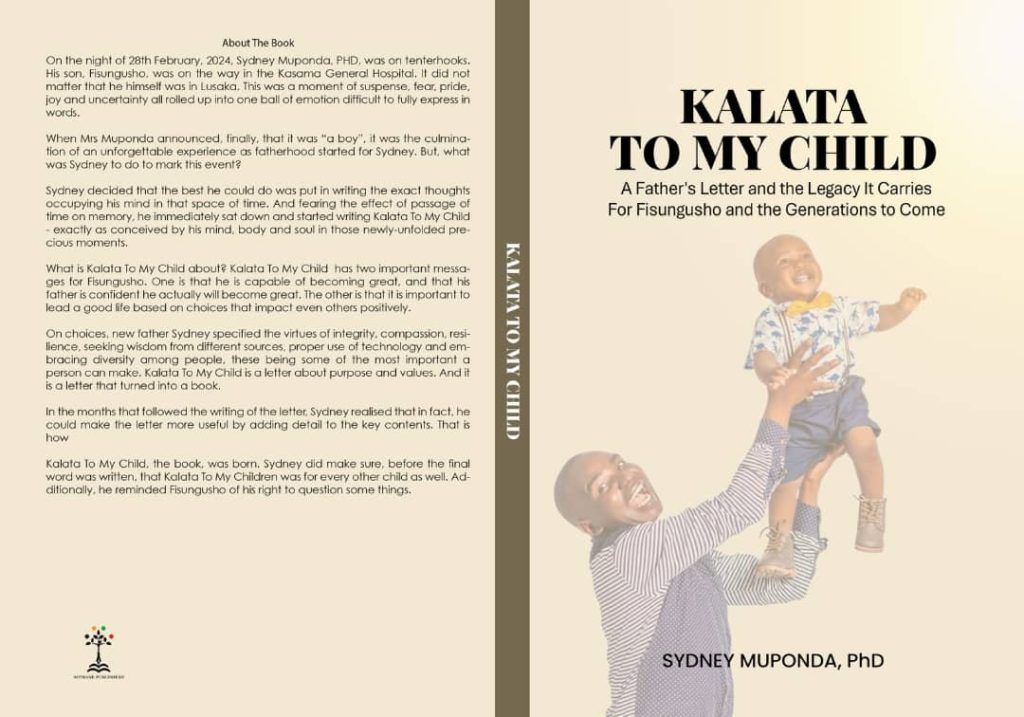
Kalata To My Child grew out of that conviction. It began privately, as a letter to my own child, and became something else the moment I set the proverbs of our people beside my own words. I was no longer writing to one child but to a generation, and I was celebrating a creativity our people have never lacked and have too rarely been paid for.
That passion is what pushed me into doctoral research on literacy and national consciousness — I wanted to test the instinct rather than merely feel it. The finding never left me: a people read their way into their own future. Nations do not develop and then begin to read. They read, and then they develop.
Do you see growth in book sales?
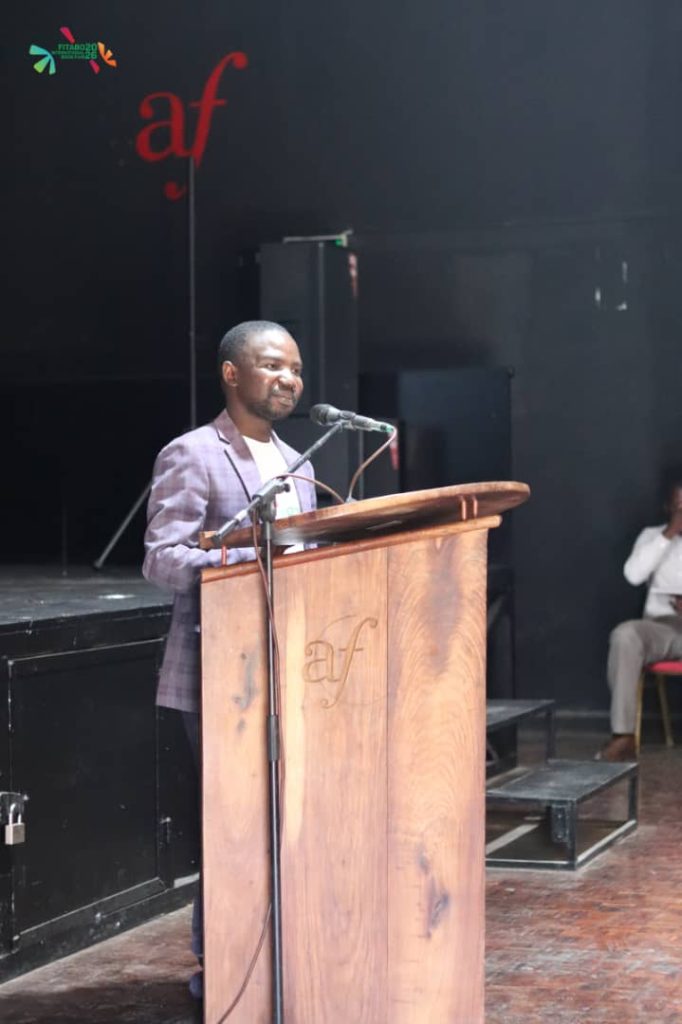
Yes — but from a very low base, and false optimism has done our sector real damage. At the FITABO International Book Fair in April, 269 delegates attended, 128 of them young people; over three days 520 books were sold and 74 titles deposited into national archives. Modest figures by international standards. But note what they prove: when books are physically placed in front of readers, at a price they can meet, readers buy them.
Across Southern Africa we have confused a distribution failure for a demand failure, and then blamed the public for not reading. The reader is not absent. The book is absent from where the reader is. Correct that, and the sales follow.
What do you plan to do in terms of marketing?
We are leaving behind the launch-event model, where a book is celebrated for one afternoon and then disappears. That model flatters the author and starves the book.
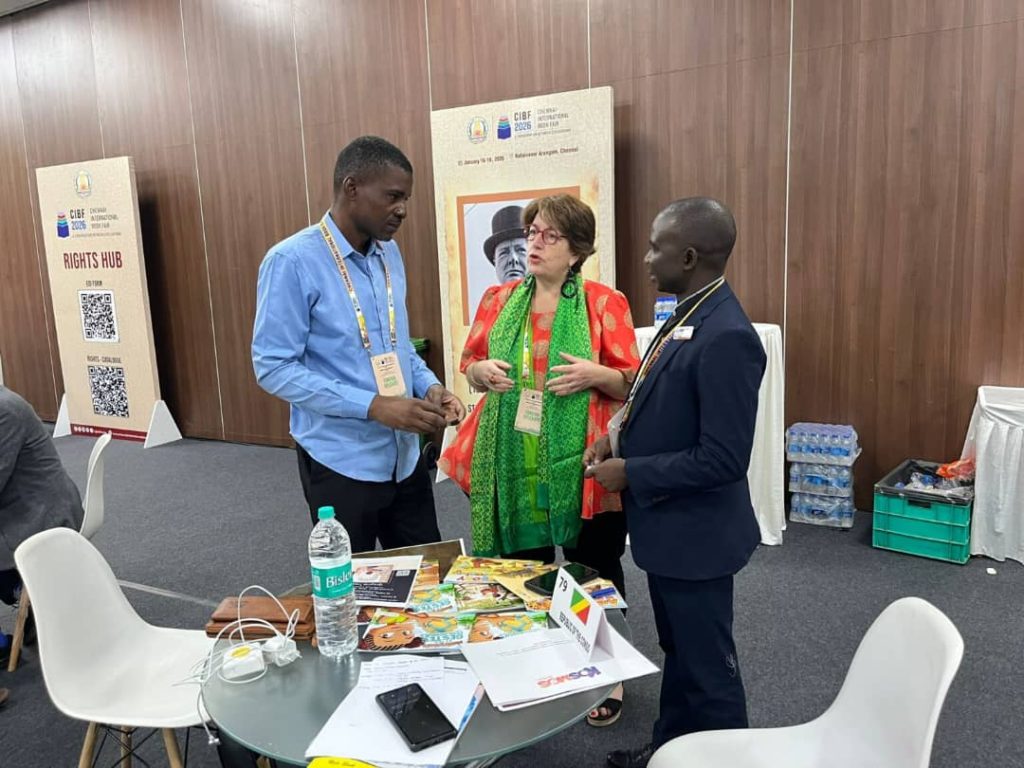
Four priorities. A year-round trading platform: we are building FITABO Connect, a vetted marketplace linking authors with editors, designers, translators and printers, so the sector has somewhere to do business in the eleven months when there is no fair. Institutional and school supply, because one agreement can move more copies than a year of individual sales and places books where the reading habit is formed. Format — serialisation in newspapers such as this one, e-books, audio editions and indigenous-language editions all reach readers a city bookshop never will. And rights: we take our catalogue to the Sharjah Booksellers Conference in September, because too many African publishers sell copies when they could be selling translation and territorial rights.
Advocacy and literature — can it grow sales? Will you partner with others, or does it end at your corner?
It has never ended at my corner, and it cannot. A publisher who thrives in a collapsed sector is only the last one standing in an empty room.
We work through national booksellers’ and publishers’ associations, through PEN, and through a consortium bringing writers, publishers, musicians, filmmakers and visual artists together so the creative economy speaks with one voice rather than seven competing ones. We have also finalised a ten-year book and literary sector master plan for 2026 to 2036, addressing what no author can fix alone: public procurement of local titles, restocking of community and school libraries, duty on paper and printing inputs, protection of royalties, and reliable sales data. I would like to see counterpart plans in every SADC country, and in time a regional one.
Advocacy does grow sales, though never on the timescale an author would wish. A library procurement policy is worth more than a thousand book launches. My appeal to fellow writers is simple: join something. An author alone is a hobby. Authors organised are an industry.
Lack of market is a common story across Southern Africa. What is the cause, and will literature make it?
The causes are structural, not cultural, and the two must be separated — because we reach too easily for the lazy explanation that Africans do not read.
We inherited publishing systems built to serve examinations, so a book means a textbook and everything else is a luxury. Distribution barely exists outside a few urban centres, so a rural reader with money and appetite still cannot find a title. Imported paper and short print runs push prices beyond household reach. Libraries, which ought to be the anchor buyer for every publisher in the region, are under-stocked. Policy pushes us toward English when the emotional language of most readers is their mother tongue. Piracy erodes what margin survives. And it remains easier for a bookshop in Harare, Gaborone or Lilongwe to import from London than to trade with its neighbour — our borders are open to books from outside and closed to one another. Beneath all of it sits an information problem: without sector-wide sales data, no bank, investor or ministry can be persuaded that books are a viable business.
Will literature make it? I am certain of it, and not out of sentiment. This region has the youngest population in the world and stories now travel by phone. Our screen industries are already mining African narrative for material, and every one of those stories begins on a page. What is required is not a miracle but a deliberate choice: buy our own books, stock our own libraries, publish in our own languages and open our regional trade. Do that, and the market will not need to be created. It will simply be permitted to appear.
Any word of encouragement to young authors facing writer’s block?
First, name it honestly. It is rarely an absence of ideas; it is fear in disguise — the fear of writing something poor. So, permit yourself to write badly. A weak page can be revised; a blank one cannot.
Second, write to one person rather than to an audience. Kalata To My Child moved the moment I stopped writing to “readers” and wrote to my own child. Name your reader and the sentences will come.
Third, read — a dry pen is usually attached to someone who has stopped reading. Fourth, treat writing as work, not as weather; set an hour, keep the appointment, and inspiration will learn where you live. Fifth, do not write alone: isolation, not inability, kills most manuscripts in this region.
And finish it. The industry can do nothing with a brilliant idea and a great deal with a rough finished draft. Every author I have published once sat where you sit, staring at a page that refused to move. The only difference between them and the writers you have never heard of is that they kept going.
ABOUT THE INTERVIEWEE
Dr Sydney Muponda is Chief Visionary Officer and Senior Consultant at SOTRANE Publishers Limited, an independent house established in 2018 with a catalogue of more than 180 titles. He is convener and Fair Director of the FITABO International Book Fair, a university lecturer, and a member of BPAZ, ZARRSO and PEN. He is the author of Kalata To My Child and writes a weekly column on education, literacy and development.
SOTRANE Publishers Limited — Kulima Tower Building, Lusaka. Enquiries: [telephone] | [email] | www.fitabo.org
Similar Posts by The Mt Kenya Times:
- Mt Kenya Times ePAPER September 17, 2026
- Ruto and Uhuru: The rupture at the heart of Kenya’s 2027 election
- Gakoromone traders and rights group demand closure of sewage discharge
- Retirement is not disenfranchisement: Reclaiming the constitutional rights of Kenya’s former presidents
- Kenya’s 2027 election: Can technology strengthen democracy or manipulate voters?
About the Author