Zimbabwean schools turn heritage curriculum into hands-on learning
 The Mt Kenya Times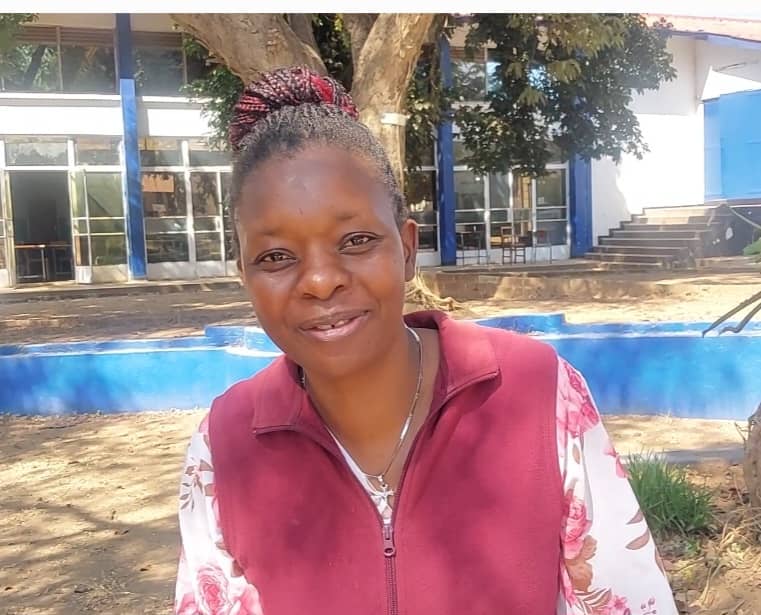
HOD Agriculture Carlotta Goromonzi
How Jameson High School in Mashonaland West is making national policy come alive — one harvest, flock, and stitch at a time.
By Azriel Chimeno
Zimbabwe’s schools are putting the Heritage-Based Curriculum to work in the fields, workshops, kitchens and computer labs — and the results are already visible.
The Heritage-Based Curriculum (HBC) 2024–2030 was designed to move learning away from a purely examination-focused model and anchor it instead in national heritage, indigenous knowledge systems, practical skills, innovation and patriotism. It aligns with Education 5.0, Vision 2030, the National Development Strategy 1 (NDS1) and the UN’s Sustainable Development Goal 4, with the ambition of producing learners who are competent, creative and capable of driving Zimbabwe’s socioeconomic transformation.
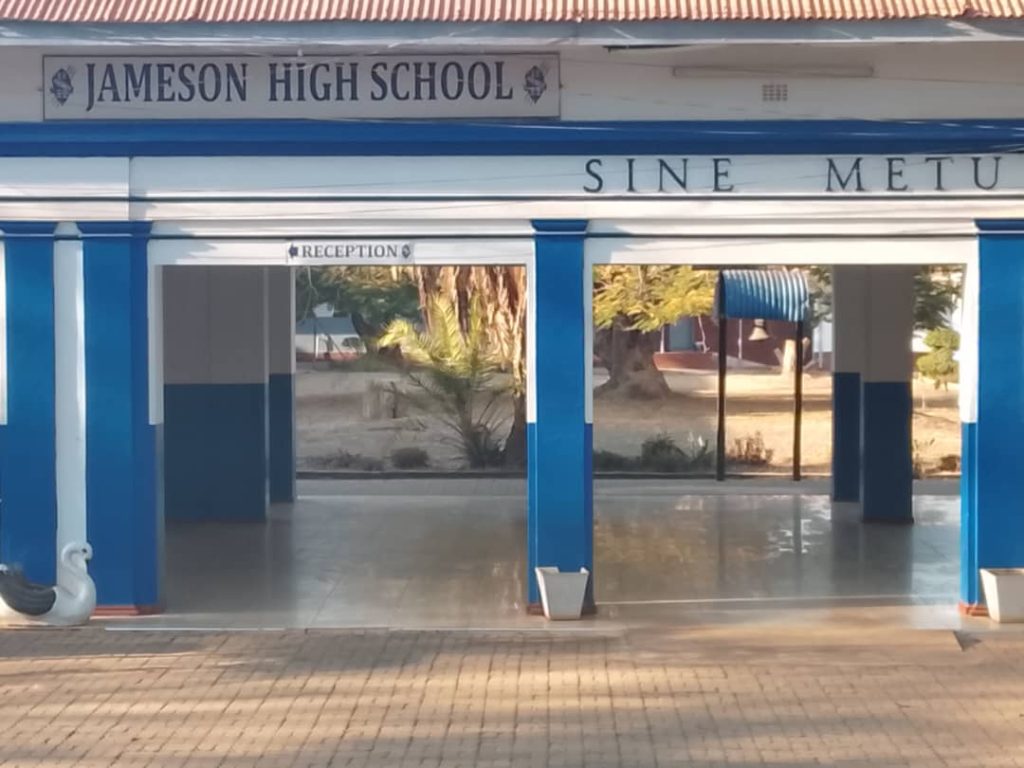
At Jameson High School in Sanyati District, Kadoma, Mashonaland West, that ambition has moved decisively off the page. Students who once studied agriculture, culture and technology in theory are now practising it every day.
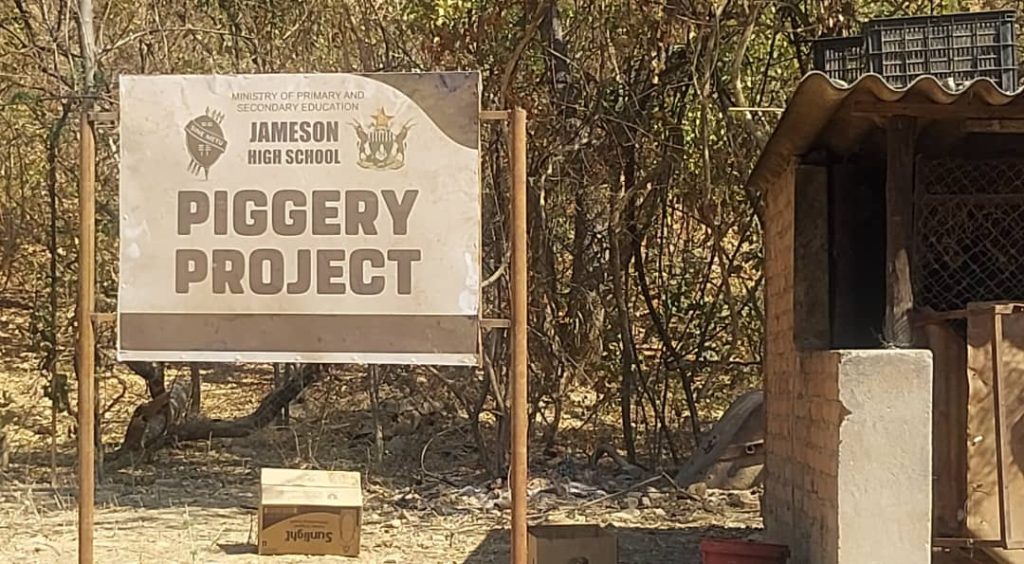
Through eight flagship projects, the school has redefined what heritage education looks like in practice. Learners are raising broilers and collecting eggs, farming fish, managing an orchard, growing crops and herbs, caring for livestock, producing textiles and crafts, baking, and mastering computer systems.
The goal is straightforward: equip students with practical skills that preserve Zimbabwean heritage while preparing them to be self-reliant, employable and community-minded. What began as national policy has become, at Jameson High, a living classroom.
From the ground up
Behind the main block, an open space has been transformed into an outdoor laboratory. Students cultivate maize, vegetables and a dedicated herb section — culinary, medicinal, fragrant and indigenous varieties used in traditional remedies. They apply conservation farming techniques and seed-preservation methods passed down through generations, tracked with modern record-keeping.
Head of Department for Agriculture Carlotta Goromonzi said the school is implementing the curriculum fully and with conviction.
“The learners are seeing the fruits of the projects with their own hands. They plant, they nurture, and they harvest. This makes them understand food security and the value of our indigenous crops in a way no textbook can,” she said.
Produce from the garden supports the school feeding programme, while surplus is sold to parents and the surrounding community. Lessons in budgeting, marketing and cooperative work are built into every harvest.
Poultry, livestock and fish
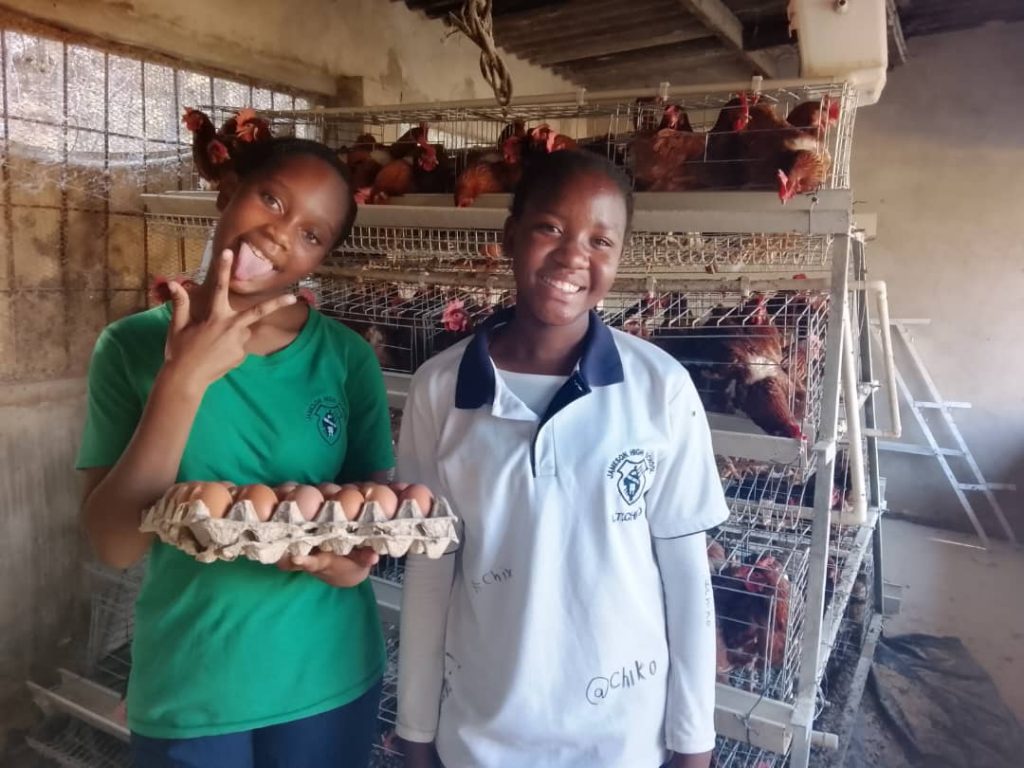
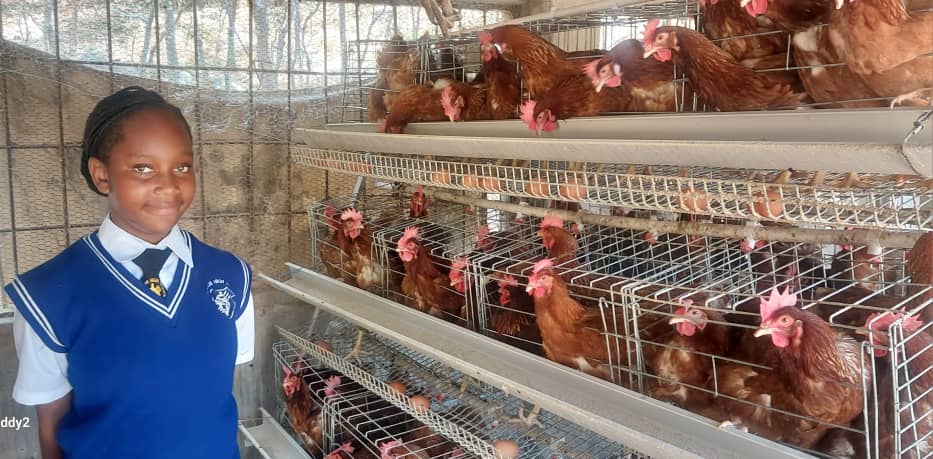
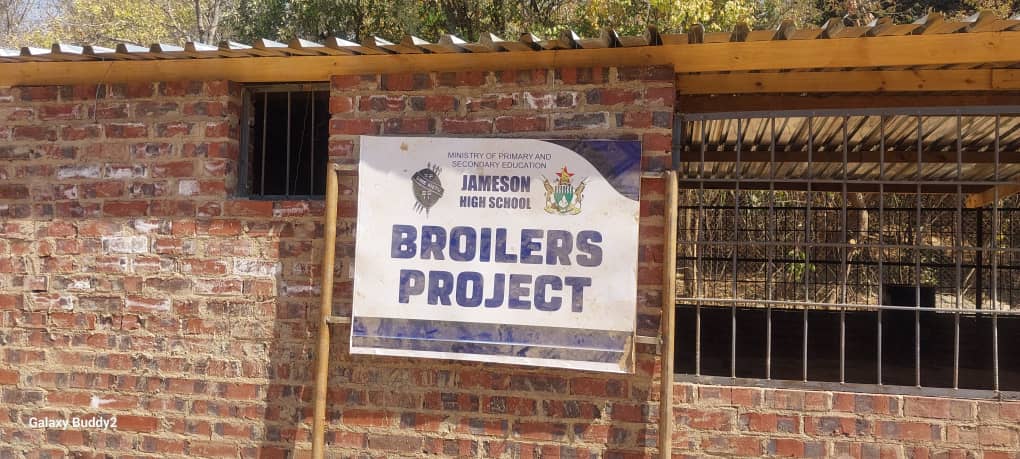 The poultry unit is one of the school’s busiest enterprises. Students manage 500 broilers every six weeks for meat production and run a layers unit that yields 200 eggs a day.
“In poultry, learners are not just feeding chickens — they are learning business. With 500 broilers every six weeks and 200 eggs collected daily, students handle costing, feeding schedules and marketing. This teaches them that poultry can be both food security and a source of income,” Goromonzi said.
Eggs are supplied to the school kitchen and sold to the community, while broilers provide income alongside lessons in business planning.
Beyond poultry, students care for pigs and goats — learning breeding, feeding, record-keeping and the economic value of indigenous livestock. The project is linked to heritage values of wealth creation and sustainable rural livelihoods, with the unit targeted to become self-sustaining within two years.
A fish pond forms part of the school’s aquaculture project. Students learn water management, fish feeding and harvesting, with the aim of diversifying protein sources for the school and demonstrating aquaculture as a viable income stream.
Orchard and textiles
 Jameson High has established an orchard growing pome, stone, citrus, tropical and vine fruits. Students learn pruning, grafting, pest control and post-harvest handling.
“The orchard does more than supply fruit for consumption. It teaches entrepreneurship, and we plan to process some of the fruit into juices and jams in the future,” Goromonzi said.
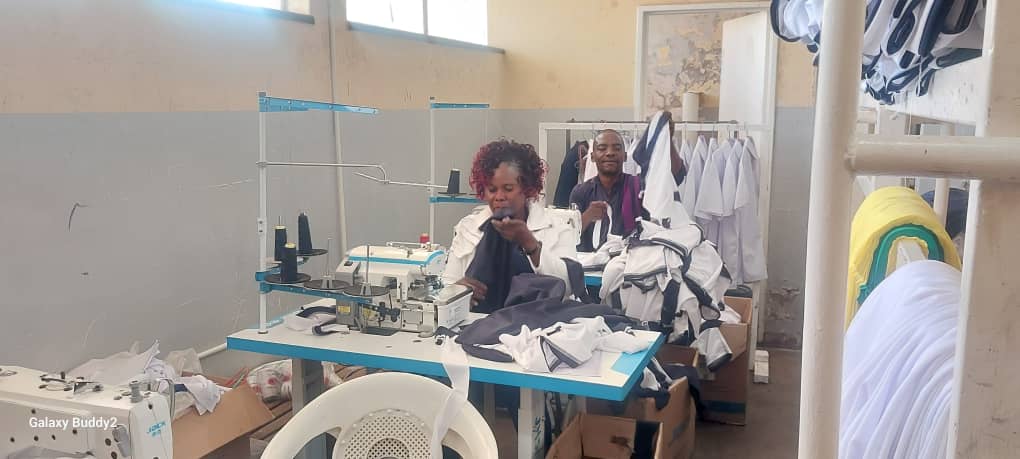
In the textile workshop, sewing machines and dyeing stations hum with activity. Students are already producing uniforms and tracksuits for Jameson High.
Head of School Abenol Matsiwe said the decision to implement HBC projects was deliberate and community-driven.
“When we sat down as a school, we asked: how do we make the Heritage-Based Curriculum real? The answer was to let learners produce what the community needs,” he said. “We are currently making uniforms and tracksuits for our own learners. Soon we will start making uniforms for other schools in the district. This is how we turn skills into service and income.”
Students learn design, costing and quality control, with some garments already worn at cultural events.
Art, craft and digital heritage
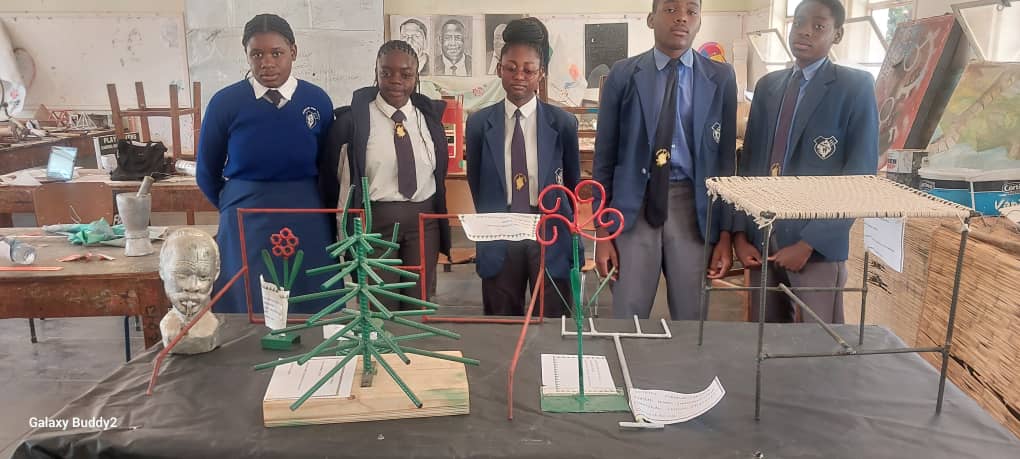
 The Art and Craft studio is where tradition meets creativity. Students carve wood, mould clay pots, create beadwork and paint murals depicting Zimbabwean history and folklore, studying techniques used by local artisans while experimenting with contemporary design. Projects include school décor, exhibition pieces and items sold at fundraisers.
“Each bead pattern, each pot shape tells a story,” one art teacher noted. “Our students are learning to keep those stories alive while earning from their talent.”
The HEXCO Computer Studies lab ties every other project together. Students maintain digital records for poultry, livestock, bakery and orchard operations, design logos and packaging for textile and craft products, and study coding. Crucially, the lab is also used to document heritage — students record oral histories from elders, digitise traditional music and create presentations about Zimbabwean customs. Digital literacy and cultural content are taught as one.
Learners speak
For students, the most significant change is seeing theory become practice.
Form 1 student Glory Benigna Pedzisayi said the projects have made school more exciting. “It’s better when we do things ourselves. In class we learn, but in the garden and workshop we understand,” she said.
Abigail Tanaka Chikowore said the skills feel useful well beyond the school gate. “The HBC has helped us as a school and as learners. The practicals are hands-on and they prepare us for life after school,” she said.
Tyron Rundare, a Lower 6 student specialising in Environmental Management, said the programme is building real confidence. “Before, we just wrote notes. Now we are producing food, clothes and products. We are learning how to work and how to earn. That is what will help us after school,” he said.
One ecosystem, one vision
 Matsiwe said the projects are designed to make Jameson High self-sustaining while serving the wider community.
“These projects are not separate activities. Together they form one ecosystem. The crops feed the bakery, the bakery feeds the learners, the computers record everything. Our aim is a school that produces, not just consumes — a school that leads by example,” he said.
He also described the change in learner attitude since implementation began. “What we have seen is discipline, ownership and pride. When a child bakes bread from maize they planted, or sews a uniform they will wear, that child will never take it for granted. That is education with meaning.”
Teachers report higher attendance and engagement since the practical rollout began, as students can see a direct link between what they learn and how they live.
On the broader vision, Matsiwe is clear that the work is only just beginning.
 “Our dream is that one day, Jameson High will not only feed itself, but also supply its community. That is the true test of the Heritage-Based Curriculum,” he said.
The fields are fuller, the pens are stocked, the ovens are warm, and the students are more confident. Heritage is no longer a subject to memorise for an exam — it is a practice to live every day.
Similar Posts by The Mt Kenya Times:
- Mt Kenya Times ePAPER September 17, 2026
- Ruto and Uhuru: The rupture at the heart of Kenya’s 2027 election
- Gakoromone traders and rights group demand closure of sewage discharge
- Retirement is not disenfranchisement: Reclaiming the constitutional rights of Kenya’s former presidents
- Kenya’s 2027 election: Can technology strengthen democracy or manipulate voters?
About the Author