
The Metaverse and Artificial Intelligence: A New Canvas for Human Connection
 The Mt Kenya Times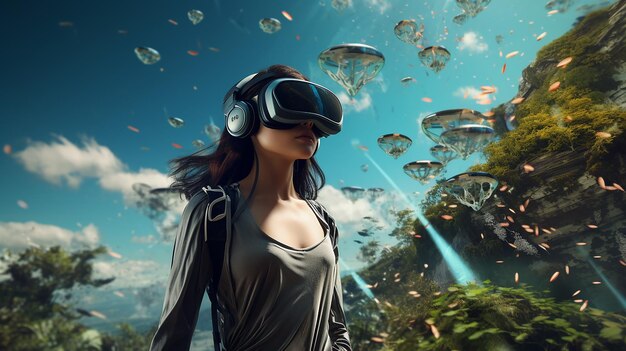
The Metaverse and Artificial Intelligence
By Jerameel Kevins Owuor Odhiambo
The metaverse, a sprawling digital universe where virtual and physical realities intertwine, feels like a dream we’re only beginning to understand. Imagine slipping on a headset and stepping into a bustling marketplace where your avatar haggles with a vendor who’s actually an AI, or attending a concert where the performer is a digital creation, yet the crowd’s energy feels as real as any stadium. Artificial intelligence fuels this dream, acting as the architect, curator, and sometimes the very soul of these virtual spaces. But beyond the tech buzzwords and glossy demos, what does this fusion of AI and the metaverse mean for us? It’s not just about new gadgets or escapism; it’s about redefining how we connect, create, and exist.
I remember my first foray into a metaverse platform, a clunky VR experience that felt like a mix of a video game and a social experiment. My avatar, a cartoonish version of myself, wandered through a virtual park where I chatted with strangers from across the globe. One was an AI, indistinguishable from the humans until it glitched mid-sentence. That moment stuck with me not because of the glitch, but because it blurred the line between what’s real and what’s constructed. AI in the metaverse doesn’t just mimic human behavior; it amplifies our ability to interact in ways that feel authentic, even when they’re entirely synthetic. This isn’t science fiction it’s already happening in platforms like VRChat and Decentraland, where AI-driven characters guide users or create dynamic environments that adapt to our whims.
But let’s step back and ask: why does this matter? The metaverse, powered by AI, promises a new kind of social fabric. In a world where physical distance often isolates us, these digital spaces offer connection without borders. AI makes this possible by generating responsive worlds think of an art gallery where the paintings shift based on your mood, detected through biometric feedback. Research from Stanford’s Virtual Human Interaction Lab shows that immersive virtual environments can foster empathy and reduce social anxiety, as users practice interactions in safe, AI-moderated settings. Yet, this potential for connection comes with a catch: the more we rely on AI to shape these spaces, the more we risk outsourcing our humanity to algorithms.
This tension between empowerment and dependency defines the metaverse’s evolution. AI’s role is dual: it’s both a tool and a collaborator. For creators, this is revolutionary. Artists are already using AI to craft impossible landscapes or compose music that evolves with the listener, as seen in projects like Holly Herndon’s AI-generated album Proto. In the metaverse, these creations become immersive experiences, not just static works. A painter in Lagos can exhibit in a virtual gallery visited by millions, with AI translating cultural nuances in real-time. But here’s the flip side: who owns this art? Who controls the data driving these experiences? Companies like Meta and Epic Games are investing billions, raising questions about whether the metaverse will be a democratic playground or a corporate walled garden.
The economic implications are staggering. The metaverse market, projected to reach $1.3 trillion by 2030 according to Citibank, is being built on AI’s ability to personalize and scale. Virtual real estate, NFTs, and digital goods are already creating new economies where AI acts as both creator and regulator. For instance, AI algorithms in platforms like The Sandbox generate unique digital assets, while others monitor transactions to prevent fraud. This could democratize wealth creation imagine a teenager in rural India designing virtual fashion that goes viral. Yet, without equitable access, the metaverse risks mirroring real-world inequalities, where only the tech-savvy or well-funded thrive.
Ethically, the stakes are even higher. AI in the metaverse can manipulate perceptions in ways we’re only beginning to grasp. Deepfakes, already a concern, could become seamless in virtual spaces, eroding trust. Studies from MIT’s Media Lab highlight how AI-driven avatars can subtly influence behavior, nudging users toward certain purchases or ideologies. Imagine a political rally in the metaverse where AI tailors the speaker’s message to each attendee’s biases persuasive, but dangerous. Regulation lags behind, leaving us to navigate a Wild West where our choices might not be as free as they seem.
Still, there’s hope in the human spirit’s resilience. The metaverse isn’t just a tech construct; it’s a reflection of our desires. AI can amplify this, creating spaces that celebrate diversity and creativity. Projects like Mozilla Hubs show how open-source metaverse platforms, powered by AI, can prioritize user agency over corporate control. Communities are forming around shared passions virtual book clubs, dance parties, even therapy sessions where AI facilitates but doesn’t dominate. These spaces remind us that technology serves us, not the other way around.
For individuals, the metaverse offers a chance to reinvent. I think of my cousin, who struggles with social anxiety but found confidence performing as a virtual DJ in a metaverse club. AI tools helped her craft her setlist and even coached her through crowd interactions. This isn’t just escapism; it’s empowerment. Research from the University of Oxford suggests that virtual identities can boost self-esteem, as users experiment with facets of themselves they might suppress in the physical world. But we must ask: what happens when these virtual selves feel more real than our flesh-and-blood lives?
The challenge is balance. AI and the metaverse can expand our horizons, but they demand critical engagement. We need digital literacy to navigate these spaces, just as we need policies to ensure they’re inclusive and transparent. The European Union’s Digital Services Act, for instance, is a step toward holding platforms accountable for AI-driven content. But beyond laws, it’s about fostering a culture where we question the algorithms shaping our experiences. The metaverse isn’t a utopia or a dystopia it’s a mirror of what we choose to build.
Ultimately, the metaverse and AI are tools for storytelling, and we’re all authors. They invite us to imagine new ways of being connected, creative, and bold. My clumsy VR park stroll was a glimpse of this, a reminder that even in a digital world, human connection drives meaning. As we shape this new canvas, let’s wield AI not as a puppeteer but as a partner, crafting a metaverse that reflects the best of who we are and who we hope to become.
The writer is a legal researcher and writer
Similar Posts by The Mt Kenya Times:
- Diaspora Times Global Sep 19 – Sep 25, 2026
- Tibet’s glacial catastrophe: Behind Beijing’s wall of silence, a climate disaster reshapes a region
- Museveni says Uganda overpaid for fuel through Kenyan middlemen as new terminal breaks ground
- Court orders throw KPL season kickoff into doubt
- Can Kenyans abroad become the untapped force that transforms Kenya?
About the Author



Tech is good