The Ngilu factor: How the 2002 coalition architect could unlock Kalonzo’s path to State House
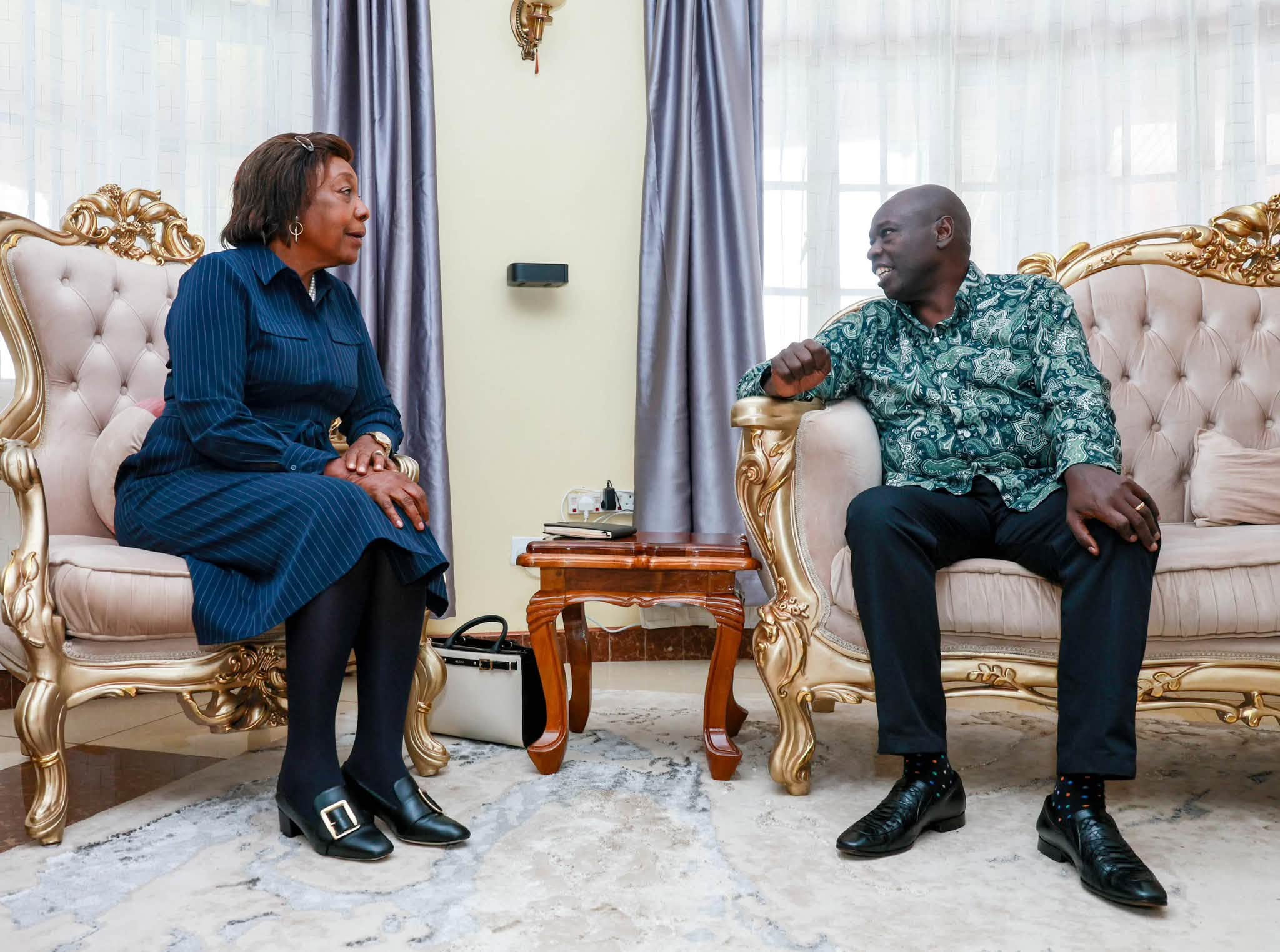
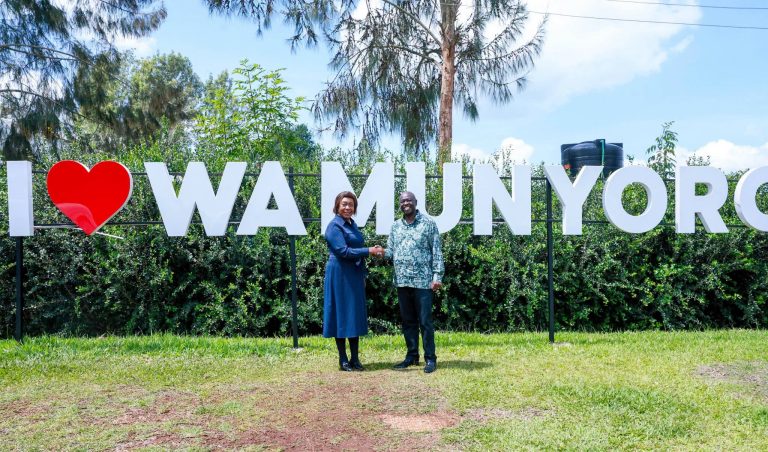
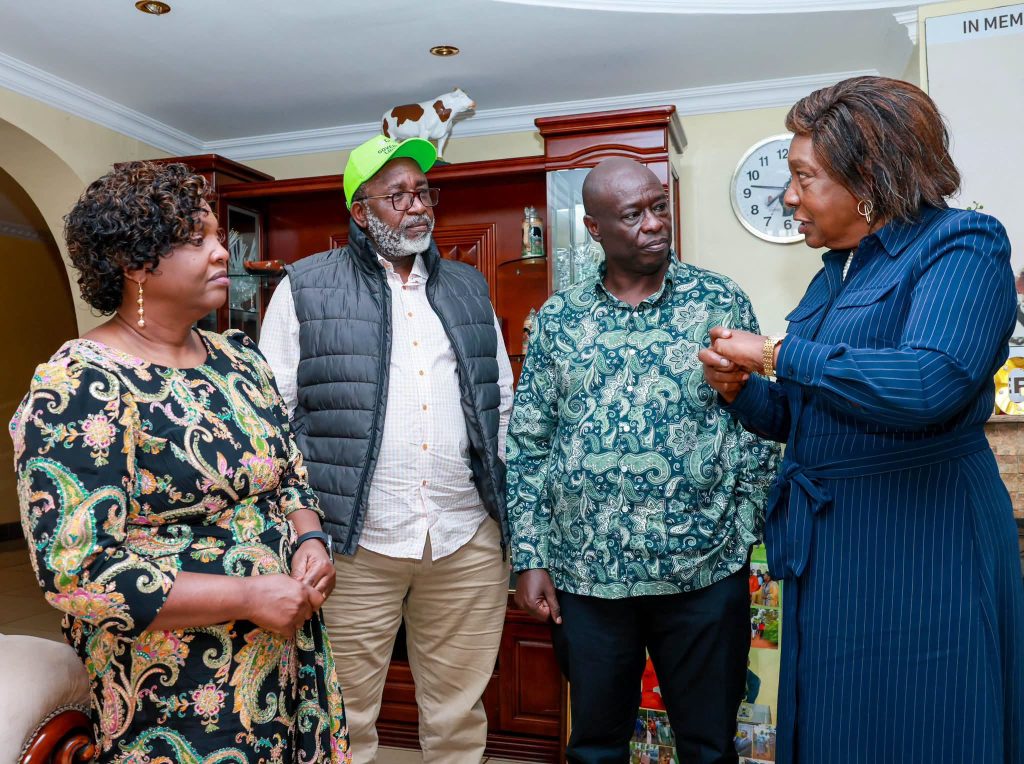
Former Deputy President Rigathi Gachagua met National Rainbow Coalition leader Charity Ngilu at his Wamunyoro residence on 3rd November 2026
A reunion at Wamunyoro has revived Kenya’s most consequential political blueprint — and the numbers suggest it could work
By James Mwangi
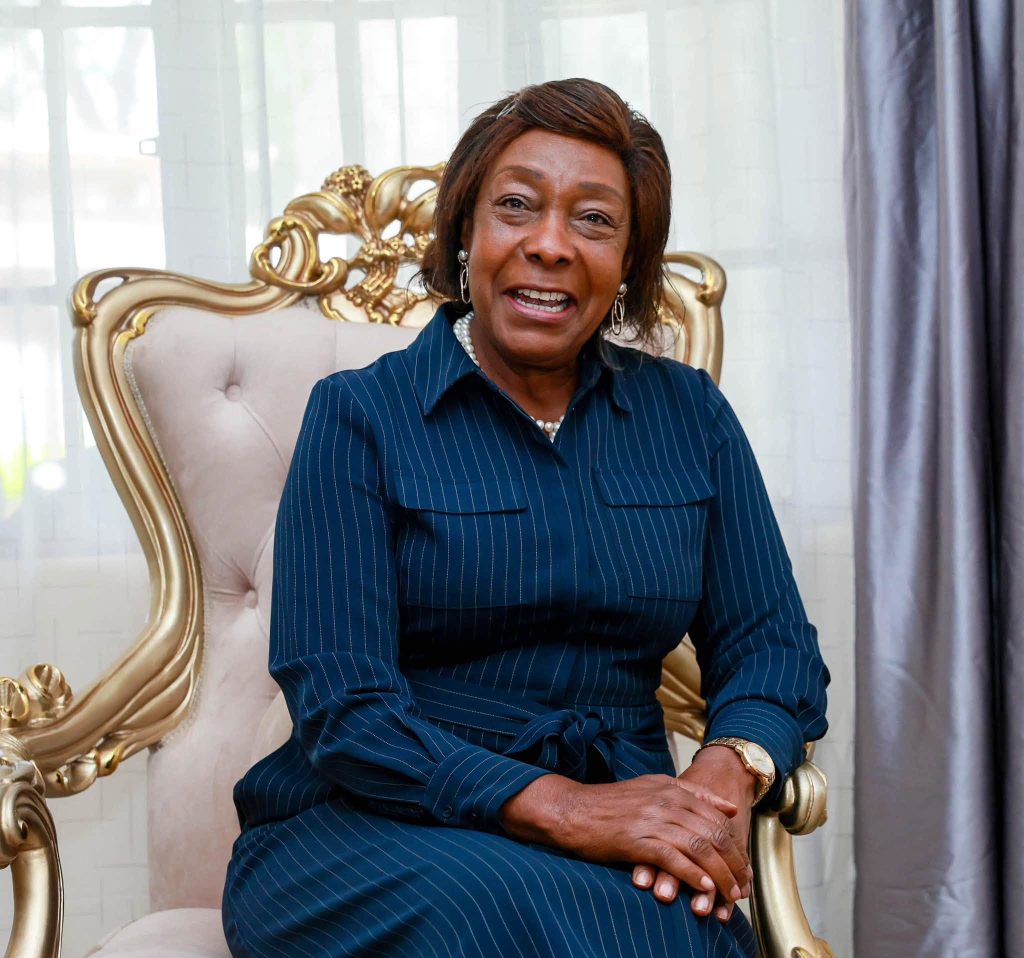
Former Deputy President Rigathi Gachagua met National Rainbow Coalition leader Charity Ngilu at his Wamunyoro residence in Nyeri County yesterday, a meeting that was far more significant than its quiet optics suggested — because the woman who walked through his gate helped engineer the last coalition in Kenyan history to sweep a ruling party from power in a single ballot.
Gachagua described Ngilu as one of the architects of the NARC dream, saying she, together with the late President Mwai Kibaki and the late Vice-President Michael Kijana Wamalwa, crafted the political strategy that led to NARC’s landslide victory in the 2002 General Election. “This morning, I benefited greatly from Ngilu’s wisdom as she took me through how NARC was crafted and implemented,” he said. He called it his “2002 moment.” To understand why, you need to understand what NARC actually was — and what it destroyed.
In 2002, the National Alliance of Rainbow Coalition won a landslide victory over KANU on 27 December. NARC’s presidential candidate, Kibaki, captured 62 per cent of the vote against only 31 per cent for the KANU candidate, Uhuru Kenyatta. According to Kalonzo Musyoka, who was present at its birth, the coalition was formed at a meeting at the Serena Hotel in Nairobi where the principals agreed on Kibaki for president, with Wamalwa and Kalonzo as first and second vice-presidents, Raila Odinga as prime minister and Ngilu as deputy prime minister. It was not an accidental alliance. It was architecture — carefully drawn by people who understood that KANU could not be defeated by any one bloc alone. Ngilu had joined hands with Kibaki and Wamalwa to craft an alliance of opposition parties to take on the then ruling KANU, and her reward was a Cabinet slot in Kibaki’s government. She remains the keeper of that blueprint.
This matters enormously in 2027, because the electoral logic that produced NARC’s victory now points — with striking arithmetic precision — towards a Kalonzo Musyoka candidacy as the opposition’s most viable path to State House.
Start with the numbers. Mt Kenya remains Kenya’s most influential electoral region, with about 5.77 million registered voters in the 2022 election, accounting for 26.1 per cent of the national electorate. The total votes cast across the Mt Kenya region in the 2022 presidential election stood at approximately 3.8 million, combining votes for both President Ruto and Raila Odinga. In the 2022 General Election, Ruto won the presidency with 7,176,141 votes — 50.49 per cent — narrowly defeating Raila Odinga who garnered 6,942,930 votes. Mt Kenya delivered roughly half of Ruto’s total. The region that made him president is now the region most openly organising to remove him.
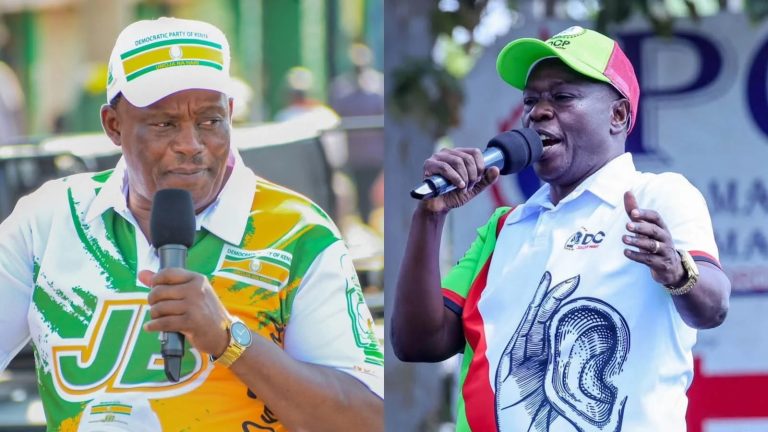
Political analyst Mutahi Ngunyi pegs the emerging opposition alliance — comprising Gachagua, Kalonzo, Eugene Wamalwa, Matiang’i, Mithika Linturi and Martha Karua — at approximately 9.4 million votes based on 2022 IEBC records. But that figure does not fully account for a development that transforms the entire arithmetic: the deliberate political merger of what was historically called the Kamba vote bloc with the Mt Kenya electoral machine.
Kitui, Machakos and Makueni had about 1.7 million registered voters in 2022, delivering approximately 769,386 votes to Raila and 250,161 to Ruto. The Wiper Party leader commands a loyal following in Ukambani, where he delivered a significant portion of the 2.2 million Kamba votes to Raila Odinga’s Azimio coalition in 2022. Those are Kalonzo’s own people. Add the loyal Ukambani base of approximately 1.6 to 2 million active votes to a Mt Kenya bloc that in 2022 alone produced 3.8 million votes across both main candidates — and further add the region’s growing voter registration numbers since — and a Kalonzo ticket backed by Gachagua’s Mt Kenya organisation begins with more than 5.5 million votes before it reaches Western Kenya, Nairobi or the coast.
Western Kenya’s four counties — Kakamega, Bungoma, Busia and Vihiga — had a combined 2.2 million registered voters in the 2022 election and added approximately 231,000 new voters during the recent voter registration exercise. If Linda Mwananchi Movement’s Edwin Sifuna consolidates that bloc behind the coalition, Kalonzo’s theoretical starting point climbs well above 7.5 million votes — a figure that, when paired with a credible running mate from the Rift Valley or Nyanza, challenges seriously for the 50-per-cent-plus-one threshold the Constitution demands.
Kalonzo has been positioning himself to inherit Ruto’s 2022 Mt Kenya vote bloc following the former’s falling out with Gachagua. In 2022, Gachagua helped deliver Mt Kenya to Ruto, only to later find himself isolated and weakened politically. The former Deputy President is not making that mistake twice. His series of consultations — with Ngilu, with Sifuna, with Kalonzo directly — is a methodical attempt to reconstruct a NARC-style coalition, this time with himself as the architect rather than the product.
Yet as Ngilu — who attended this week’s meeting as the sitting NARC party leader — would be the first to acknowledge, the architecture of 2002 was not simply about numbers. In 1992 and 1997, Kibaki, Raila Odinga, Kijana Wamalwa, Ngilu and others ran separately; each believed they were the rightful standard-bearer. Ethnic mistrust, personal ambition and the absence of a unifying structure made coalition-building impossible, and Moi won both times with less than 40 per cent of the vote. It was the painful discipline of subordination — placing Kibaki at the top despite multiple competing presidential ambitions — that made NARC’s victory possible.
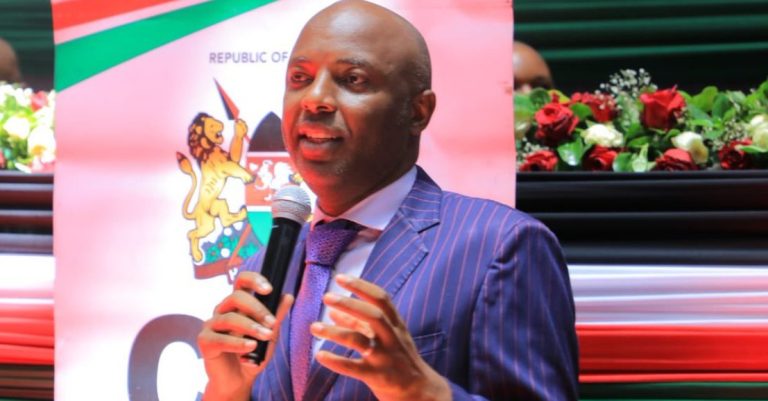
The opposition coalition today brings together Kalonzo, Gachagua, Matiang’i, Karua, Wamalwa and Muturi, but has not yet settled on a single presidential candidate, a formal coalition structure or a power-sharing formula. Muturi has said publicly that if he is not chosen, he will back Kalonzo. Matiang’i and Kalonzo’s camps remain visibly at odds. Karua, who co-convenes the coalition with Kalonzo, has said the alliance remains focused on building strong institutions before settling on its 2027 candidate.
That is the right instinct. But with the August 2027 General Election now nine months away, the window for the kind of patient, structural coalition-building that Ngilu helped engineer in 2002 is narrowing fast. She walked into Wamunyoro yesterday carrying the memory of how Kenya’s most decisive democratic transition was built — in a hotel room, by people willing to agree, in secret, before they went public. Gachagua called it wisdom. For Kalonzo, it may yet prove to be the winning formula.
Similar Posts by The Mt Kenya Times:
- Gachagua draws 2002 blueprint from Ngilu for 2027 opposition push
- Kenya’s divided opposition: Can unity win the 2027 election?
- OPINION: When the Inspector-General is summoned: The constitutional line between judicial oversight and institutional overreach
- Spanish football mourns Jesús de Miguel after fatal on-pitch collision
- Ten Hag’s relegation warning shakes Manchester United as crisis deepens
About the Author