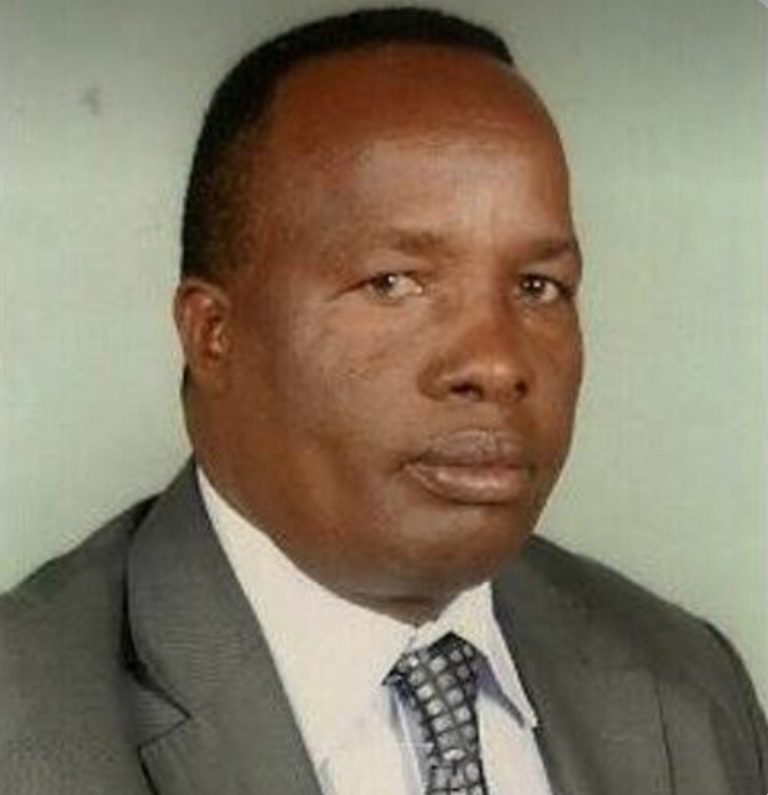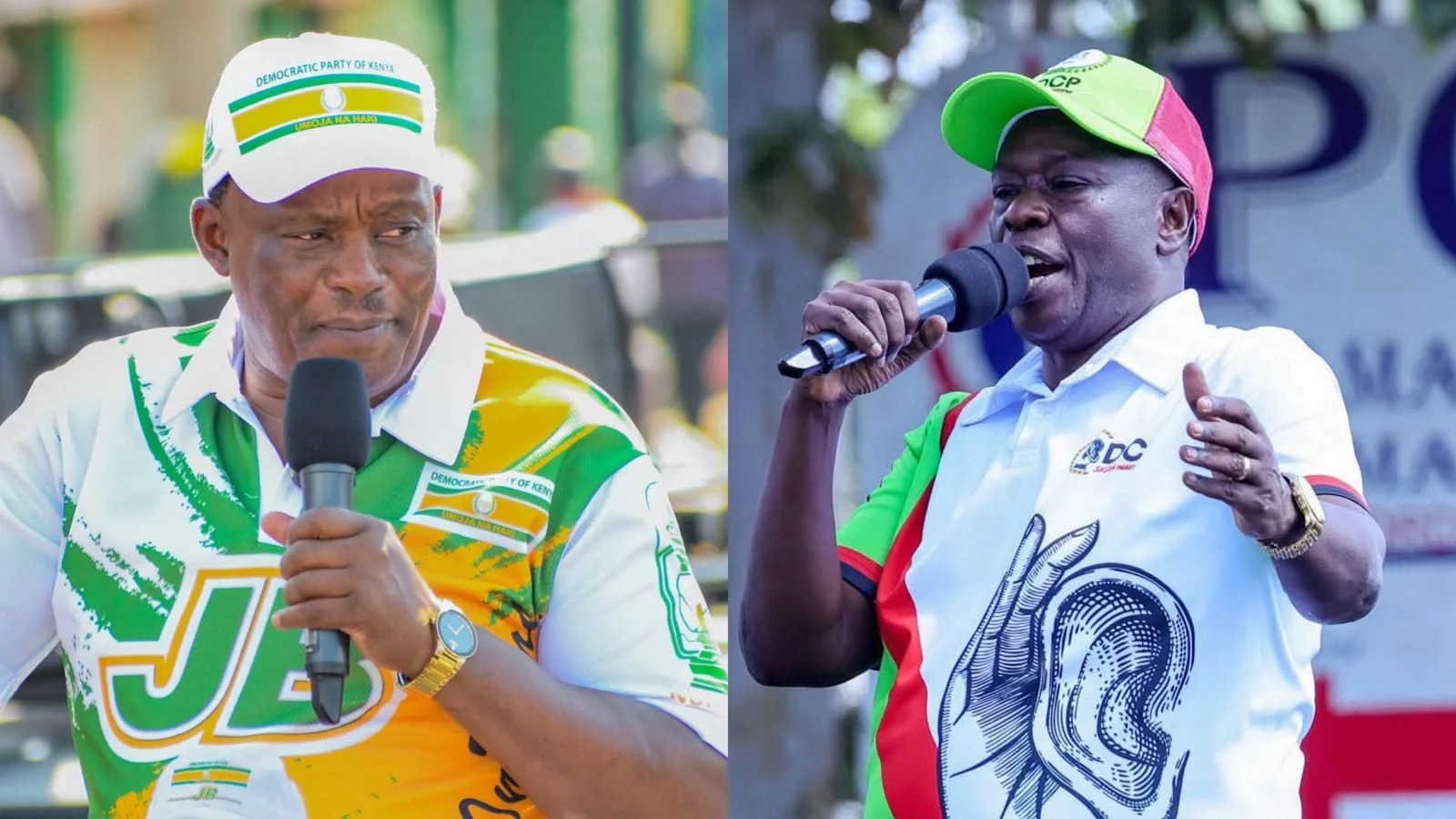
Former Deputy President Rigathi Gachagua and former National Assembly Speaker Justin Muturi
With personal ambitions clashing and a presidential candidate still undecided, Kenya’s opposition coalition risks repeating the mistakes that have handed the incumbent an advantage before
By Collins Kibet
Kenya’s political landscape is shifting with increasing urgency as leaders reposition themselves ahead of the 2027 General Election. Presidential ambitions are no longer whispered — they are being announced at church services, strategy meetings and regional rallies. Former Deputy President Rigathi Gachagua, former Interior Cabinet Secretary Fred Matiang’i, Wiper leader Kalonzo Musyoka, Democratic Action Party-Kenya leader Eugene Wamalwa, former National Assembly Speaker Justin Muturi and People’s Liberation Party leader Martha Karua have all emerged as principals in an opposition coalition vowing to present a single candidate against President William Ruto. The ambition is clear. The unity is not.
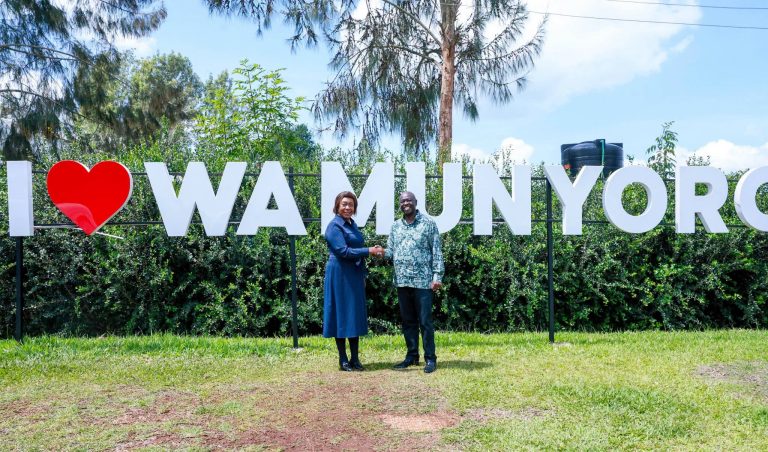
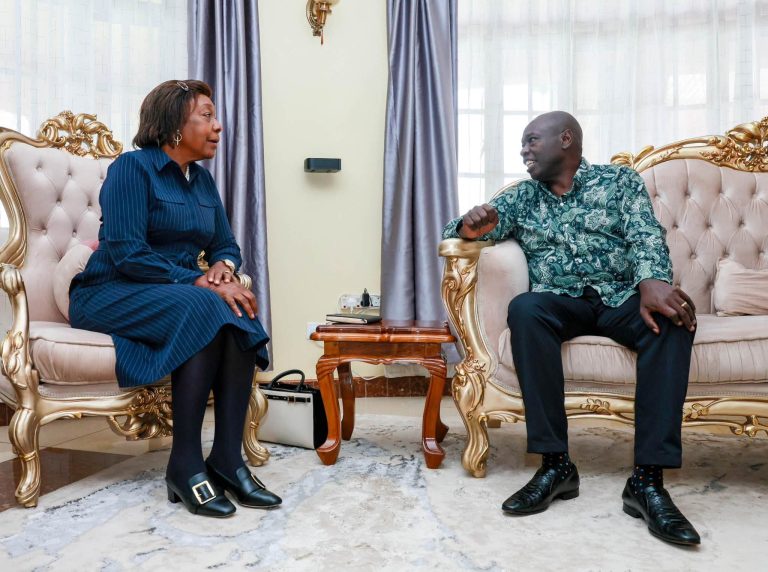
Yesterday, Gachagua met former Kitui Governor Charity Ngilu at his Wamunyoro residence in Nyeri County, where they discussed Kenya’s political future and drew lessons from the 2002 National Rainbow Coalition campaign that ended KANU’s decades in power. Gachagua said Ngilu — one of the original architects of NARC — had walked him through how that alliance was crafted and implemented, and that the conversation had given him what he called a “2002 moment.” It was an evocative reference. The NARC victory remains the most instructive example in Kenya’s democratic history of what becomes possible when opposition leaders place national interest above personal ambition. The question is whether today’s principals are genuinely prepared to do the same.
Gachagua has consistently insisted that opposition leaders cannot afford to enter the 2027 race divided, describing a united ticket as the only viable strategy to unseat the Kenya Kwanza administration. His proposal for a three-bloc political arrangement bringing together his Democracy for Citizens Party, the Linda Mwananchi movement and Wiper — to consolidate support from Mt Kenya, Western Kenya and Ukambani — was announced on Monday, even as other coalition members were still negotiating the terms of a broader alliance. That tension between Gachagua’s pace and the comfort of his partners is a recurring theme in the coalition’s internal dynamics.
The coalition has stepped up efforts to conclude a formal agreement and settle on a formula for picking its presidential flagbearer, amid growing public debate over who should fly the opposition flag and concerns that premature endorsements could derail delicate negotiations. Those concerns are well-founded. Muturi has publicly challenged his opposition colleagues to stop what he described as delay in selecting a joint presidential candidate, warning against what he called “the politics of secrecy” in coalition decision-making. His frustration reflects a wider anxiety: that behind closed doors, the coalition’s most powerful figures are negotiating a predetermined outcome, leaving smaller parties with little genuine say.
Muturi has stated publicly that if he is not selected as the coalition’s flagbearer, he will support Kalonzo for the presidency. “If it will not be me, I will support my brother Dr Stephen Kalonzo Musyoka to be the flag bearer,” he said. The declaration is significant for two reasons. It acknowledges that Muturi himself is a presidential contender — and it signals that the coalition’s internal arithmetic is already being shaped by bilateral understandings rather than an agreed transparent process.
Matiang’i’s candidacy has become one of the most contentious questions within the coalition. Jubilee Party has backed him as its preferred presidential candidate, while Karua, who co-convenes the coalition with Kalonzo, has said the alliance remains focused on building strong institutions before settling on its 2027 candidate. His absence from a Western Kenya tour that was intended to demonstrate opposition unity drew sharp attention, with allies of Gachagua expressing discomfort over what they described as Matiang’i pursuing a parallel political strategy independent of the coalition’s collective agenda. Some within the coalition have gone further. Lawyer Ndegwa Njiru, a close ally of both Kalonzo and Gachagua, accused Matiang’i of being a “state project” — a claim that, whether true or not, illustrates the depth of distrust between the coalition’s principal camps.
The Kalonzo question is equally delicate. The coalition comprises at least six outfits — Wiper, Jubilee, Karua’s People’s Liberation Party, Wamalwa’s DAP-K, Muturi’s Democratic Party and Gachagua’s Democracy for Citizens Party — and Kalonzo remains the figure whose Ukambani base makes him arguably the most electorally indispensable member. For Kalonzo, the question of Matiang’i’s candidacy is a political calculation: associating too closely with Matiang’i risks undermining his rapport with Gachagua, whose backing in Mt Kenya remains a crucial bargaining chip in the opposition’s power matrix. The personal calculations are intricate, and they are happening in public.
Beyond the alliance’s internal mechanics, the constitutional arithmetic of a Kenyan presidential election demands more than regional consolidation. A winning candidate must secure more than half of all valid votes cast nationally, plus at least 25 per cent of valid votes in more than half of all counties. That standard requires genuine national reach, not just a tidy arrangement between regional barons. Kalonzo has acknowledged this, saying: “Our priority is unity and a workable formula. Once we have national consensus, we shall pick a flagbearer, first among equals, to deliver change in 2027.” The sentiment is right. The mechanism for achieving it remains undefined.
There is also a more fundamental problem: Kenyans are tired of opposition politics that exist primarily as a vehicle for displacing one set of leaders and installing another. Unemployment, food costs, public debt, healthcare and limited opportunities for young people are not abstract policy concerns — they are daily realities. The opposition must demonstrate it has practical, costed answers to these problems, not simply a louder critique of the government.
Political analysts have drawn comparisons to the One Kenya Alliance of 2022, in which Kalonzo, Musalia Mudavadi, Moses Wetang’ula and Gideon Moi held extensive meetings before the alliance eventually collapsed under the weight of competing presidential ambitions. The NARC of 2002 succeeded because its leaders were willing to subordinate individual ambition to a shared vision. The current coalition has the blueprint. What it has not yet demonstrated is the discipline to follow it.
The opposition is yet to agree on a joint presidential candidate, the coalition’s formal structure or a power-sharing formula ahead of the August 2027 General Election. With less than a year of serious preparation remaining before campaigning intensifies, the cost of further delay rises with every passing week. Kenya does not need another temporary political arrangement held together by electoral convenience. It needs an opposition that can govern — and that is willing to prove it, starting with how it treats its own members.
Similar Posts by The Mt Kenya Times:
- KPC foils attempt to steal fuel through illegal pipeline connection in Mombasa
- DP Party calls for united opposition ahead of 2027 elections
- Gachagua draws 2002 blueprint from Ngilu for 2027 opposition push
- The Ngilu factor: How the 2002 coalition architect could unlock Kalonzo’s path to State House
- OPINION: When the Inspector-General is summoned: The constitutional line between judicial oversight and institutional overreach
About the Author