The Mt Kenya Times
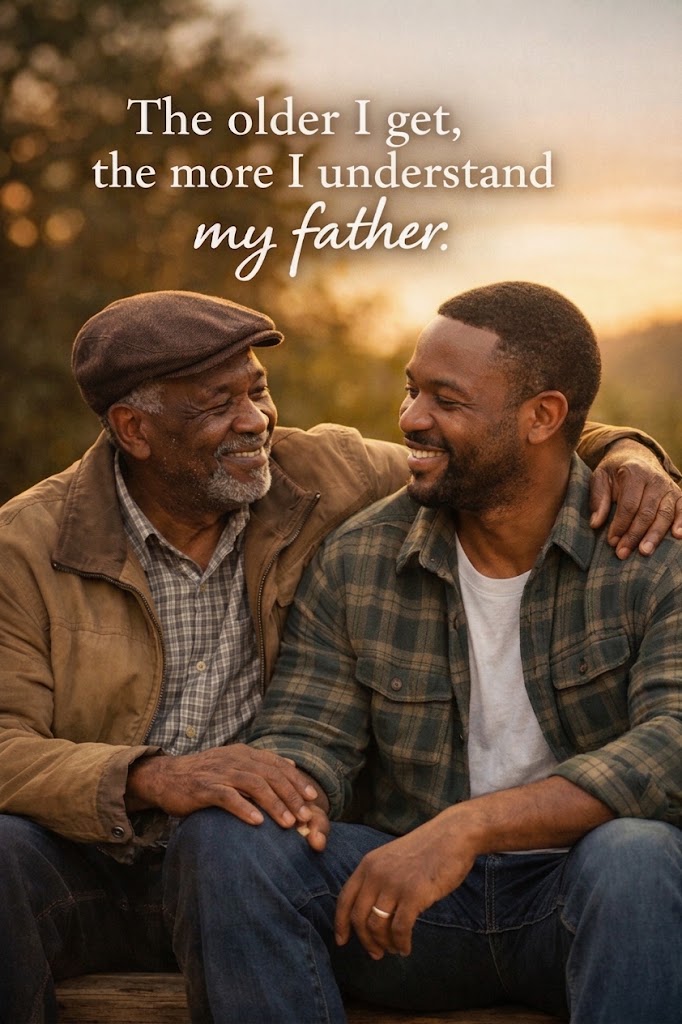
Father and daughter
Behind the ordinary things we take for granted are years of quiet sacrifice we may never fully see.
By Hadassah Karangu
There are things about our parents that we only begin to understand when we grow older. As children, we see them through a narrow lens — what they give us, what they deny us and the rules they impose. We notice the things they bought, the opportunities they provided and, perhaps most vividly, the things they refused to allow us to do. But adulthood has a strange way of reshaping that perspective. Suddenly, the ordinary begins to look extraordinary.
I experienced one of those moments recently while sitting and talking with my father.
It was not a dramatic conversation. There was no major life lesson announced, no grand speech about parenting. We were simply talking. Yet somewhere in that ordinary exchange, I found myself looking at my upbringing differently — noticing things I had long grown accustomed to and, in growing accustomed to them, had quietly stopped appreciating.
I thought about our farm and the investments my father has made over the years. The water infrastructure. The taps placed in different parts of the compound to make work easier. The countless decisions behind developing and maintaining a piece of land — the planning, the labour, the repairs, the expenses and the constant, quiet thinking about what would make tomorrow easier than today. I realised that what I had always considered normal was actually somebody’s sacrifice. And perhaps that is one of the greatest ironies of childhood: we mistake our parents’ sacrifices for the ordinary conditions of life.
It made me think more deeply about fatherhood.
Let me be clear from the outset: this is not an argument against single mothers. It would be both unfair and intellectually dishonest to suggest that children raised without fathers cannot thrive. They absolutely can. Millions of women have raised children under extraordinarily difficult circumstances and produced responsible, educated and compassionate adults. Many single mothers have carried responsibilities that were never meant to be theirs alone. They deserve recognition, not pity. But acknowledging their extraordinary work should not prevent us from having an honest conversation about the value of an involved father.
Because fathers can matter enormously.
Not necessarily because they are fathers, but because of the particular role they can play when they are present, responsible and emotionally invested in their children’s lives. There is, after all, a difference between having a father and experiencing fatherhood. A man can live under the same roof as his children and still be absent from their lives. He can pay school fees and put food on the table while never once asking his child how they are doing. He can be physically present but emotionally unavailable. The real question, then, is not simply whether there is a man in the house. The question is: what kind of presence does a child actually experience?
Growing up, I did not always understand the value of my father’s actions. But now, looking around our farm, I see more than physical structures and investments. I see a philosophy of life. I see someone who has spent years asking questions that children rarely think to ask. What will this place need in five years? How can we make this work easier? What needs to be repaired? What can be improved? These may appear to be ordinary questions. But children learn from ordinary things.
A child watching a parent solve problems is learning problem-solving. A child watching a parent work despite exhaustion is learning resilience. A child watching a parent plan for the future is learning responsibility. A child being corrected after a mistake is learning that actions have consequences. And sometimes, a child simply needs someone older to say: that is not the right way — try again.
That does not mean mothers cannot teach these lessons. They absolutely can and do. It simply means that different people bring different experiences, perspectives and forms of guidance into a child’s life. This is where the conversation about fatherhood needs to grow up. For too long, society has reduced fathers to providers. A father’s success is measured by whether he brings money home, pays school fees or builds a house. Those things matter. But fatherhood is far larger than a payslip.
Children need fathers who talk to them and listen. Who correct without humiliating. Who demonstrate responsibility rather than merely demanding it. Who can admit when they are wrong. Who teach their sons that becoming a man is not about aggression or conquest, but about responsibility, self-control and the courage to do what is right. Who teach their daughters that their worth is not determined by the attention of men, but by who they are and what they are capable of becoming.
This matters especially for boys. There is a great deal of talk today about young men needing to “man up” — but we rarely ask where they are supposed to learn what healthy manhood actually looks like. Someone has to show them. And often, the most powerful lesson is not a lecture. It is observation. A boy watches how his father treats his mother. He watches how his father treats people who cannot offer him anything in return. He watches how he behaves when money is tight, when things go wrong, whether he keeps his promises and whether the man who demands honesty from him is himself honest. The child may say nothing. But he is always taking notes.
The same is true for girls. A daughter’s understanding of respect and healthy masculinity can be shaped significantly by the men she encounters growing up. But this does not mean a girl without a father is destined to lack these qualities. Children can find excellent role models in mothers, grandparents, teachers, uncles and community members. Human beings are remarkably capable of filling gaps. Still, we should not romanticise absence simply because some children overcome it. The fact that someone can survive without something does not mean that thing has no value.
There is also an uncomfortable truth we must confront: many fathers have voluntarily removed themselves from their children’s lives. Some leave after separation. Some disappear after an unplanned pregnancy. Some provide money but no relationship, genuinely believing that paying the bills completes their parenting responsibility. It does not. A child may remember the school fees. But they will remember far more vividly the father who attended their school event, listened to their worries or simply sat beside them when life became difficult.
There is a form of wealth that does not appear in a bank account. It is the wealth of having someone who truly knows you — who notices when you are unusually quiet, who can recognise a dangerous decision before you make it, who has lived long enough to say: I have been there. Do not take that road.
Legacy is not always a mansion or a bank account. Sometimes it is a water tap installed in the right place because someone thought about the people who would use it years later. Sometimes it is a work ethic passed quietly from one generation to the next. Sometimes it is a sentence your father said ten years ago that suddenly makes perfect sense when you are older and facing something hard.
Appreciate your parents while they are still here. Not because they are perfect, but because behind many ordinary things we take for granted are years of sacrifice we may never fully see.
The greatest inheritance a parent can leave a child is not what they put in their hands — but what they put in their character.
Similar Posts by The Mt Kenya Times:
- Mt Kenya Times ePAPER October 17-18, 2026
- Ruto bets billions on Kerio Valley — with one eye on 2027
- Ruto’s health ministry kills Murang’a’s digital hospitals
- Kenya bets on Mount Kenya to drive a billion-shilling tourism revival
- Do you have a wealth vision? Or are you just working until you die?
About the Author