The Pfizer question: Why Kenya must welcome cheaper cancer drugs without surrendering its vigilance
 The Mt Kenya Times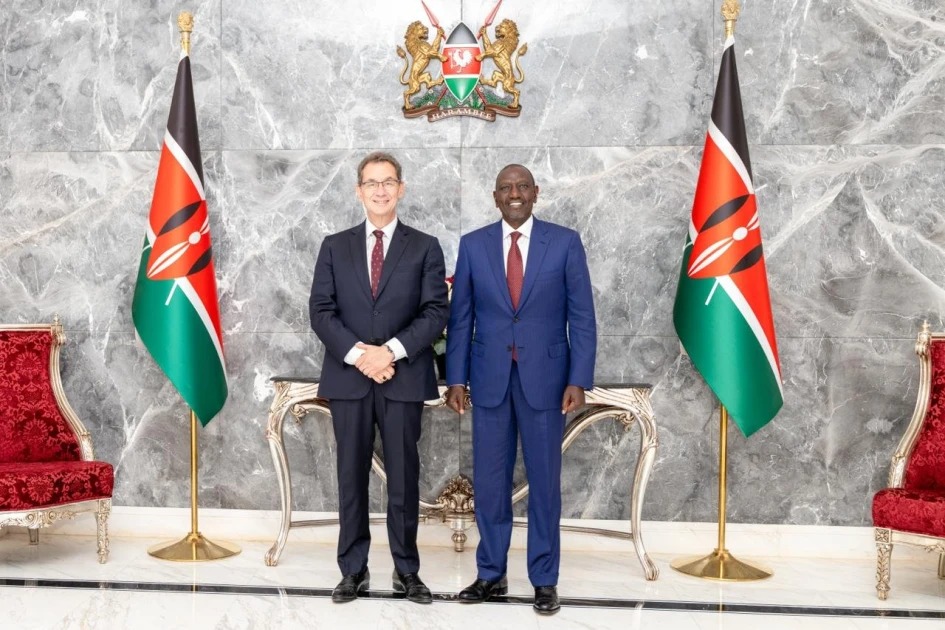
President William Ruto with Pfizer Chairman and Chief Executive Albert Bourla at State House
By Mr. Fredrick Kipchumba Chelimo PWD
Email: fkipchelimo@yahoo.com
Cancer does not knock gently on the door of a Kenyan family. It arrives with fear, uncertainty and, all too often, a financial burden capable of destroying everything a family has spent a lifetime building. A diagnosis can turn a home into a fundraising centre, force the sale of ancestral land, drain retirement savings and leave families borrowing from relatives and strangers in the desperate hope of purchasing another cycle of treatment. For far too many Kenyans, the battle against cancer is therefore fought on two fronts: against the disease itself and against the unbearable cost of staying alive.
That is why any credible effort to dramatically reduce the price of cancer medicines deserves serious attention and genuine optimism. If the new arrangement involving Pfizer can genuinely reduce the cost of certain cancer medicines from hundreds of thousands of shillings—and, in some reported cases, close to KSh1 million—to below KSh50,000 per treatment cycle, its significance for Kenyan families cannot be overstated. It could represent one of the most consequential breakthroughs in access to cancer treatment in the country’s recent history.
But when a promise is this significant, scrutiny must be equally serious. Kenyans should welcome cheaper, life-saving medicines. At the same time, they are entitled to ask exactly how those medicines will be delivered, who will benefit, how long the prices will remain affordable and what protections exist against secrecy, abuse or excessive dependence on a foreign pharmaceutical company. Hope is indispensable to a cancer patient. But in the management of public healthcare, hope must never be permitted to replace accountability.
The question is not whether Pfizer is a respected multinational pharmaceutical company. It is. Nor is there any serious argument against making cancer treatment cheaper. Kenya desperately needs affordable medicines. The deeper question is whether Kenya possesses sufficiently strong institutions to protect the public interest throughout the life of this agreement.
What exactly has the country signed? Which medicines are covered? What quantities will be supplied? What is the actual pricing formula? How long are the reduced prices guaranteed? What happens when the agreement expires? Are there exclusivity provisions that could affect competition or future procurement? And, perhaps more importantly, will this partnership strengthen Kenya’s long-term pharmaceutical capacity or merely make the country more dependent on the companies that manufacture the medicines it needs? These are not hostile questions. They are responsible questions.
They become even more important when multinational pharmaceutical companies operate within countries where public procurement and healthcare governance have repeatedly faced questions about transparency and accountability. Kenya’s recent experience offers ample reason for caution. The country has endured major controversies surrounding medical procurement, public supply chains and healthcare financing. KEMSA has previously faced serious audit and procurement concerns, while the transition to the Social Health Authority has generated substantial public debate over major technology contracts, medical equipment arrangements and the management of public resources.
Whether every allegation surrounding these institutions is ultimately proven is not the only issue. The deeper problem is the erosion of public trust. Kenyans have repeatedly witnessed impressive announcements followed by difficult questions about implementation, contracts, payments and accountability. It is therefore unreasonable to expect citizens to abandon their right to scrutiny simply because a healthcare initiative is presented as a miracle.
The historical record should also make Kenya wiser, particularly when considering Pfizer’s controversial 1996 clinical trial during a meningitis epidemic in Kano, Nigeria. The company tested the experimental antibiotic trovafloxacin, known as Trovan, on children affected by the epidemic. Pfizer has consistently maintained that the trial was conducted with appropriate approvals and consent and has denied wrongdoing. However, subsequent investigations, litigation and academic examinations raised serious ethical questions concerning informed consent and the circumstances surrounding the study.
The controversy generated years of legal disputes and ultimately led to a settlement with Kano State, leaving behind a legacy that extended far beyond the courtroom. It created a deep and lasting problem of public mistrust. The lesson from Kano should not be turned into a permanent indictment of Pfizer, nor should history be distorted into an unfair assertion that the company deliberately sought to harm African children. Corporations, governments and institutions can learn from past controversies and improve their practices. But the episode should not be forgotten either. Its most important lesson is about the importance of accountability when powerful institutions and vulnerable populations meet.
Trust cannot simply be announced. It must be earned. Kenya should therefore welcome Pfizer’s initiative while demanding an exceptionally high standard of transparency. Parliament, in particular, must refuse to become a ceremonial spectator to a major healthcare transaction. Its constitutional responsibility is not to applaud a cheaper medicine deal. Its responsibility is to interrogate it thoroughly on behalf of the millions of citizens whose taxes, health and lives are implicated.
Every medicine covered by the agreement should have a publicly verifiable international reference price, a transparent Kenyan acquisition price and a clearly established final cost to the patient. Kenyans should be able to determine whether the promised savings genuinely reach hospitals and patients or disappear somewhere between the manufacturer, government agencies, distributors, insurers and healthcare providers.
There must also be clarity about the sustainability of the arrangement. Cheap quality medicines today are welcome, but Kenya must ask what happens tomorrow. If lower prices depend entirely upon a particular international company’s continued goodwill, then the country may be solving today’s crisis while postponing tomorrow’s vulnerability.
This is where the conversation must move beyond access and towards pharmaceutical sovereignty. There is a fundamental difference between importing affordable medicines and developing the national capacity to manufacture medicines. Kenya can celebrate lower prices while remaining permanently dependent on foreign producers for the drugs that determine the survival of its citizens. That may provide immediate relief, but it does not automatically create long-term health security.
The real opportunity is therefore to use partnerships such as this one to build Kenya’s domestic pharmaceutical capacity. Any meaningful commitment to technology transfer must be clearly defined. Will Kenyan manufacturers receive access to relevant production technologies? Will scientists and pharmaceutical professionals receive specialised training? Will research institutions benefit from meaningful partnerships? Will local manufacturers eventually develop the capacity to produce more sophisticated medicines, or will Kenya remain a market that merely imports, distributes and packages products developed elsewhere? A genuine development partnership should leave Kenya stronger than it found it.
An independent public-interest monitoring framework is therefore essential. Treatment outcomes should be monitored. Stock-outs should be publicly reported. Distribution margins should be transparent. Technology-transfer commitments should contain measurable milestones rather than vague promises. Parliament should receive regular reports, while the Auditor-General should have full access to all financial records involving public resources. Commercial confidentiality must never become a convenient curtain behind which public money and public health are hidden.
Most importantly, the true measure of this partnership will not be found in the grandeur of its launch, the sophistication of its press statements or the applause that follows a presidential announcement. It will be found in the oncology ward. It will be found in the hands of a doctor prescribing treatment and in the life of a frightened patient wondering whether they can afford another month of care.
A cancer patient does not care about the elegance of an international agreement. They care whether the medicine is available when the oncologist prescribes it. They care whether the healthcare system will pay for it, whether the hospital will demand additional money and whether treatment will continue without interruption. For that patient, affordable healthcare is not an economic statistic. It is the difference between despair and another chance at life.
The Pfizer agreement therefore deserves neither blind celebration nor automatic condemnation. It deserves something far more valuable: rigorous, independent and forensic public scrutiny combined with an unwavering commitment to making life-saving medicines accessible to every Kenyan who needs them.
If the promised transformation in cancer medicine prices is real, sustainable and protected by a transparent contractual framework, Kenya should not hide the evidence. Let the prices be published. Let Parliament interrogate the agreement. Let independent institutions audit its implementation. Let doctors, hospitals and patients confirm that the medicines are actually reaching those whose lives depend on them.
As the late physician and humanitarian Paul Farmer famously observed, “The idea that some lives matter less is the root of all that is wrong with the world.” For Kenya, that observation carries a profound moral challenge. Cancer treatment must cease to be a privilege determined by the size of one’s bank account. But the promise of affordable treatment must equally be protected by transparency, accountability and institutions strong enough to ensure that no Kenyan’s hope becomes another casualty of secrecy, corruption or poor governance.
Kenya should embrace the opportunity. But it must do so with its eyes fully open. Cheaper cancer medicines can save lives. Strong institutions can protect the integrity of the system that delivers them.
In the fight against cancer, hope is essential. But when public money, powerful corporations and vulnerable lives meet, hope alone is never enough. The first duty of government is not simply to promise hope. It is to make that hope real, affordable, sustainable and verifiable.
Similar Posts by The Mt Kenya Times:
- AI Curse or boon: The Future of Intelligence: Artificial or Emotional?
- Dr. Ekrah Ndung’u wins TVET advocacy award after 12 years
- Mt Kenya Times ePAPER October 17-18, 2026
- Ruto bets billions on Kerio Valley — with one eye on 2027
- Ruto’s health ministry kills Murang’a’s digital hospitals
About the Author