The Psychological Significance Of Memory In The Acquisition Of English Language In Primary School Pupils

Abduganiyeva Gulbanu Rakhim

By: Abduganiyeva Gulbanu Rakhim
Abstract: This article focuses on the importance of the memory process in learning English for students of junior school age and the development of the ability to remember information well in language learning.
Key words: Memory, memorial abilities, cognitive development, foreign language, acquisition.
In today’s rapidly developing era, knowledge of foreign languages is important. In particular, one of the most important requirements of today’s time is to learn English. In the current modern education, necessary conditions are being created for the young generation to become mature and qualified personnel in all respects and to learn the language.
Why is it important to teach children foreign languages from childhood?
Learning English from a young age helps in both educational and intellectual development. When you learn another language of another community, you get to know both the language and their cultural diversity.
Learning a foreign language from childhood develops the child in all aspects. Language shapes our thinking and affects our cognitive processes. Language expands the world, improves the child’s memory, intelligence, develops the ability to observe. Therefore, in today’s developed society, the importance of forming interest in English in children is increasing.
Children speak in languages they hear. So introducing English into your child’s life will help him start using the language. In the future, when the child grows up, his spoken English will be repeated unconsciously and using correct grammar. However, in order for the lessons to be really effective and not overload the child, they must follow certain guidelines, which can be called the voluntary nature of the lessons.
Under no circumstances should children be forced to learn English. Especially children of preschool age are among them. If lessons become a chore, they can quickly become boring and children may find it difficult to learn the language later on. The main goal of parents and teachers is to arouse interest in language, and in this process play activities help in this.
It is appropriate that we give the following recommendations on the best time to teach English to students of junior school age.
The sooner you start introducing your child to English, the better. Scientists think so. They say the following:
Half of cognitive abilities are formed in the first 4 years of human life.Basic skills are formed at the age of 7-8.
From the age of 8-10, all abilities should be developed through education.
That is, the older a person is, the more time and effort he has to spend on learning English. Therefore, the best way to teach children English is to start before the age of 4.
For this reason, the role of the memory process in teaching children a language is of particular importance:
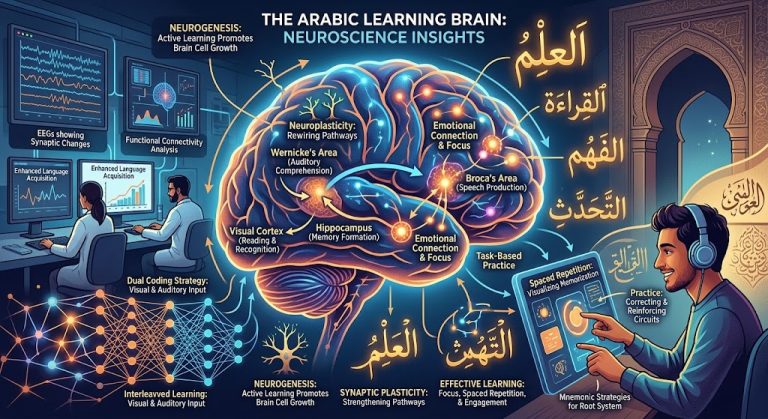
Memory plays a crucial role in second language acquisition. Working memory, a cognitive space for managing and storing information, has been identified as a key individual difference variable in language learning: It mediates various aspects of language learning processes and outcomes.
In conclusion, phonological short-term and working memory spans are related to vocabulary and grammar learning in second language learners. Typically, short-term retention, as measured by simple intermediate tasks such as word repetition, is associated with vocabulary learning. Grammar learning is usually related to the working memorial system.
This system is often tested with complex span tasks that require participants to simultaneously process and store information.
Abduganiyeva Gulbanu Rakhim’s daughter, Termez State University, Faculty of Foreign Philology, 3rd year student
List of used literature:
- Abdilkhakimovna, Mamaradjabova Bogzoda, and Berdiyeva Sabohat Rakhimovna. “DEVELOPMENTAL CHARACTERISTICS OF THE PHENOMENON OF SELF-CONSCIOUSNESS DURING PRIMARY SCHOOL AGE.” For Teachers 57.6 (2024): 203-206..
- Abdilkhakimovna, Mamaradjabova Bogzoda. “Psychological Mechanisms of the Influence of Self-Awareness Strategy on the Development of Children’s Emotions in the Family.” Web of Semantics: Journal of Interdisciplinary Science 2.3 (2024): 229-232.
- Ivanov P.I, Zufarova M.E. General psychology. Publishing house “National Society of Philosophers of Uzbekistan”, Tashkent. 2014
- Mamarajabova, Bogzoda Abdilkhakimovna. “ROL SOZNANIYA V DEYATELNOSTI CHELOVEKA.” Problemy science 6 (2019): 106-107.
- Mamaradjabova, B. “SELF-AWARENESS STRATEGY.”
- Sharafutdinova X, Mamaradjabova B. General psychology textbook.-T.: “Innovatsiyo-Ziyo”, 2022.-B 6.
Similar Posts by The Mt Kenya Times:
- Mt Kenya Times ePAPER September 19-20, 2026
- Kenya joins US and UK to put citizens on the terrorism frontline
- Kenya’s parliament races to tame the AI frontier
- Kalonzo calls Ruto to order over Uhuru attacks
- Gachagua takes his 2027 campaign to America
About the Author