The Servant Leader Redefining Public Service In Kenya Feted As A Hero: The Story Of Harison Ochieng Yogo
 The Mt Kenya Times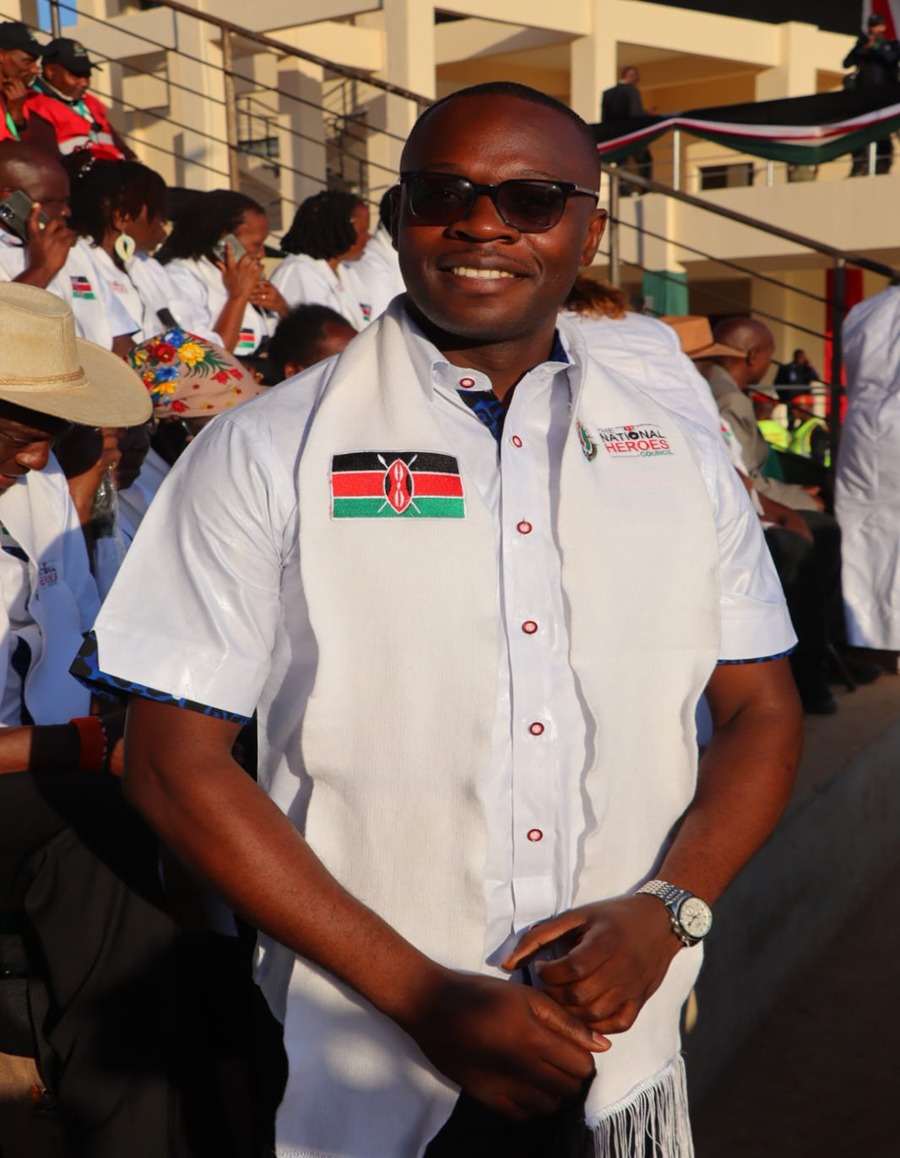
Harison Ochieng Yogo
By Jerameel Kevins Owuor Odhiambo
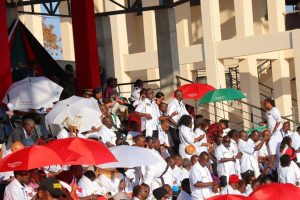
On October 13, 2025, at Ithookwe Stadium in Kitui County, President William Samoei Ruto presided over a ceremony that would enshrine Harison Ochieng Yogo among Kenya’s national heroes. The recognition, confirmed by Dr. Charles Wambia, Chief Executive Officer of the National Heroes Council, followed months of rigorous evaluation and public consultation. Yogo’s category was Statesmanship, a testament to his transformative impact on government service delivery. What makes Harison’s story remarkable is not just the position he holds but the impact he has made within and beyond it. Within a single year, his Huduma Mashinani initiative touched 30,000 lives in Mombasa, propelling the centre to national acclaim. These numbers tell only part of the story; behind them lies a philosophy of leadership that challenges the very foundations of public service. As management guru Peter Drucker once observed, “The best way to predict the future is to create it.” Yogo has done precisely that, crafting a future where government services meet citizens with dignity, efficiency, and genuine care.
The journey of this Assistant County Commissioner, currently serving as Centre Manager for Huduma Centre Mombasa, reveals a pattern of relentless excellence. His academic credentials include certifications from the London School of Insurance through the Young Insurance Professionals Programme, complementing his role as adjunct lecturer at the Kenya School of Government. Membership in the Kenya Association of Public Administration and Management further grounds his theoretical knowledge in practical application. Yet credentials alone never transform institutions; what distinguishes Yogo is his capacity to translate knowledge into tangible community impact. His responsibilities span operational management, customer relations, human resource coordination, and adherence to Huduma Kenya Service Delivery Standards. Each duty becomes an opportunity for innovation rather than mere obligation. This approach embodies what leadership scholar John Maxwell termed “the law of the lid,” where leadership ability determines organizational effectiveness.
The Huduma Mashinani initiative stands as Yogo’s magnum opus, a forty-day outreach program executed in partnership with Mombasa Cement. Thirty thousand residents received essential government services without charge, breaking down barriers that had long separated citizens from their government. Services that previously required days or weeks were compressed into minutes or hours under his stewardship. The initiative did not merely deliver services; it restored faith in public institutions. Customers received clear timelines for document collection, eliminating the anxiety and uncertainty that plague government interactions. This transformation earned Mombasa Huduma Centre the distinction of best performance in Kenya for the 2023/2024 financial year. As Nelson Mandela wisely noted, “What counts in life is not the mere fact that we have lived. It is what difference we have made to the lives of others.” Yogo’s difference is measurable, profound, and enduring.
Beyond administrative excellence, Yogo’s community engagement reveals a leader who understands that service transcends office walls. His initiatives include tree planting at Junda Creek with Brian Youth Group, sensitization programs at Jaffrey Foundation Community, and empowerment sessions at ICS College. The Huduma Football FC uses sports as a vehicle for educating communities about government programs, proving that engagement need not be formal to be effective. The centre’s participation in Pwani Innovation Week 2024 showcased these achievements to broader audiences. A Huduma Centre Choir emerged under his watch, producing two video songs that blend sensitization with celebration. Each program reflects Yogo’s conviction that government should not merely serve citizens but walk alongside them. Management theorist Tom Peters captured this ethos perfectly: “Excellent firms don’t believe in excellence only in constant improvement and constant change.” Yogo embodies this relentless pursuit of better.
The blood donation initiative that earned Huduma Centre Mombasa a certificate of recognition in 2025 illustrates Yogo’s expanded vision of public service. Saving lives through voluntary donation demonstrates that government facilities can be catalysts for community wellbeing beyond their mandated functions. This same expansive thinking drove the centre’s refurbishment and renovation through partnership with Mombasa Cement. Customer service training programs for newly deployed and existing staff ensure that excellence becomes institutional rather than individual. The Mt Kenya Times captured the transformation in a February 5, 2025 headline: “Mombasa Huduma Centre Crowned Kenya’s Service Excellence Champion: A Story of Innovation and Customer Centric Transformation.” Such recognition validates what staff and citizens experience daily, a fundamental reimagining of what government service can be. Simon Sinek’s observation that “leadership is not about being in charge; it is about taking care of those in your charge” finds perfect expression in Yogo’s approach.
Yogo’s impact predates his Mombasa posting, revealing consistency rather than circumstance as his defining trait. During his tenure in Sirisia Constituency, he taught primary school students preparing for KCPE examinations despite his full-time responsibilities as Assistant County Commissioner. Parents and students testified to his dedication, describing a man who squeezed teaching hours from already demanding days. Media coverage highlighted this unusual commitment with the headline: “Assistant County Commissioner with the Zeal of Imparting Knowledge and Providing Mentorship to Primary School Students In Sirisia Constituency.” His investment in young minds demonstrated that leadership extends beyond job descriptions into moral obligation. The time spent with those students planted seeds that would bloom in ways perhaps unknowable but certainly significant. Educational philosopher Paulo Freire wrote, “Education does not transform the world. Education changes people. People transform the world.” Yogo understood this distinction and acted accordingly.
International recognition followed inevitably, confirming what local communities already knew. The Mandela Washington Fellowship for Young African Leaders selected Yogo in 2025, sending him to the United States for intensive leadership development. The Principal Deputy Assistant Secretary of State signed his certificate, official validation of his potential to shape Africa’s future. Wayne State University certified his completion of Leadership in Public Management, with Vice Provost Christine Jackson adding her signature to his growing portfolio. The Spirit of Detroit Award, presented by the Detroit City Council, recognized his “exceptional achievement, outstanding leadership and dedication to improving the quality of life.” These honours came not as ends in themselves but as fuel for continued service. Winston Churchill’s reminder that “we make a living by what we get, but we make a life by what we give” resonates deeply with Yogo’s trajectory.
The transformational nature of Yogo’s leadership lies in its sustainability and replicability. He has not created a system dependent on his presence but rather cultivated a culture that will outlast his tenure. Staff members voluntarily absorb his zeal, suggesting that inspiration has become institutional DNA. His approachability ensures that excellence does not create distance but rather builds bridges between management and frontline workers. The best Huduma Centre award speaks volumes about collective achievement under singular vision. Teamwork flourishes where leadership creates space for contribution rather than demanding compliance. Management consultant Ken Blanchard observed, “The key to successful leadership today is influence, not authority.” Yogo wields influence with the precision of a master craftsman, shaping organizational culture through example rather than edict.
Yogo epitomizes the promise of Article 1 of Kenya’s Constitution: “We the people of Kenya.” His self-identification as a servant leader grounds authority in responsibility rather than privilege. His happiness derives not from titles or recognition but from witnessing efficient, exceptional service delivery to the masses. Such leaders are rare in public service, making their identification and celebration crucial for systemic transformation. The Swahili word “Kongole” (congratulations) seems insufficient for honoring someone who redefines what public service can achieve. Yogo’s customer-centric excellence transforms abstraction into daily reality for thousands of citizens. Philosopher Albert Schweitzer’s insight that “the purpose of human life is to serve, and to show compassion and the will to help others” finds embodiment in Yogo’s every professional choice.
As Kenya celebrates its heroes, let this recognition be more than ceremonial it must be a clarion call. A call for a new breed of civil servants who see their work not as privilege, but as a sacred duty. Harison Yogo has shown that public service, when anchored in love for people and driven by visionary leadership, can be a force that uplifts communities and transforms nations. His rise has been consistent, steady, and unshakably rooted in values that transcend borders and titles. The nation’s recognition of his work is both timely and deserved. And yet, for Harison, this is not a destination but a milestone on a longer journey. Kenya needs more like him not for applause, but for impact.
The trajectory from local innovation to national recognition to international fellowship reveals a pattern that Kenya and Africa desperately needs. Yogo moves from grace to grace not through political manoeuvring but through demonstrated impact. Time, that constant variable, will reveal the full scope of his contribution as mentored leaders emerge and systems he established mature. His transformation of Huduma Centre Mombasa from functional to exceptional provides a blueprint for institutional change across government. The integration of community engagement, staff development, strategic partnerships, and unwavering focus on customer experience creates a holistic model of public service. Young administrators studying his methods will find not tricks or shortcuts but principles: serve genuinely, innovate constantly, engage broadly, and lead humbly. As leadership expert Warren Bennis concluded, “Leadership is the capacity to translate vision into reality.” Harison Ochieng Yogo has translated vision into reality for 30,000 Mombasa residents and counting, proving that one person’s commitment can indeed transform public service and, ultimately, transform lives.
May the name Harison Ochieng Yogo echo as a symbol of what is possible when integrity meets service, when leadership meets humility, and when one man chooses to dedicate his life to the betterment of others. His heroism is not that of the battlefield, but of the bureaucracy where transformation is harder, slower, yet deeply needed. His story is a bold answer to the question, “Can government work for the people?” It can and it does when men like Harison lead. Let every civil servant, every student, and every Kenyan draw courage from his journey. For in his mission, we see a mirror of our nation’s highest hopes. In honouring Harison Yogo, we honour the best of who we are and who we must become.
The writer is a legal and social commentator
Similar Posts by The Mt Kenya Times:
- Laikipia University: A natural haven for learning
- Why you should not milk a Kenyan buffalo
- Beyond the scars: The grief, fear and hope of living after breast cancer
- Obaga Momanyi hosts free medical camp for Persons with Disabilities in Bonchari
- How Kenya’s economic titans feast while competition law serves as courteous footnote
About the Author