The Mt Kenya Times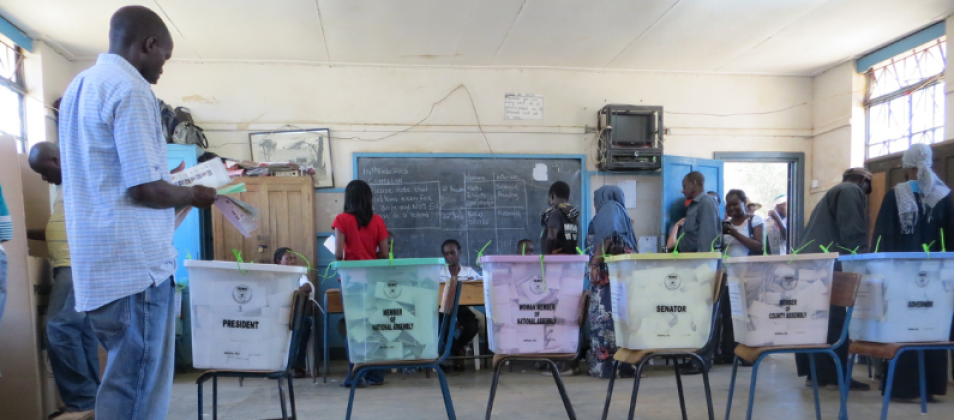
Kenyans elections
By: Jerameel Kevins Owuor Odhiambo
Between 2003 and 2014, more than a quarter of Kenyans admitted to Afrobarometer researchers that they had sold their vote for money, food, or some other trinket of the moment. Afrobarometer data between 2003 and 2014 found that more than a quarter of the population said they engaged in vote buying, and researchers believe this is likely an understatement of the true scope of the problem. By 2021, a Transparency International Kenya survey of over a thousand respondents found that fifty-nine per cent would willingly accept a bribe from a political candidate, and more troublingly, seventy point five per cent believed that questions of integrity should not bar a person from vying for office at all. A separate ten-county study found that fifty-six per cent of respondents had at some point received a bribe from a political aspirant, and twenty-four per cent admitted to having offered one themselves. Kenya’s National Crime Research Centre has gone further still, concluding that bribery is the single most prevalent election offence in the country. These are not the confessions of a fringe. They are the arithmetic of a republic.
Sit with that arithmetic for a moment, because it does something quieter and more corrosive than the headlines about rigged tallying centres and disputed IEBC servers. Rigging is theft committed against the voter. Vote-buying is a transaction the voter enters into willingly, a small mortgage taken out against the next five years, paid for in advance with a two-hundred-shilling note, a kilo of sugar, a branded kitenge, a promise of a job that will never materialize. The tragedy of Kenyan democracy is not only that it is stolen. It is that, with disturbing regularity, it is sold.
Walk through any by-election Ol Kalou is as instructive as any and you will not find voters debating fiscal policy on the mabati verandas of the trading centre. You will find brokers moving between homesteads with envelopes, young men on boda bodas ferrying “appreciation” from one polling station to the next, and a peculiar, unspoken choreography in which everyone understands the rules without anyone stating them aloud. Nobody calls it a bribe. It is “something small,” “fuel money,” “understanding one another.” The euphemism does the work that shame used to do. Language has been recruited to launder the transaction, and once language launders a thing, conscience stops noticing it.
This is not a story about greedy voters and cunning politicians, told the way a foreign correspondent might tell it, as though Kenyans are uniquely corruptible. It is a story about incentives meeting deprivation, and deprivation, once organised into a market, becoming self-perpetuating. A mother queuing for four hours at a clinic that has no gloves, no painkillers, no doctor, does not experience the five-year electoral cycle as an abstraction about accountability. She experiences it as five years of the same absence. When a candidate finally arrives with something tangible in hand, the state has already taught her, through its own negligence, that the ballot is not where value comes from. The stomach votes because the stomach has learned, through bitter repetition, that promises are cheap and cash is not.
And yet here is where the analysis must resist the comfort of a single villain this is precisely the arrangement that suits the political class best. A hungry electorate is a cheap electorate. It is far less expensive to buy a vote for the price of a soda than to build the school, tarmac the road, or staff the dispensary that would make buying votes unnecessary. Poverty is not merely tolerated by Kenya’s political economy; in its electoral application, it is cultivated, because an electorate reduced to its stomach is an electorate that has already outsourced its judgment. Why invest in development that empowers scrutiny when you can invest in hunger that guarantees compliance?
None of this absolves the voter. There is a peculiar Kenyan fatalism that treats vote-selling as something done to the poor rather than something the poor also choose, and that fatalism is itself a form of condescension as if the poor cannot be expected to reason, only to react. The uncomfortable truth is that plenty of vote-buying happens well above the poverty line, among people who have eaten that day and will eat tomorrow, who take the envelope simply because it is there and because everyone else is taking one too. Herd conscience is still conscience, deployed in the wrong direction.
What would it mean, then, to vote with the three pounds of grey matter God or evolution saw fit to place above the stomach? It would mean treating a manifesto the way one treats a contract reading the fine print, asking what has been costed and what has merely been promised. It would mean remembering, at the ballot box, the pothole that swallowed a matatu in March, the teacher who was never posted, the CDF account nobody has ever seen audited and asking whether five years of amnesia is worth two hundred shillings today. It would mean recognizing that the by-election broker and the corruption baron in Nairobi are not strangers to one another; they are financed by the same pipeline, and the shilling handed over at the trading centre is simply corruption’s retail outlet, its last and most intimate point of sale.
Some will object, reasonably, that lecturing the hungry about civic virtue is a luxury of the fed, and that structural poverty cannot be moralized away by appeals to conscience alone. They are right that the solution cannot rest on exhortation. Campaign finance regulation, faster and more visible prosecution of election bribery under the Elections Offences Act, and perhaps most powerfully the kind of civic education that reframes vote-selling not as harmless hustle but as a mortgage against one’s own children’s future, all matter more than sermons. But structural reform and individual reckoning are not rivals; a nation does not wait for perfect institutions before it starts thinking clearly, any more than a person waits for perfect health before deciding to stop smoking.
The dream, admittedly, is a modest fiction against a stubborn reality. It imagines a Kenyan electorate that wakes up one ordinary Tuesday, smells the coffee it has been sleeping through for a generation, and asks the simplest and most devastating of questions: what, precisely, did we sell, and to whom, and was it worth what we lost? That morning has not yet come. But every ballot cast in full knowledge of that question, rather than in exchange for a token that ends up being wroth two hundred shillings and five years of silence, is a small down payment on the country that dream describes.
The writer is a social commentator
Similar Posts by The Mt Kenya Times:
- Mt Kenya Times ePAPER October 12, 2026
- Gachagua’s party storms Kikuyu from afar as 2027 countdown begins
- Counties caught: The KSh100B payroll scandal Kenya can no longer hide
- CS Ogamba: tree planting could generate carbon credit millions to fund education
- Farouk Kibet calls for unity and development as leaders rally behind Ruto’s 2027 re-election bid
About the Author