Range Rover
Across six decades and countless rivals, one silhouette has never needed a badge to announce itself
By John Irungu Maina
There are vehicles you identify by their badge, and then there are vehicles you recognise before you ever see one.
The Range Rover belongs firmly in the second category.
Across generations, changing technologies, evolving tastes and an increasingly crowded luxury-SUV market, Range Rover has maintained something remarkably difficult to achieve in the automotive world: a distinctive visual identity that endures. You can spot one approaching from a distance and, in most cases, know immediately what it is.
That recognition is not accidental.
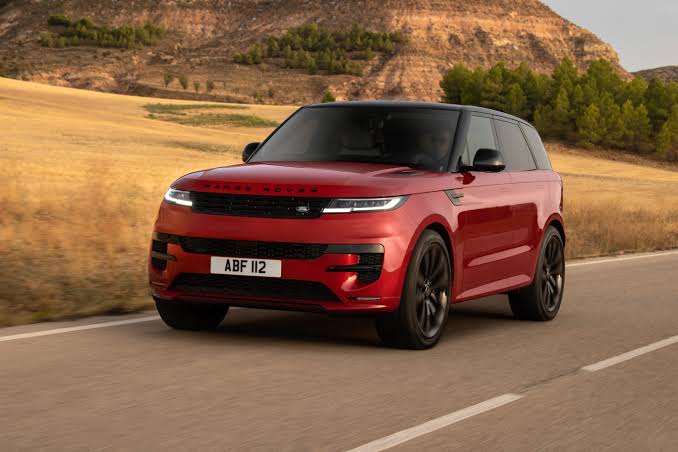
Since the original Range Rover arrived in 1970, the design has evolved considerably — but the fundamental character has held firm. The upright stance, commanding height, clean body lines, distinctive roofline and assured proportions have continued to define the vehicle across every generation. Range Rover has never needed excessive styling to announce itself. Its presence comes from proportion alone.
The design has traditionally relied on simple, confident surfaces rather than complicated creases. There is a sense of restraint to the shape. Even as newer generations have grown more sophisticated, the essential idea remains instantly recognisable — and that continuity is one of Range Rover’s greatest strengths.
The roofline is perhaps its most distinctive feature. The floating-roof effect, particularly pronounced on modern generations, gives the vehicle a profile unlike anything else on the road. Combined with the raised ride height and characteristic rear treatment, it creates a silhouette that reads clearly even when finer details are difficult to make out.
Then there is the side profile. A Range Rover does not try to look like a sports car masquerading as an SUV. It embraces its size and height without apology. The proportions communicate luxury through confidence rather than aggression — a deliberate choice in a market crowded with vehicles designed to compete loudly for attention.
Range Rover has largely taken a different approach. It does not need enormous grilles, aggressive creases or fussy bodywork to establish its identity. The simplicity is the identity.
Inside, the same philosophy holds. Range Rover cabins have moved steadily towards clean dashboards, premium materials, minimalist controls and an atmosphere built around deep comfort. The objective has never been simply to make the interior luxurious — it has been to create a particular feeling. And that feeling has always been central to what the Range Rover name means.
It is a vehicle designed to occupy an unusual space between luxury and genuine capability. The original concept was quietly revolutionary: a machine that combined serious off-road ability with a level of refinement that was extraordinary for a vehicle designed to leave the road. That dual personality became the foundation of its identity. A Range Rover could pull up to a luxury hotel without looking out of place, then leave the tarmac entirely and handle terrain that would defeat most rivals wearing a prestige badge.
Over the decades, competitors have copied parts of the formula. Luxury SUVs multiplied. Performance SUVs appeared. Premium manufacturers developed their own large off-road models. Yet Range Rover remained visually distinct throughout — and that is the real power of a coherent design language.
The latest generations are sleeker, more technologically advanced and more aerodynamic than their predecessors. But they still carry the visual cues that connect them to the Range Rovers that came before. This is where the brand has been particularly successful: it has modernised without abandoning its past.
The challenge for any iconic vehicle is knowing how much to change. Change too little and it becomes outdated. Change too much and it loses the identity that made it famous. Range Rover has spent more than five decades walking that line with unusual discipline.
Its evolution has never been about preserving individual design elements. It has been about preserving the character behind those elements. That is why a current Range Rover can look entirely different from a model produced thirty years earlier and still feel, instinctively, unmistakably like a Range Rover.
The badge may confirm what you are looking at. But the silhouette tells you first.
And that, perhaps, is the greatest achievement of Range Rover’s design philosophy: it built an identity strong enough to be recognised before the name is even visible.
Similar Posts by The Mt Kenya Times:
- Mt Kenya Times ePAPER October 7, 2026
- Ruto signs KSh389B electric vehicle deal at State House
- Kenya mobilises KSh70B to fight Ebola as US and World Bank step in
- High Court freezes law school admissions over disputed entry rules
- Grade 11 textbooks head to schools as CBC transition gathers pace
About the Author